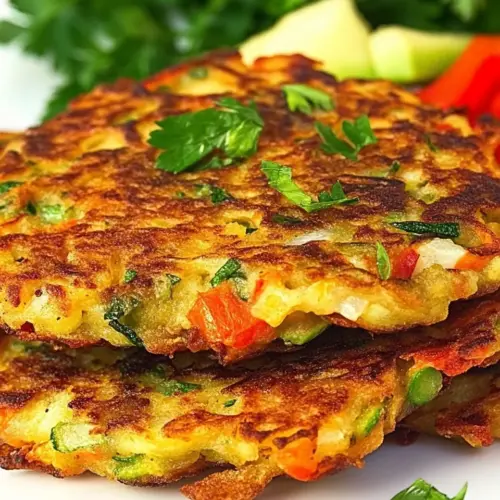
Clean Eating Vegetable Fritters
Clean Eating Vegetable Fritters are crisp edged, tender inside patties made with grated zucchini, bell pepper, and scallions. This easy, wholesome recipe delivers bright, herby flavor and satisfying texture, perfect for an easy weeknight dinner or casual brunch. Try them for a simple vegetable forward meal that stays light yet filling.
Equipment
- Sauté Pan
- Spatula
- Grater
- Colander
- Mixing Bowl
Ingredients
- 2 cups zucchini grated, water squeezed out *see instructions Provide moisture and mild flavor while adding bulk and texture after grating and squeezing out excess water; helps bind with eggs and flour to form the fritter base.
- 2 eggs large, lightly beaten Bind ingredients together and add richness; lightly beaten eggs set during cooking to give structure and hold fritters intact.
- 3/4 cup red bell pepper chopped Contribute sweet, crisp flavor and colorful contrast; chopped red bell pepper adds moisture and small bursts of bright taste in each bite.
- 3/4 cups scallions sliced, greens and whites, roots discarded Add a mild onion-like sharpness and fresh green color; sliced scallions distribute delicate allium flavor without overpowering the fritter.
- 1/2 cup flour (white whole-wheat was used in this recipe) Help absorb residual moisture and create a cohesive batter; flour tenderizes and provides structure so fritters hold their shape when cooked.
- 1/4 teaspoon kosher or sea salt Season the batter with balanced saltiness; kosher or sea salt enhances all flavors while controlling overall seasoning level.
- 1/8 teaspoon black pepper Introduce subtle heat and depth; freshly ground black pepper brightens flavors and adds a gentle background spice.
- 2 tablespoons thyme leaves fresh, optional 2 teaspoons dried thyme Impart herbaceous, aromatic notes to complement vegetables; fresh thyme leaves (or dried equivalent) lift the savory profile when mixed into the batter.
- 1/8 teaspoon paprika Provide warm, smoky undertones and color contrast; a pinch of paprika enhances savory depth without overwhelming the other flavors.
- 3 tablespoons olive oil Enable shallow frying with a clean, fruity fat; olive oil crisps the fritter exterior and conducts heat for even browning.
Instructions
- Shred zucchini and place in a colander or fine-mesh sieve set over a bowl. Sprinkle a small amount of salt over the zucchini and let sit for about 10 minutes. Then press on the zucchini to squeeze out any remaining water into the bowl.: You will notice a fresh, green aroma as the zucchini releases moisture, and the bowl will collect a surprising amount of liquid, which shows why this step matters. Pressing the grated zucchini by hand or with a spoon until mostly dry helps the fritter batter remain thick and able to brown, producing crisp edges rather than steaming in the pan. Listen for the gentle thud of moisture being pressed out, and feel the texture change from slippery to cohesive. A common error is not fully draining the zucchini, which leads to flat, soggy fritters that do not caramelize properly.
- Whisk eggs in the bottom of a large bowl. Add the zucchini, bell pepper, scallions, flour, salt, pepper, thyme, and paprika to the bowl, stirring to combine completely. Add one tablespoon of the olive oil to a sauté pan over medium heat, and add in a mound of the mixture, pushing with the spatula to flatten into a round. Repeat with 2 more. 3 should fit in the pan.: As you whisk the eggs , they will thicken slightly and turn a uniform pale yellow, ready to bind the vegetables. The whisking technique should be brisk but brief, enough to combine whites and yolks so they evenly coat the vegetables. This binding step is critical because it provides structure and richness; without it the fritters can fall apart in the pan. Avoid overwhisking to foam, which can change the texture and make the interior too airy.
- Cook each fritter for 2 to 3 minutes on one side, and then flip and cook for an additional 2 to 3 minutes on the other side, or until golden brown and cooked through.: At this stage the mixture will become a cohesive batter dotted with colorful flecks of red bell pepper and green scallions , and you can see the scattering of spices. Stir until you feel a slightly thick, spoonable consistency; the flour should be evenly distributed so no dry pockets remain. The right consistency ensures even cooking, so check that the batter holds together when scooped. A typical mistake is adding too much flour to compensate for wetness, which yields dense fritters rather than tender ones.
- Serve sprinkled with thyme leaves for garnish, and topped with a dollop of light sour cream or Greek yogurt, if desired.: As the oil heats, it will shimmer and give off a gentle olive scent; that is the cue to add the batter. Press each mound into a compact round so the center cooks through while the edges crisp. Hearing a steady sizzle means the temperature is right, producing a golden crust that contrasts with the soft interior. If the oil smokes, reduce the heat, because too hot oil will char the exterior before the center cooks.
- Enjoy!: You should watch for an even, deepening brown and a faint, toasty aroma as the fritters cook, signaling Maillard reaction at work. The sound will be a steady sizzle rather than a violent fry, which is what creates a crisp surface without burning. After flipping, press gently with the spatula to ensure full contact with the pan so the underside browns evenly. A frequent pitfall is flipping too early, which causes the fritter to fall apart, or leaving them too long, which will dry out the interior.
- Serve sprinkled with thyme leaves for garnish, and topped with a dollop of light sour cream or Greek yogurt, if desired: The moment of plating is about contrast, where a spoonful of cool, tangy yogurt balances the warm, herbaceous patties, and a scattering of fresh thyme adds an aromatic finish. The visual of golden rounds with a white dollop and green flecks is inviting, and the first bite should combine crisp edge, tender center, and refreshing topping. Avoid piling too many fritters in one layer, which traps steam and softens the bottom ones.
- Enjoy!: Savor the layered textures and the brightness of the vegetables, noting how the light seasoning and herbs let the produce shine. Take a moment to appreciate the contrast of warm fritter and cool topping, the gentle crunch and the vegetal tenderness. If any fritters remain, store them loosely covered for tomorrow, and reheat gently to regain some crispness. A mistake to avoid is reheating at too high a heat, which can dry them out quickly.
Notes
- Adjust moisture: If your grated zucchini seems particularly wet, squeeze it in a clean kitchen towel to remove extra liquid so the batter stays thick and fries correctly.
- Binding tweaks: If you want a firmer fritter, stir in a touch more flour a teaspoon at a time until the mixture holds its shape without becoming dense.
- Herb choices: Fresh thyme brightens the fritters most, but if you only have dried, use less by volume since dried herbs are more concentrated.
- Pan temperature: Maintain a steady medium heat so the fritters achieve even golden color without burning edges or leaving raw centers.
- Oil use: Use about one tablespoon of olive oil at a time; adding more as needed prevents the pan from becoming too greasy while ensuring even browning.