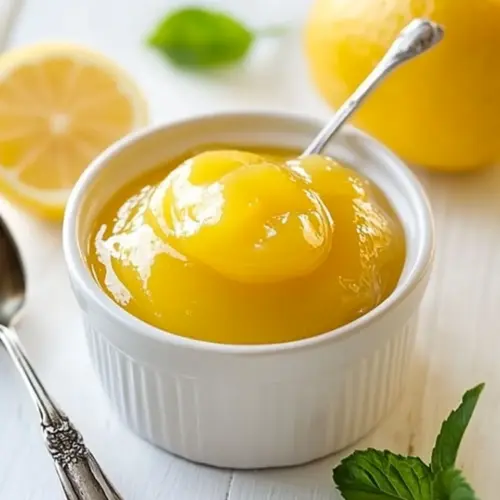
Classic Lemon Curd
Classic Lemon Curd is a silky, bright spread with a creamy texture and intense citrus flavor. This easy to make curd blends fresh lemons, rich egg yolks, and butter into a glossy, versatile topping perfect for toast, tarts, or layered desserts. It stores well and freezes beautifully, making it an ideal make ahead treat for weeknight breakfasts or special gatherings.
Equipment
- Food Processor
- Stainless steel saucepan
- Candy thermometer
- Mixing Bowl
- Fine sieve
Ingredients
- 3 large lemons, washed (organic recommended) Provide bright citrus zest and oils when grated, contributing fresh aroma and intensified lemon flavor; wash thoroughly to remove residues and use organic when possible to avoid pesticides. Offer natural acidity in the curd, balancing sweetness and helping set the texture alongside egg yolks.
- 1 1/2 cups sugar Sweeten the curd and help with structure by dissolving into the citrus mixture; adjust sweetness to taste while ensuring enough sugar to counteract the tartness of lemon juice. Also aids in creating a glossy, smooth finish as the curd cooks and thickens.
- 1/2 cup unsalted butter, room temperature Contribute rich, creamy mouthfeel and a silky texture when softened and whisked into the warm lemon mixture; room temperature butter incorporates more easily for an emulsified curd. Adds buttery flavor that mellows the tartness and lends stability when chilled.
- 5 large egg yolks Thicken the curd and provide a custardy base through coagulation of proteins when gently cooked; separate yolks are preferred for a smooth, velvety consistency. Impart a rich, yellow color and help achieve a set that is firm yet spreadable when properly tempered.
- 1/2 cup lemon juice Deliver concentrated acidity and lemon flavor that defines the recipe; fresh juice ensures a bright, natural tartness compared with bottled alternatives. Combine with sugar and eggs to create the curd’s characteristic tang while contributing to the final texture.
- pinch of salt Enhance overall flavor by balancing sweetness and acidity with a tiny savory note; a pinch prevents the curd from tasting flat and heightens other flavors. Help to round out the profile without making the curd salty.
Instructions
- Zest the lemons. Be careful to avoid the white pith as it is very bitter. Juice the lemons.: As you grate the bright outer peel, you will smell a burst of citrus oils, vivid and slightly floral, which tells you the zest is fresh. The white pith underneath should be avoided because it adds an unpleasant bitterness, so watch the grater angle and rotate the fruit carefully to get only the colored skin. When you squeeze the lemons, expect a clean, tangy aroma and a bit of pulp in the bowl, which you can strain if you prefer silkiness. A common mistake is pressing too hard while zesting, which drags pith into the mix, so take your time and inspect the zest for any pale bits.
- Add the sugar and lemon zest to a food processor fitted with the steel blade and pulse until the zest is finely ground up with the sugar. In a medium glass or stainless steel mixing bowl, cream the butter and the lemon sugar mixture until fluffy. Add the eggs, one at a time, and beat until combined. Add the lemon juice and salt and beat until combined.: Right away you will notice the sugar becoming perfumed, tiny flecks of zest dispersing and releasing oils that scent the kitchen. Creaming the softened butter with this lemon sugar produces a pale, aerated mixture that helps integrate the fats into the curd later on. When incorporating each egg yolk , the texture will smooth and become richer, and beating after each addition ensures an even emulsion. Adding the lemon juice introduces acidity, which feels sharp at first but will mellow when cooked. If the mixture looks slightly curdled after adding juice, that is normal before it heats gently, but avoid overbeating which can incorporate too much air. A frequent error is adding cold ingredients, which can shock the butter and cause separation, so bring elements to room temperature first.
- Pour the mixture into a medium stainless steel saucepan and cook over low heat stirring continuously until thickened and the temperature has reached 170 F, about 20 minutes. Check the temperature using a candy thermometer. Remove from the heat, cool completely, and store in the fridge in a glass jar with a lid. It will keep in the fridge for up to a week. It can also be frozen in a freezer-safe airtight container for up to a year (let it thaw in the fridge overnight). Makes about 2 cups.: As heat touches the mixture, the first sensory change is a gentle steam and a richer lemon scent, evolving from bright to rounded. Continuous stirring keeps the texture smooth and prevents hot spots, you will hear a soft simmer and see the color deepen to a glossy, pale yellow. Hitting roughly 170 F ensures the egg yolks have thickened without curdling, and using a reliable candy thermometer removes guesswork. When the curd coats the back of a spoon, it is the visual cue you want. Remove from heat immediately to avoid overcooking, then cool so the curd sets while retaining shine. If you stop stirring, the curd can cling and burn on the pan, giving an off taste, so keep motion steady and moderate. Transfer to a glass jar to chill, the cold will firm it further and sharpen the flavor.
Notes
- Softening butter: Let the butter sit at room temperature until it is just pliable. This prevents lumps when you cream it with the lemon sugar, ensuring a glossy final curd. If it melts, the emulsion can break, and if it is too cold, it will not incorporate evenly.
- Measuring juice: Always measure the lemon juice after squeezing to get exactly 1/2 cup. If you end up short, add a touch more juice slowly to maintain balance; if you have too much, reduce slightly or use a bit more sugar to compensate.
- Monitoring temperature: Use a candy thermometer for accuracy, aiming for 170 F. This prevents undercooked eggs and avoids overcooking which makes the curd grainy. Remove from heat promptly when you reach the target.
- Cooling and storage: Cool the curd quickly in a shallow container, then refrigerate in a sealed glass jar. Proper cooling preserves texture and keeps the flavor bright. Label with the date and use within a week.
- Freezing portions: Freeze in small airtight containers for longer storage. Thaw overnight in the fridge to maintain texture, and stir gently before using to reincorporate any separated elements.