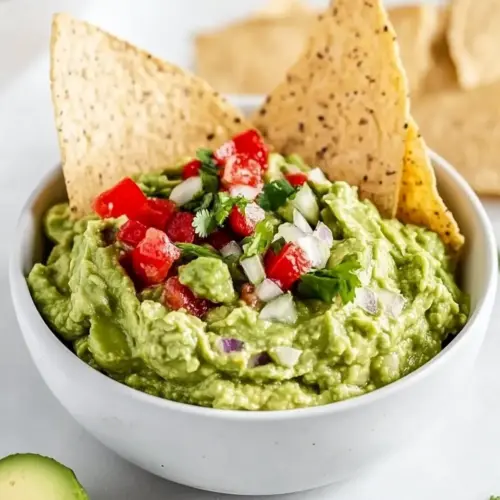
Classic Guacamole
Classic Guacamole is a creamy, bright dip featuring ripe avocado, zesty lime, and fresh herbs. Easy to whip up in minutes, this recipe delivers vibrant flavor and satisfying texture, ideal for parties or quick snacks. With bold aromatics and simple technique, it makes a perfect easy weeknight appetizer and a reliable crowd pleaser.
Equipment
- Medium Bowl
- Fork or Potato Masher
- Knife
- Cutting Board
- Citrus Juicer
Ingredients
- 2 cups diced ripe avocado about 2 medium avocados Provide creamy, rich texture and healthy fats that form the base of guacamole; mash to desired consistency to create a smooth or chunky dip and help bind the other flavors together.
- 2 tablespoons freshly squeezed lime juice Add bright acidity to balance richness and enhance freshness; squeeze over avocado immediately to slow browning and lift the overall flavor profile.
- 1 teaspoon freshly grated garlic Contribute a sharp, pungent aromatic note that cuts through richness; grate finely for even distribution and to avoid large garlicky bites.
- 1/2 teaspoon kosher salt Season and amplify flavors while providing a clean, savory background; dissolve into the avocado to bring out the natural tastes of the other ingredients.
- 1/4 teaspoon freshly cracked black pepper Introduce a subtle heat and earthy complexity with a slight bite; crack fresh for maximum aroma and to complement the salt and citrus.
- 1/4 cup finely diced tomato Offer juicy freshness and a mild sweetness that adds contrast and color; seed and finely dice to prevent excess moisture while adding texture.
- 3 tablespoons minced onion Bring a crisp, slightly sweet bite and a mild pungency that complements avocado; mince finely to distribute sharpness without overpowering other elements.
- 2 tablespoons minced cilantro Provide bright, herbal freshness and a hint of citrusy flavor that lifts the dip; chop finely and mix in to add a fragrant finishing note.
- 1 tablespoon minced jalapeno optional Supply optional heat and vegetal brightness for those who like spicier guacamole; mince small to control spice level and remove seeds if milder heat is desired.
Instructions
- In a medium bowl, mash the diced avocado, lime juice, garlic, salt, and pepper until it is your desired consistency.: The first aromas you will notice are the bright zing of lime juice and the sharp, fragrant bite of freshly grated garlic . Use a fork or a potato masher and listen for a soft, slightly squishing sound as the avocado breaks down, releasing its buttery oils. Visually aim for a mixture that is mostly smooth with small chunks remaining, unless you prefer it completely silky. The salt will dissolve into the mash, bringing out sweetness and rounding the edges of the citrus. A common mistake at this stage is overmashing which can create a pasty texture, so pause and test the mouthfeel often. The why is simple, the way you mash determines how each spoonful distributes flavor, and controlling the texture affects how well the tomato and onion integrate later. If the mixture seems dry, a splash more lime juice restores brightness and helps loosen the mash. If it tastes flat, a pinch more salt can open up the flavors.
- Fold in the tomato, onion, cilantro, and jalapeno (if using). Taste and season with additional salt and pepper if needed.: When you fold in the diced tomato , minced onion , chopped cilantro , and optional minced jalapeno , listen for the soft rustle of the herbs and watch the bowl come alive with specks of red and green. Folding is gentler than stirring, which preserves the small tomato pieces and prevents the mash from becoming too uniform. This texture contrast is what gives each bite its character, with bursts of juiciness from the tomato and a crisp snap from the onion . Be mindful of excess tomato juices, they can thin the mixture so drain seeds if needed to keep consistency. A frequent error is adding ingredients while the mash is too liquid, which dilutes the flavors; aim for a cohesive but not soupy final texture. The reason this step matters is that these fresh components bring brightness, crunch, and herbal lift, and how you fold them in determines how those elements are distributed across the dip. After folding, taste for balance and adjust with tiny increments of salt or lime juice if either component needs nudging.
- Taste and season with additional salt and pepper if needed.: This final check is all about nuance, and you should approach it like a musician tuning an instrument. Bring a small spoon to your lips and note whether the acidity of the lime juice is cutting through, whether the garlic is present but not harsh, and if the heat from the jalapeno is balanced. Adjusting seasoning in tiny increments preserves the integrity of the mix; add less than you think and re-taste. The sensory cues to watch are brightness, saltiness, and a gentle roundedness in the finish. A common mistake is over seasoning quickly, especially with salt , which can suppress other flavors. If you oversalt slightly, add a bit more diced avocado to mellow the mixture. This tasting step is crucial because it personalizes the final bowl, ensuring the flavors are tuned to your palate and the specific ingredients you used.
Notes
- Choose ripe avocados: Aim for fruit that yields to gentle pressure but does not feel collapsing. This ensures a creamy texture that mashes nicely while still holding small pieces if you like chunkier guacamole.
- Squeeze lime at the last moment: Fresh lime juice brightens the flavors and helps keep the dip green, so add it shortly before serving rather than letting it sit for hours.
- Fine mince the aromatics: Mince the onion, cilantro, and jalapeno small so they integrate evenly and no single forkful has an overpowering bite.
- Taste as you go: Season gradually with salt and pepper, tasting after each small addition to avoid over seasoning. Adjustments by pinch or drop make a big difference.
- Store briefly with care: If you need to hold the guacamole for a short time, press plastic wrap directly onto the surface to limit air exposure and slow browning.