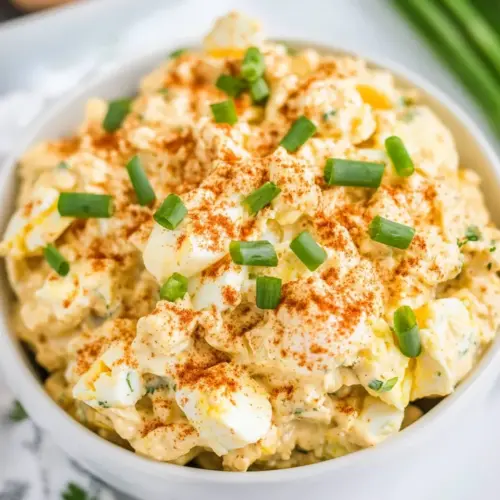
Classic Egg Salad Recipe
Classic Egg Salad Recipe is a creamy, tangy, and easy to make salad that combines chopped eggs with mayonnaise, mustard, and bright pickles for an irresistible sandwich filling or light lunch. The texture is chunky yet silky, with herbal notes from dill and green onion. Perfect for an easy weeknight meal or prep ahead lunches, it delivers comfort and freshness in every bite, so make it today.
Equipment
- Saucepan
- Mixing Bowl
- Knife
- Cutting Board
- Spoon
Ingredients
- 8 hard-boiled eggs, peeled and chopped Provide creamy, protein-rich texture and body to the salad; chopped small for bite-sized pieces that blend easily with dressings without overpowering other flavors.
- 1/3 cup mayonnaise or more Add a rich, silky mouthfeel and bind ingredients together; adjust amount to reach desired creaminess and help mellow acidic notes in the mixture.
- 1 tablespoon stone ground mustard Contribute tangy, robust mustard flavor and a bit of coarse texture; stir in to brighten the salad and provide a subtle sharpness that complements the eggs.
- 1 tablespoon pickle juice or lemon juice Introduce bright acidity that lifts the overall flavor profile; a splash balances the richness and can help mimic the tang of pickled elements.
- 1/2 small red onion, chopped Offer crisp, slightly sharp bite and a hint of sweetness when finely chopped; incorporate sparingly to add texture contrast and light pungency.
- 1 tablespoon dill, chopped Deliver fresh herbal brightness with a mild anise-like note; chop finely and fold in to refresh the palate and enhance savory components.
- 1 tablespoon green onion, chopped Provide mild oniony sharpness and fresh green flavor; chop and sprinkle to add a clean, slightly pungent accent throughout the salad.
- 1 tablespoon green garlic, chopped or use 2 minced garlic cloves Impart garlicky freshness and subtle vegetal zing when minced; use either young green garlic for mildness or garlic cloves for more pronounced savory depth.
- 1/4 cup diced pickles, optional Add crunchy, salty, tangy pops when included; dice and mix in to introduce pickled brightness and contrast against creamy elements.
- 1/4 teaspoon kosher salt or to taste Season the mixture with controlled salinity and help amplify other flavors; add gradually and taste to avoid over-salting delicate ingredients.
- fresh black pepper to taste Contribute warming spice and a touch of earthiness to taste; grind fresh and add sparingly to complement the creamy and acidic components.
- 1/2 teaspoon paprika, sweet or smoked Provide a smoky or sweet warmth and visual color when sprinkled; use judiciously to enhance aroma and add an appealing finish to the salad.
- chopped chives Offer delicate oniony flavor and visual garnish when chopped; scatter on top or fold in for a mild, fresh finish.
- chopped green onion Supply additional fresh, mild onion taste and garnish versatility; use chopped for layering flavor and to enhance the salad's presentation.
- paprika Give vibrant color and a mild smoky or sweet finish when dusted; use as a final garnish to add aroma and visual appeal.
Instructions
- Boil and peel the eggs. Chop them into 1/4 inch pieces and add to a medium bowl.: When you drop the eggs into boiling water you should hear a gentle simmer, not a violent roar. The sensory cue is a steady bubble pattern that cooks the eggs evenly, resulting in a tender white and creamy yolk. The reason gentle boiling matters is it reduces cracking and prevents rubbery whites, which can ruin the texture. A common mistake is to overcook them, which yields a dry, powdery yolk and a sulfurous smell, so time them carefully. After cooling, peel the shells under running water to help remove stubborn bits, and pat the eggs dry so they mix cleanly without excess moisture.
- Add the rest of the ingredients and stir to combine.: You will feel the resistance of the whites and the creaminess of the yolks as you chop, and aim for consistent pieces so the salad has a balanced mouthfeel. I use a rocking motion with a sharp knife, avoiding a food processor which can make a paste. The visual cue is uniformity, small cubes about the size of a corn kernel, which ensures each forkful has varying textures. One pitfall is chopping too finely, which loses the chunk element that defines a satisfying egg salad, so stop when you see distinct pieces.
- Taste and adjust for salt and pepper.: As you spoon in mayonnaise , mustard , and the acid, notice the change in sheen as the mixture becomes glossy and cohesive. Stir gently to coat the eggs without breaking them down, using a folding motion to preserve chunks. This technique matters because overmixing produces a pasty texture instead of a creamy but chunky spread. A common issue is adding all the mayonnaise at once; instead, add gradually and stop when the salad holds together pleasantly.
- Refrigerate for 30 minutes before serving.: Bring a small spoonful to your nose and palate to evaluate balance. You should detect the gentle salinity, a touch of acid, and a hint of spice from the mustard and paprika . Adjustments are about harmony, not volume, so add tiny increments of salt and freshly cracked black pepper . Over seasoning is easy, so add a little, mix, and taste again. A frequent mistake is to rely on measured amounts without tasting, which can leave the salad flat or oversalted if your pickles are briny.
- Garnish with chopped chives, green onion and paprika before serving.: Chilling lets flavors meld and the texture firm slightly, creating a cleaner, more cohesive bite. In the fridge you will notice the salad tighten and the aromas settle into a single, joined profile. This rest matters for texture, because it prevents the salad from being runny on bread or crackers. Don’t skip this step if possible, though if you must serve immediately, at least let it rest for ten minutes at room temperature. One error to avoid is refrigerating in a shallow dish uncovered, which can dry the surface; cover with plastic or a lid.
- Garnish with chopped chives, green onion and paprika before serving: The final garnish provides contrast in color and a fresh bite. Sprinkle the chives and finely sliced green onion so they are dispersed, then finish with a light dusting of paprika for warmth and visual appeal. The crunch and aroma of the herbs just before serving make the salad feel lively and inviting. A downside is overgarnishing which can swamp the delicate egg flavor, so add thoughtfully. If you want a smoky edge, use smoked paprika sparingly, otherwise sweet paprika keeps it classic.
Notes
- Peeling tip Cleanly peel eggs by shocking them in an ice bath immediately after boiling, this contracts the whites and separates the membrane, making shells come off smoothly and reducing stray shell shards in your salad.
- Mayonnaise control Add mayonnaise gradually and stop when the salad binds, this prevents a soupy texture and helps preserve the chopped structure of the eggs.
- Acid balance Use pickle juice or lemon juice sparingly, tasting as you go, because even a small amount can brighten the entire bowl and trim any heaviness.
- Herb timing Stir most herbs into the mix but save some chives for garnish to retain a fresh, vivid note and attractive color contrast on serving.
- Onion handling If raw red onion feels too assertive, soak the chopped pieces in cold water for ten minutes then drain well to mellow the bite.