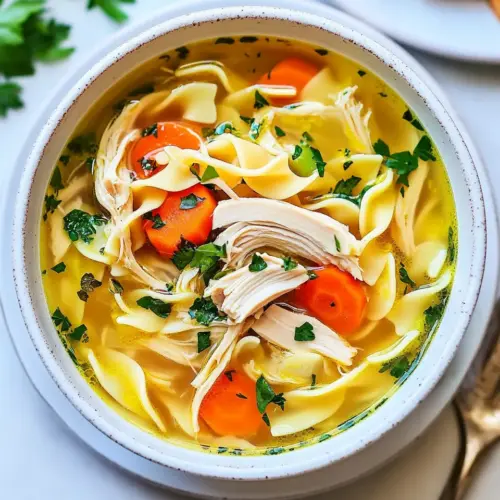
Classic Chicken Noodle Soup
Classic Chicken Noodle Soup is a warm, savory bowl of comfort with tender shredded chicken, wide egg noodles, and a bright finish of lemon and parsley. This easy weeknight dinner is both hearty and refreshing, perfect for cold nights or when someone needs a pick me up. It’s simple to make, pantry friendly, and guaranteed to become a family favorite.
Equipment
- Large Pot
- Ladle
- Knife
- Cutting Board
Ingredients
- 2 tablespoons unsalted butter or olive oil Adds a rich, silky base and helps sauté aromatics; melted unsalted butter gives a creamy mouthfeel while olive oil provides a lighter, fruitier backbone if preferred. Use moderate heat to prevent browning and retain a clean, savory foundation for the soup. Adjust amount slightly for desired richness without overwhelming the stock.
- 1 yellow onion, chopped Provides sweet, savory depth and aromatic foundation when chopped and softened; cooking until translucent releases natural sugars that balance the broth. Adds texture and body to the soup, blending with other vegetables for a classic savory profile. Chop uniformly to ensure even cooking and flavor distribution.
- 2 carrots, chopped Contributes natural sweetness, color, and slight firmness; chopped carrots add both flavor and visual appeal as they simmer in the broth. Their sugars mellow with cooking, enhancing overall balance and complementing the savory chicken. Cut into consistent pieces so they cook evenly with the celery.
- 2 celery ribs, chopped Delivers bright, savory, and aromatic notes with a slight crunch; chopped celery supports the soup's savory backbone and pairs with carrots and onion in a classic mirepoix. Releases vegetal flavor into the broth as it softens, enhancing complexity. Trim and chop evenly to meld textures with other vegetables.
- 4 cloves garlic, minced Imparts pungent, savory, and aromatic lift when minced; garlic brightens and deepens the soup with a warm, slightly sweet note as it cooks briefly with aromatics. Add toward the end of sweating to avoid bitterness from overcooking. Mince finely to disperse flavor uniformly throughout the broth.
- 2 bay leaves Infuses gentle, herbal earthiness when simmered whole; bay leaves add subtle depth and an aromatic background during long simmering. Remove before serving to avoid tough, bitter pieces. Use intact to provide rounded savory notes without dominating the soup.
- 1 teaspoon chopped fresh thyme (or 1/2 teaspoon dried thyme) Offers fresh, herbal, and slightly floral complexity; chopped fresh thyme (or dried) brightens the broth and complements poultry flavors. Tie stems or add dried early so the herb can release its oils throughout simmering. Adjust quantity to personal taste for a subtle or pronounced herb presence.
- 8 cups chicken broth or stock Creates the primary flavorful liquid and body for the soup; chicken broth or stock supplies savory depth and umami that defines the dish. Use a good-quality store-bought or homemade stock and skim any foam for clarity. Heat gently and simmer with aromatics to maximize flavor extraction.
- 6 ounces wide egg noodles Provides tender, comforting texture and absorbs the broth's flavors; wide egg noodles contribute substantial body and a homey mouthfeel. Add toward the end of cooking to avoid over-softening and to maintain bite. Cook to al dente so they hold up when served and reheated.
- 3 cups cooked shredded chicken (we use rotisserie chicken) Supplies the main protein and hearty texture when shredded; cooked chicken (rotisserie works well) enriches the soup with savory, meaty flavor and convenience. Stir in late to warm through without drying, preserving moistness and tenderness. Use dark and white meat as preferred for flavor balance.
- 1 tablespoon freshly squeezed lemon juice, or more, to taste Brightens and lifts the soup with acidity and freshness; freshly squeezed lemon juice adds a clean, tangy finish that enhances the other flavors. Add gradually and taste to reach desired brightness without overpowering the broth. Lemon juice can be adjusted just before serving for best impact.
- 3 tablespoons chopped fresh Italian parsley leaves Adds fresh, herbaceous finish and visual appeal; chopped Italian parsley contributes a clean, slightly peppery note and balances richness. Stir in at the end to preserve color and delicate flavor. Use generously for garnish and to enhance overall freshness.
- Kosher salt and freshly ground black pepper, to taste Ensures proper seasoning and balanced flavor; kosher salt and freshly ground black pepper enhance and define the soup's taste profile. Season gradually during cooking and adjust at the end to taste, keeping in mind the saltiness of the broth. Grind pepper fresh for best aromatic quality.
Instructions
- In a large pot, melt the butter or oil over medium-high heat. Add the onion, carrots, and celery and cook until tender, about 5 to 7 minutes. Add the garlic and cook for one minute. Stir in the bay leaves and thyme.: As the butter or olive oil warms you will hear a soft sizzle when the vegetables hit the pan, and the kitchen will begin to smell sweet and aromatic as the onion , carrots , and celery release their moisture. The goal here is translucence and tenderness, not browning, so keep the heat steady and stir occasionally. When the vegetables soften they contribute sugars and body to the final broth, which deepens the overall flavor. If you rush this step by turning the heat too high you risk caramelizing or burning the onion , which will add a bitter note. A common mistake is letting the garlic sit too long; add it last so it becomes fragrant in about a minute without turning bitter. The bay leaves and thyme should be stirred in so they bloom in the warm fat, releasing subtle herbal aromatics that will infuse the broth.
- Pour in the chicken broth and bring to a boil. Add the noodles and simmer for 5 to 6 minutes or until tender, but not all the way cooked. You don’t want them to get mushy.: When the chicken broth hits the pot you will see it shimmer and slowly gather into a gentle boil. That rolling motion helps distribute heat evenly so the noodles cook uniformly. Add the egg noodles and listen for a quieter, steady simmer which indicates the starches are releasing. The noodles should be slightly underdone at this point because they will finish cooking later with the chicken . Textural control is important, since overcooked noodles will become limp and soggy. If your pot goes from simmer to a vigorous boil, lower the heat; too much agitation can break delicate noodles and cloud the broth. A common oversight is skipping the brief noodle pre cook, leading to a mushy final texture.
- Stir in the shredded cooked chicken and simmer for 2 to 3 minutes. If the soup is too thick for your liking, you can add more broth.: Once you fold in the shredded chicken the aroma will gain meaty depth, and the pieces will warm through, releasing juices into the broth. Simmer briefly so the chicken becomes tender and melds with the noodles without overcooking. This short finish helps the meat stay moist and prevents it from drying out. If you find the soup is thicker than you prefer, pour in more chicken broth a little at a time until you reach the desired consistency. Avoid adding cold liquid straight from the fridge if you can, because it will drop the temperature drastically and interrupt the gentle simmer; instead use room temperature or warm liquid.
- Stir in the lemon juice, parsley, and season with salt and pepper, to taste.: Adding the fresh lemon juice at the end brightens the entire pot and cuts through the savory richness. The chopped Italian parsley will add a green, herbaceous flash and a fresh aroma. After these additions, taste and adjust with kosher salt and freshly ground black pepper , since seasoning right at the end ensures you do not over salt early when the broth is concentrated. A typical error is over seasoning before the flavors have had time to meld; always taste after the finishers are in place.
- Remove the bay leaves and ladle the soup into bowls. Serve warm.: Before serving, fish out the bay leaves so no one encounters their papery texture. As you ladle, notice the steam rising, the fragrant mix of herbs and citrus, and the way the noodles cradle the shredded chicken . Serve it warm so the contrasts between bright lemon and savory broth are most pronounced. One small trap is letting the soup sit too long uncovered, which can lead to a thin skin forming on top; keep it covered if you are not serving immediately.
Notes
- Use rotisserie chicken for speed, shredding it gives you tender pieces that warm quickly in the soup, making this an excellent weeknight option without losing flavor.
- Choose your fat, swap between unsalted butter or olive oil depending on whether you want a richer or lighter finish, both work well for sautéing the aromatics.
- Finish with citrus, a tablespoon of fresh lemon juice brightens the broth and balances the savory notes, add more to taste for extra lift.
- Preserve noodle texture, store cooked noodles separately from the broth if you expect leftovers, then combine when reheating so they do not turn mushy.
- Adjust broth boldness, if your chicken broth is very salty, dilute with a splash of water or unsalted broth and re season at the end to taste.
- Fresh herbs last, stir in the chopped Italian parsley just before serving to keep its bright color and fresh flavor intact.