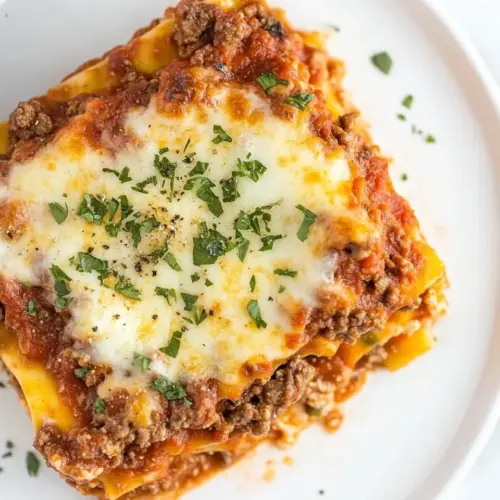
Classic Beef Lasagna
Classic Beef Lasagna is a creamy, cheesy, and savory layered casserole that combines tender ground beef, rich tomato sauce, and creamy ricotta cheese for an easy weeknight dinner or a crowd pleasing family meal. With bubbling mozzarella cheese on top and well seasoned layers inside, it offers comforting textures and flavors that make it worth the time to assemble.
Equipment
- Large Nonstick Skillet
- 9 x 13 inch casserole dish
- Mixing Bowl
- Oven
Ingredients
- 1 1/2 pound s85 to 90% lean ground beef Brown and crumble to provide a hearty, savory foundation and primary protein for the lasagna; cooks until no pink remains and releases flavorful browned bits that enrich the sauce. Combine with aromatics and tomato elements to form a robust meat sauce that layers between noodles. Adjust cooking time to render excess fat and concentrate beef flavor.
- 2 medium onions, chopped Chop finely and sauté to build sweet, aromatic depth and a tender texture that complements the meat; cooks until translucent to release sugars that balance acidity. Add early in the sauce-making process so the onion melds with garlic and tomatoes. Avoid overbrowning to prevent bitterness while still achieving a caramelized base.
- 6 medium garlic cloves, crushed Crush and mince to impart pungent, savory warmth and aromatic lift that enhances the meat and tomato flavors; add during sautéeing for best flavor release. Distribute evenly through the sauce to provide consistent garlic presence in every bite. Adjust quantity for preferred intensity without overpowering other seasonings.
- One 28-ounce can tomato sauce Simmer to create the primary tomato base and body of the sauce, offering rich umami, acidity, and moisture for layering. Combine with cooked beef, aromatics, and seasonings to form a cohesive, saucy filling for the lasagna. Reduce gently if a thicker consistency is desired before assembling.
- 4 tablespoons tomato paste Stir in concentrated tomato richness and body to deepen color, sweetness, and savory intensity of the sauce; dissolve into the tomato base for uniform flavor. Use sparingly to avoid over-thickening while bolstering tomato character. Blend thoroughly to prevent pockets of paste in the layers.
- 1 tablespoon Italian seasoning Season evenly to provide a balanced Mediterranean herb profile that complements tomatoes, beef, and cheeses; add to the sauce during simmering for integrated flavor. Use as part of the overall seasoning strategy rather than relying on it alone. Taste and adjust proportionally with salt and pepper.
- 1 1/2 teaspoons granulated white sugar Balance acidity and reduce sharpness by adding subtle sweetness to the tomato sauce, smoothing flavors and enhancing overall palatability. Dissolve into the simmering sauce so it melds with herbs and tomato components. Use judiciously to avoid an overly sweet profile.
- 1 1/4 teaspoons salt Enhance savory depth and control overall seasoning by seasoning the sauce components and ricotta mixture as needed; sprinkle during sauce preparation and tasting. Ensure even distribution to avoid unevenly seasoned layers. Adjust incrementally, remembering cheeses contribute saltiness.
- 1/2 teaspoon freshly ground black pepper Brighten and contrast flavors with freshly cracked spice to provide mild heat and complexity; add to the sauce with salt and other seasonings. Grind to taste for fresher aroma and better flavor than preground pepper. Use sparingly to support rather than dominate other flavors.
- 30 ounces ricotta cheese Combine and mix to form a creamy, rich cheese layer that contributes moisture, tang, and a smooth texture between noodle layers; fold with egg, parsley, and seasonings for structure. Spoon evenly across noodles to create a consistent, luscious bite. Opt for full-fat for best texture and mouthfeel.
- 8 ounces shredded mozzarella cheese Melt evenly to create stretchy, gooey topping and interlayer cheese pull; sprinkle between layers and over the final bake for desirable browning. Use pre-shredded or shred from a block for fresher melt characteristics. Distribute to achieve balanced cheesiness without overwhelming the filling.
- 1/4 cup grated Parmesan cheese Grate finely and sprinkle to introduce nutty, salty complexity and help create a golden, savory crust when baked; incorporate into cheese layers and top for accent. Use high-quality aged Parmesan for more pronounced umami. Mix with other cheeses for melded flavor.
- 1/4 cup minced fresh flat-leaf parsley Mince finely and fold into the cheese mixture to add fresh herbaceous brightness and a subtle vegetal note that lightens richness; sprinkle between layers for consistent flavor. Use fresh parsley for best color and aroma. Adjust amount based on preference for herbal emphasis.
- 1 large egg, lightly beaten Beat lightly and incorporate to bind the ricotta mixture, adding structure and helping the cheese set during baking for cleaner slices. Mix thoroughly with ricotta, herbs, and seasonings for cohesive texture. Avoid overbeating which can make the mixture too loose.
- 1 1/2 teaspoons dried Italian seasoning Season dried herb blend to further reinforce Italian-style flavors in the cheese mixture or sauce; add during mixing for integrated herbal notes. Use in moderation to complement, not overpower, fresh herbs. Consider this as a secondary seasoning layer for consistency.
- 1 1/4 teaspoons salt Season to control saltiness and enhance overall flavor harmony within the cheese mixture and sauce; add measured amounts while tasting to prevent oversalting. Remember that many cheeses contribute additional salt, so adjust accordingly. Distribute evenly for uniform seasoning.
- 1 teaspoon garlic powder Season powdered garlic to provide consistent, mild garlic flavor within the cheese mixture where fresh garlic may be less suitable; fold in with other cheese ingredients. Use as a background flavor enhancer rather than the primary garlic note. Combine with fresh garlic used in the sauce for layered garlic complexity.
- 1/4 teaspoon freshly ground black pepper Season ground spice to add subtle warmth and complement black pepper in the sauce and cheese layers; incorporate into the cheese mixture for balanced seasoning. Use sparingly to avoid noticeable spice pockets. Blend thoroughly for even distribution.
- 16 ounces lasagna noodles Cook and layer to serve as the structural starch component that separates cheese and sauce layers; boil or use no-boil varieties as directed to reach tender-but-firm texture. Arrange evenly and overlap slightly to prevent gaps while allowing sauce to moisten them during baking. Choose thickness appropriate for desired mouthfeel.
- 4 ounces shredded mozzarella cheese Sprinkle additional shredded cheese to boost melty cheesiness and enhance top and inner layers with creamy texture and mild flavor; use as a finishing layer for extra stretch. Distribute evenly to avoid clumping and achieve uniform browning. Combine with Parmesan for more complex flavor.
- 2 tablespoons grated Parmesan cheese Grate to add concentrated salty, nutty finish when layered or sprinkled on top, supporting mozzarella with sharper umami notes and promoting a golden crust. Use sparingly to balance rather than dominate the milder cheeses. Freshly grated yields best melt and flavor.
- 2 tablespoons minced fresh flat-leaf parsley, for garnish Mince and garnish to introduce a final burst of fresh herb aroma and visual color contrast that lightens and brightens the finished lasagna; sprinkle over slices just before serving. Use fresh parsley for optimal flavor and appearance. Adjust garnish amount to taste.
Instructions
- In a large, nonstick skillet, add the ground beef and onion and sauté over medium-high heat. Cook until the meat is browned, about 5 to 7 minutes, stirring occasionally to break up the meat. Add the garlic and cook 1 minute more, stirring constantly.: You will notice the sound of the ground beef hitting the hot pan, a lively sizzle that signals flavor development. As the meat browns, small brown bits will stick to the pan, contributing deep savory notes once deglazed. Stir occasionally to break up clumps so the pieces brown evenly; this promotes a meaty texture in the final lasagna. The aroma shifts from raw to nutty and caramelized as the onion becomes translucent. Watch for gray patches to disappear and for a consistent golden brown color on the meat, which usually takes about five to seven minutes. A common mistake is crowding the pan, which causes steaming instead of browning, leaving the meat pale and less flavorful. If it seems greasy, tilt the pan and spoon off excess fat, or use a paper towel briefly to blot; you want savory juices, not a slick puddle.
- Turn the heat down to medium-low. Stir in the tomato sauce, tomato paste, dried Italian herb seasoning, sugar, salt, and black pepper. Bring to a boil, and then put a lid on the skillet, keeping it ajar. Turn the heat down to simmer and cook 5 minutes, stirring occasionally. Remove from the heat and cool slightly.: During this stage you should hear steady sizzling and smell rich, toasty notes. Breaking the meat into small crumbles ensures even seasoning and that every layer carries the beef essence. The visual cue is when juices turn from pink to clear and the surface develops a mahogany tint. This step builds the foundation for the sauce, because those browned bits provide concentrated flavor. Avoid stirring too frequently which prevents proper browning; gentle, periodic stirring is best. If you end up with too much liquid, increase heat briefly to evaporate it, but be careful not to scorch the pan.
- In a large bowl, stir together all of the ricotta ingredients.: When you add the crushed garlic , it will hiss softly as it hits the hot fat, releasing a bright, aromatic note. Stir constantly to avoid the bitter bite that burned garlic can impart. Within a minute the garlic will soften and become fragrant but not browned. The scent will quickly shift to an inviting garlicky warmth that enhances the meat. Don’t let the garlic go past that point, or you will introduce bitterness to the whole dish. If you do overcook it, remove any dark bits and consider adding a splash of tomato sauce to mellow the harshness.
- Preheat the oven to 375 F.: Lowering the heat transitions the cooking from rapid browning to gentle melding. The sizzle softens and the pan will emit a calmer, deeper aroma as the next ingredients integrate. This temperature change prevents the tomato components from scorching and allows the flavors to marry more harmoniously. A frequent error is keeping the heat too high, which can cause the sauce to reduce unevenly or stick to the pan. Adjust the flame so you see a gentle simmer rather than an aggressive boil.
- Spread 3/4 cup of meat sauce evenly in the bottom of a 9 x 13-inch casserole dish. Arrange 4 to 5 lasagna noodles on top of the meat sauce. Spread 1/3 of the ricotta mixture on top of the noodles. Spread 1/4 of the meat sauce on top of the ricotta layer. Repeat this layering process 2 times.: As you combine the tomato sauce and tomato paste with the meat, the mixture will thicken and the aroma becomes warm and tomato rich. The paste adds concentrated body, making the sauce cling to the meat and later to the noodles. Dried herbs will rehydrate in the sauce, releasing their fragrant notes, while the sugar softens acidity and salt amplifies all flavors. Stir thoroughly until the paste is fully incorporated and you see a uniform color, which signals an even flavor base. A mistake here is adding too much seasoning at once; taste after a few minutes of simmer and adjust gradually.
- Arrange 4 to 5 lasagna noodles on top. Spread the remaining 1/4 of the meat sauce on top of the noodles. Sprinkle the 4 ounces shredded mozzarella and 2 tablespoons parmesan on top.: Bringing the sauce briefly to a boil signals that all ingredients are interacting and will jumpstart reduction. Setting the lid ajar traps some steam, which helps meld flavors while preventing a vigorous boil that could splatter. You will see gentle bubbling and smell a rounded, cooked tomato scent as the ingredients begin to marry. Keep a close eye so it does not foam over, which indicates the heat is too high.
- Cover with foil and bake for 50 minutes. Remove the foil and cook for 5 to 10 minutes more. Remove from the oven and sprinkle fresh parsley on top, to garnish.: Simmering mellows the sauce and deepens the flavor. You may notice the sauce darkening slightly and thickening as water evaporates. Stir occasionally so nothing clings to the pan and the sauce reduces evenly. This short simmer lets the herbs bloom and the garlic lose any raw edge. Overcooking at this stage could overly concentrate salt or dry out the mixture, so five minutes is sufficient for this recipe.
- Remove from the heat and cool slightly: Letting the sauce cool a bit makes it safer to layer and helps prevent the filling from becoming runny when assembled. You will feel warmth rising when you lift the lid, and the aroma will be more settled and integrated. Cooling also prevents the ricotta mixture from curdling or loosening when combined. Resist the temptation to layer piping hot sauce directly into the casserole, as it can create a watery final texture.
- In a large bowl, stir together all of the ricotta ingredients: Mixing the ricotta cheese with the beaten egg , grated Parmesan cheese , minced parsley , dried Italian seasoning, salt, and garlic powder yields a cohesive, creamy filling. The texture should be smooth and slightly fluffy, not runny. The egg helps set the ricotta during baking, while the parsley adds freshness. Taste a small spoonful to check seasoning; ricotta can be mild, so ensure it is properly salted to match the sauce. Overmixing can make the ricotta dense, so fold until just combined.
- Preheat the oven to 375 F: Setting the oven to 375 F readies the environment for even baking. You will hear the oven start and, if you place a tray inside, feel the steady warmth circulate. This temperature encourages the interior to heat through while giving the top cheese time to melt and brown without drying the center. It’s important to confirm oven temperature with an oven thermometer if your oven runs hot or cold to avoid under or over baking.
- Spread 3/4 cup of meat sauce evenly in the bottom of a 9 x 13 inch casserole dish: A thin base layer of sauce prevents the noodles from sticking and provides immediate savory flavor at the bottom edge of every slice. Use the back of a spoon to smooth the sauce, ensuring even coverage. You should see a thin glossy layer that will absorb into the first noodles. Skipping this step risks the bottom noodles drying and sticking to the dish.
- Arrange 4 to 5 lasagna noodles on top of the meat sauce: Lay the lasagna noodles so they slightly overlap and cover the sauce. The noodles should be flexible but not fragile; if they crack, you can overlap them more. Smooth them flat to create an even platform for the ricotta layer. If using no boil noodles, make sure the sauce is slightly looser to provide enough moisture for them to cook through during baking.
- Spread 1/3 of the ricotta mixture on top of the noodles: Spoon the ricotta filling into dollops and gently spread to an even layer, leaving a small border so the sauce and cheeses can mingle at the edges. The texture should be creamy and cohesive, and you will notice a cool, creamy contrast to the warm sauce below. Avoid pressing too hard which can compress the layer and make the texture dense.
- Spread 1/4 of the meat sauce on top of the ricotta layer: Apply a quarter of the meat sauce in an even layer over the ricotta, ensuring the flavors alternate in every bite. The sauce will slightly seep into the cheese, marrying the layers; visually you should see distinct strata. If the sauce looks too thick to spread well, spoon it carefully and pat it into place rather than dragging which can mix layers prematurely.
- Repeat this layering process 2 times: Repeating builds height and ensures consistent distribution of flavors. Each repetition should mirror the first, creating alternating ribbons of pasta, cheese, and sauce. The visual cue is a tall, even casserole that holds together when cut. Avoid assembling too tightly which can prevent even baking and result in a gummy interior.
- Arrange 4 to 5 lasagna noodles on top: Finish the layering with another sheet of noodles to cap the interior. Smooth them so they cover the top filling evenly, creating a canvas for the final sauce and cheese. These top noodles will absorb some moisture and become tender while baking, so ensure they lie flat for uniform texture.
- Spread the remaining 1/4 of the meat sauce on top of the noodles: Distribute the final portion of sauce across the top, covering the noodles completely. This ensures the top layer is flavorful and prevents the noodles from drying out. An even, glossy layer signals readiness for the cheese topping.
- Sprinkle the 4 ounces shredded mozzarella and 2 tablespoons parmesan on top: Scatter the remaining mozzarella cheese and grated Parmesan cheese to form a cheesy crown that will melt, bubble, and brown. You will see the cheeses create a uniform layer that turns golden during baking, offering contrast in texture. Don’t pile too much, which can create a greasy top; instead, aim for even coverage.
- Cover with foil and bake for 50 minutes: Tent the dish with foil to trap steam, allowing the interior to heat through without the top over browning. During this time you will hear gentle oven hum and later observe bubbling at the edges where sauce peeks through. This long covered bake ensures the egg in the ricotta sets and the noodles cook evenly. A common error is sealing the foil tightly to the dish which can stick to the cheese; tent it slightly to avoid this.
- Remove the foil and cook for 5 to 10 minutes more: Uncovering lets the cheese surface brown and develop a slight crisp. Watch for a golden color and little browned bubbles, which are the visual cues of doneness. The additional minutes concentrate the top flavors and add texture contrast. Avoid leaving it uncovered too long which can dry the edges.
- Remove from the oven and sprinkle fresh parsley on top, to garnish: After the lasagna rests briefly out of the oven, sprinkle the minced parsley for a bright finish. Resting lets juices settle so the lasagna slices cleanly, and the fresh herb adds a pop of color and a hint of freshness against the rich layers. Cutting too soon often leads to a loose, collapsing slice, so allow five to ten minutes before serving.
Notes
- Brown the beef thoroughly: Proper browning develops deeper flavor through Maillard reaction, so cook until the meat has a rich color and small browned bits form. This is the foundation of a rich sauce and prevents a bland final dish.
- Drain excess fat: If your ground beef releases a lot of fat, drain most of it to prevent a greasy casserole. Leaving a little fat preserves flavor but too much will make the lasagna heavy and oily.
- Toast the tomato paste: Cooking the tomato paste for a minute with the meat brings out a sweeter, more roasted tomato note. This step reduces acidity and adds complexity to the sauce with no extra ingredients required.
- Season the ricotta: Taste and adjust the ricotta cheese mixture before assembling, because it can be bland. Adding the right amount of salt, pepper, and herbs ensures the interior layers are as flavorful as the sauce.
- Use an oven thermometer: Ovens vary, so an oven thermometer helps maintain the correct 375 F temperature for even baking. This prevents undercooked centers or overly browned tops.
- Let it rest before slicing: Allow the lasagna to sit for five to ten minutes after baking so juices redistribute. This makes for neater slices and a better plated presentation.