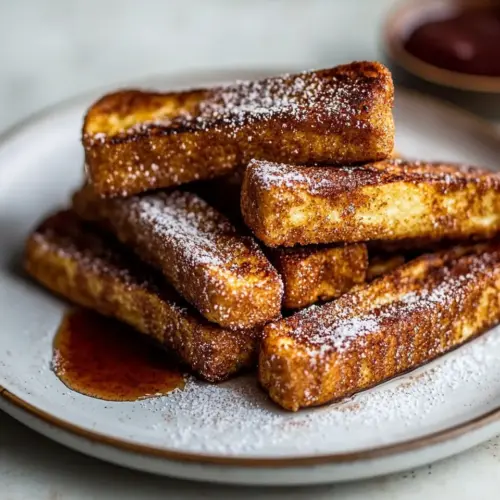
Cinnamon Sugar French Toast Sticks
Cinnamon Sugar French Toast Sticks are warm, crispy edged and soft centered breakfast sticks with browned butter and a cinnamon sugar coating, easy to make and perfect for feeding a crowd. They deliver a comforting, slightly spiced aroma and are an ideal easy weekend breakfast or brunch treat to share, giving you a quick, crowd pleasing reason to make them.
Equipment
- Baking Sheet
- Parchment Paper
- Medium Bowl
- Small Bowl
- Medium Pot
- Serrated Knife
Ingredients
- 12 slices thick cut, soft whole grain bread or brioche bread Layer and cut into sticks to create the base for the french toast; provides structure and soaks up the custard while offering a tender, slightly chewy texture when cooked.
- 1 1/2 cups whole milk or nut/seed based milk Enrich and thin the egg mixture to ensure even soaking of the bread; contributes creaminess and helps create a custardy interior when the sticks are cooked.
- 4 large eggs Bind and thicken the custard mixture so it clings to the bread; adds richness, helps with browning, and creates a golden exterior when fried.
- 1 tablespoon vanilla Enhance aroma and deepen flavor in the custard with a floral vanilla note; balances sweetness and complements cinnamon and maple.
- 1 tablespoon maple syrup, plus more for serving Add a subtle sweet complexity to the custard and help caramelize the surface; extra for serving to amplify sweetness and depth.
- 1/4 teaspoon freshly grated nutmeg Provide warm, aromatic background spice to the custard; contributes complexity and a hint of seasonal warmth that pairs with cinnamon.
- 1/2 teaspoon kosher salt Season the custard to balance sweetness and enhance overall flavor; helps highlight the bread and spices without making the mixture taste flat.
- 6 tablespoons salted butter Melt and brown in the pan to crisp the exterior and add a rich, savory-sweet finish; contributes to golden color and a luscious mouthfeel.
- 1/2 cup granulated sugar Coat the finished sticks to deliver a crunchy, sweet shell that contrasts the custardy interior; dissolves slightly for a pleasant granulated texture.
- 1 tablespoon cinnamon Flavor the sugar coating with warm spice and tie the profile together; provides the signature cinnamon taste that defines these french toast sticks.
Instructions
- Preheat the oven to 350 degrees F. Line a baking sheet with parchment paper. Cut each slice of bread into 1 inch wide "sticks". In a medium bowl, whisk together the milk, eggs, vanilla, maple, nutmeg, salt, and 1 tablespoon melted butter. Dip each breadstick into the egg mixture and toss to coat. Remove, allowing any excess to drip off back into the bowl. Place on the prepared baking sheet. Repeat with the remaining bread. Bake for 10 minutes, flip and bake 10-15 minutes more, or until lightly golden. Meanwhile, add the remaining 5 tablespoons butter to a medium pot set over medium heat. Allow the butter to brown lightly until it smells toasted and nutty, about 2-3 minutes. Remove from the heat. In a small bowl, combine the sugar, and cinnamon. Brush each french toast stick with browned butter and then sprinkle with cinnamon sugar…or toss to coat for extra sweetness. Serve warm with maple syrup.: As the oven warms you will notice a faint, dry heat rising, which sets the stage for even baking. A fully preheated oven ensures the sticks begin setting at the right temperature so they brown evenly rather than slowly drying out. A common mistake is not letting the oven reach temperature, which can cause soggy centers, so always wait until the gauge reads steady 350 degrees F before baking.
- Line a baking sheet with parchment paper: Parchment provides a nonstick surface and prevents the bottoms from overbrowning, it also makes cleanup effortless and helps the air circulate under the sticks. If you skip parchment the sugar may stick and burn, so avoid that by lining the pan first.
- Cut each slice of bread into 1 inch wide sticks: When you cut bread into uniform sticks they bake at the same rate and soak the custard evenly; visually they also create a pleasing finger food. Use a serrated knife for clean edges, because tearing the bread can cause uneven soaking. Try not to compress the slices while cutting, compression can make the interior dense rather than fluffy.
- In a medium bowl, whisk together the milk, eggs, vanilla, maple, nutmeg, salt, and 1 tablespoon melted butter: The mixture should look homogeneous and slightly frothy, and you will smell the maple and vanilla coming forward. This emulsion is the custard, it coats the bread and creates that tender interior. A mistake here is under whisking, leaving streaks of egg white, which can lead to uneven texture; whisk until smooth.
- Dip each breadstick into the egg mixture and toss to coat: You should see the custard cling to the surface, the sticks becoming glossy with just enough soak to penetrate without collapsing. The tactile cue is a slightly heavy but not soggy feel. Avoid leaving the bread immersed too long, or it will become waterlogged and collapse during baking.
- Remove, allowing any excess to drip off back into the bowl: Letting excess drip prevents puddles on the baking sheet that would steam the bottoms and prevent crisping, and it keeps the custard ratio consistent. Hold the stick vertically for a few seconds so gravity helps remove surplus custard. A common mistake is hurried placement which leaves blobs of custard that can burn on the pan.
- Place on the prepared baking sheet: Space the sticks so hot air circulates between them, this encourages even browning and crisping. If sticks are crowded they steam instead of crisping, leading to limp edges. Ensure they are arranged in a single layer for best results.
- Repeat with the remaining bread: Work steadily so the soaked sticks do not sit too long and become soggy, rotating between dipping and arranging helps maintain consistent texture. I set a rhythm so each stick spends roughly the same time between soak and bake. The mistake to avoid is letting earlier soaked sticks sit uncovered for an extended period, which can lead to drying on the surface.
- Bake for 10 minutes, flip and bake 10 to 15 minutes more, or until lightly golden: During baking you want to watch for a pale golden hue at the edges and a slightly firm center when pressed. The first 10 minutes start the set, flipping ensures both sides develop even color and texture. Overbaking dries the bread, so look for gentle browning rather than deep mahogany; if they brown too fast reduce the oven by 25 degrees F.
- Meanwhile, add the remaining 5 tablespoons butter to a medium pot set over medium heat: As the butter warms you will hear a quiet bubbling and then notice it clarifying, followed by small brown flecks forming and a deep nutty aroma. That toasty scent signals that the Maillard flavors are developing, which is why browned butter is such an impactful finish. The common pitfall is walking away, when butter can quickly go from browned to burnt, so stay attentive and remove it as soon as you smell nuttiness.
- Allow the butter to brown lightly until it smells toasted and nutty, about 2 to 3 minutes: The visual cue is small brown specks collecting at the bottom and a clear, golden liquid forming; the sound becomes quieter as the water cooks off. This process intensifies the flavor, offering a deeper, almost caramel character that pairs beautifully with the cinnamon sugar. If you overcook the butter it will taste bitter, so remove it from heat the moment the aroma shifts to toasted.
- Remove from the heat: Let the browned butter sit briefly so residual heat settles but it stays fluid enough to brush, the aroma will linger and infuse the coating. Resting a few seconds prevents splatter when brushing. Don't leave it too long or it will solidify and be harder to brush evenly.
- In a small bowl, combine the sugar, and cinnamon: The dry mix should be evenly blended so every bite gets a consistent cinnamon kiss, and your hands will soon notice the fine grain of the sugar and the warm spice scent. Mixing them thoroughly avoids clumps and ensures a uniform coating. Skipping proper mixing can lead to pockets of plain sugar or cinnamon heavy bites.
- Brush each french toast stick with browned butter and then sprinkle with cinnamon sugar…or toss to coat for extra sweetness: The browned butter helps the sugar adhere and creates a glossy, crisp finish as it cools. When you brush, you will see the sugar cling and start to glisten, and the aroma becomes pronounced. If you toss the sticks, do it gently so the coating is even without breaking the pieces. A mistake is applying too much butter which causes sogginess, aim for a thin, even layer.
- Serve warm with maple syrup: Warm sticks will be glossy and fragrant, and a drizzle of maple adds a sweet contrast to the cinnamon sugar shell. Serving immediately preserves the crisped edges and warm interior. If you let them sit too long they lose that contrast, so serve promptly for the best experience.
Notes
- Make it richer with brioche Swap the base bread for brioche to add butteriness and a tender crumb that yields an almost custard like center when soaked and baked.
- Use nut milk for a dairy free option Choose a robust almond or oat milk to maintain creaminess while keeping the recipe plant friendly, the subtle nutty notes complement the cinnamon.
- Add citrus to the custard Stir in a small amount of orange zest to the custard mixture for a bright lift that contrasts the sweet coating without changing the core steps.
- Make mini versions for parties Cut the sticks smaller to create bite sized pieces that are perfect for dipping and sharing at gatherings.
- Freeze for easy mornings After baking and coating, freeze in a single layer then store in a sealed container so you can reheat individual portions for a quick breakfast.
- Control sweetness with less sugar Reduce the coating sugar slightly and serve extra maple on the side so each person can sweeten to taste.