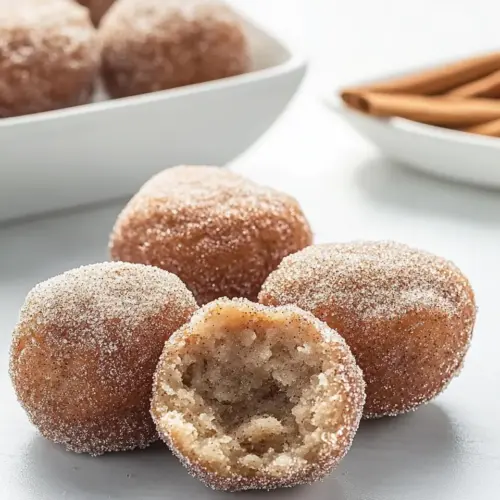
Cinnamon Sugar Doughnut Bites
Cinnamon Sugar Doughnut Bites are tender, spiced little rounds coated in a crisp cinnamon sugar that deliver warm, comforting flavors. These easy to make bites combine buttery richness with tangy buttermilk and aromatic vanilla bean paste, perfect for a quick brunch or cozy snack. Make them for a crowd or a solo treat, they are irresistibly snackable and sure to disappear fast.
Equipment
- Stand mixer
- Paddle attachment
- 12-Cup Muffin Pan
- Wire Rack
- Mixing Bowls
Ingredients
- 1/2 cup (110 grams) firmly packed light brown sugar Adds rich molasses sweetness and moisture to the dough, helping create tender, flavorful bites; firmly pack for accurate measurement and to ensure consistent texture in the finished product.
- 1 cup (200 grams) granulated sugar, divided Provides primary sweetness and structure when creamed or incorporated; dividing the granulated sugar allows part to be used in the batter and part for coating to give a crisp sugary exterior.
- 1 large egg (50 grams), room temperature Binds ingredients together while contributing lift and richness; using a room-temperature large egg ensures even emulsification for a uniform, tender crumb.
- 3/4 cup (170 grams) unsalted butter, melted and divided Contributes deep buttery flavor, moisture, and tenderness; melting and dividing the butter helps incorporate fat evenly and allows part to be used in the dough and part for brushing or finishing.
- 3 tablespoons (42 grams) vegetable oil Adds neutral fat for extra tenderness and a slightly softer bite; vegetable oil helps keep doughnut bites moist and prevents them from becoming dry after baking.
- 1 1/2 teaspoons (9 grams) vanilla bean paste Imparts concentrated vanilla flavor and aromatic flecks that enhance overall taste; using vanilla bean paste yields a more intense, natural vanilla profile than extract.
- 2 1/4 cups (281 grams) all-purpose flour Provides the bulk structure and texture of the bites; all-purpose flour balances protein for a tender yet sturdy crumb suitable for small baked doughnuts.
- 1 teaspoon (3 grams) kosher salt Enhances and balances sweetness while strengthening gluten slightly; kosher salt amplifies flavors without making the bites taste salty when measured properly.
- 1/2 teaspoon (2.5 grams) baking soda Acts as a leavening agent to help the dough rise and create a light interior; measuring baking soda accurately ensures proper reaction with acidic buttermilk.
- 1/2 teaspoon (1 gram) ground nutmeg Adds warm, nutty aromatic notes that complement cinnamon and enhance depth; ground nutmeg should be used sparingly to avoid overpowering the spice blend.
- 1 3/4 teaspoons (3 grams) ground cinnamon, divided Provides warm, woody spice flavor and pairs with sugar for a classic coating; dividing the ground cinnamon lets some flavor be incorporated into the dough and some used for topping.
- 1 cup (240 grams) whole buttermilk, room temperature Contributes acidity and moisture, reacting with baking soda to produce lift and a tender crumb; using whole buttermilk at room temperature promotes even mixing and proper leavening.
Instructions
- Preheat oven to 375°F (190°C). Spray a 12-cup muffin pan with cooking spray.: As the oven warms you will notice a gentle hum and the scent of warming air. This initial heat is crucial, it creates immediate lift when the batter hits the oven which helps form a tender interior and slightly domed top. A common mistake is placing batter in an oven that is not fully preheated, which can result in uneven rise and denser centers. Make sure the rack is centered and the pan is at room temperature to avoid thermal shock that can warp the pan.
- In the bowl of a stand mixer fitted with the paddle attachment, beat brown sugar, 1/4 cup (50 grams) granulated sugar, and egg at medium speed until lightened in color and well combined, 1 to 2 minutes, stopping to scrape sides of bowl. Add 1/4 cup (57 grams) melted butter, oil, and vanilla bean paste; beat until well combined, 1 to 2 minutes, stopping to scrape sides of bowl.: You will see the mixture become paler and slightly fluffier, with the sugars dissolving into the egg, creating a glossy batter base. This step builds air that contributes to a lighter crumb. If you skip scraping the bowl you may end up with pockets of unmixed sugar or egg which can cause uneven texture. Aim for a consistent, smooth paste before adding melted fats.
- In a medium bowl, whisk together flour, salt, baking soda, nutmeg, and 1/4 teaspoon cinnamon. With mixer on low speed, add flour mixture to sugar mixture alternately with buttermilk, beginning and ending with flour mixture, beating just until combined after each addition and stopping to scrape sides of bowl. Divide batter evenly among prepared cups (about 1/4 cup [about 70 grams] each). Firmly tap pan on a kitchen towel-lined counter several times to settle batter and release any air bubbles.: The aroma will shift as the vanilla bean paste releases its fragrance and the fats integrate, resulting in a silky, cohesive batter. The added fat enriches the mouthfeel and helps keep the bites tender. A typical pitfall is adding hot butter that cooks the egg; let melted butter cool slightly before adding to avoid this. When the mixture is homogeneous and slightly glossy you are ready to combine dry ingredients.
- Bake until a wooden pick inserted in center comes out clean, 12 to 18 minutes. Let cool in pan for 5 minutes. Remove from pan, and let cool completely on a wire rack.: Whisking distributes the baking soda and spices evenly, which prevents pockets of unmixed leavening that could create uneven rise or bitter bursts of soda. You should see a uniform pale mixture with tiny specks of spice. If you skip this step, the batter may have streaks of spice and uneven texture. This dry blend sets the stage for gentle incorporation with the wet mixture.
- In a small shallow bowl, place remaining 1/2 cup (113 grams) melted butter.: Alternate addition creates a tender crumb by limiting gluten development, and the buttermilk reacts with the soda to create lift. The batter should become smooth and slightly thick, not runny; it will fall from a spoon in a thick ribbon. Overmixing here is the most common error, which yields a tough texture. Stop mixing as soon as the streaks disappear, and use a spatula to finish if needed.
- In a medium shallow bowl, stir together remaining 3/4 cup (150 grams) granulated sugar and remaining 1 1/2 teaspoons (3 grams) cinnamon. Roll a doughnut in melted butter; roll in cinnamon sugar. Repeat with remaining doughnuts. Serve immediately.: As you fill each cup you can feel the batter's weight, and tapping the pan will flatten peaks and bring bubbles to the surface, which pop and result in a fine crumb. This action prevents large holes inside the finished bites. A mistake is overfilling the cups, which causes spillover and irregular baking. Keep the portioning consistent for even baking time.
- Bake until a wooden pick inserted in center comes out clean, 12 to 18 minutes. Let cool in pan for 5 minutes. Remove from pan, and let cool completely on a wire rack.: During baking you will watch the tops set and blush to a light golden color, and the scent of cinnamon will become pronounced. The toothpick test verifies doneness without overbaking; an overbaked bite becomes dry and mealy, so check early. Cooling briefly in the pan lets the structure firm slightly, then transferring to a wire rack prevents sogginess from trapped steam.
- In a small shallow bowl, place remaining 1/2 cup (113 grams) melted butter.: The melted butter should be warm and silky, ready to help the sugar adhere. The aroma of warm butter enhances the final coating. If the butter is too hot it will melt the sugar quickly and create a gummy finish, while cold butter will not allow the sugar to stick well. Keep it lukewarm and stir to maintain consistency before rolling.
- In a medium shallow bowl, stir together remaining 3/4 cup (150 grams) granulated sugar and remaining 1 1/2 teaspoons (3 grams) cinnamon.: This cinnamon sugar should be evenly mixed so each bite receives consistent flavor and texture. The dry sugar gives the exterior a slight crunch, and the spices provide aromatic warmth. If the cinnamon is clumped, the coating will taste uneven, so whisk until homogenous. Measure carefully to avoid overly sweet or under-spiced results.
- Roll a doughnut in melted butter; roll in cinnamon sugar. Repeat with remaining doughnuts. Serve immediately.: When you dip each cooled bite into the butter you will hear a faint, soft sound as the coating adheres, and the finished surface will shimmer slightly before the sugar settles into a thin crust. Rolling ensures total coverage and that every bite has that crunchy exterior contrasted with the tender interior. A frequent mistake is coating while the bites are too warm, which can cause the sugar to dissolve and create a sticky texture, so ensure they are cool to the touch before rolling. Serve right away to enjoy the full contrast of textures.
Notes
- Portion Consistency: Use an ice cream scoop or a kitchen scale to portion the batter evenly, ensuring uniform bake times and consistent texture across all bites.
- Spice Adjustment: Increase or decrease the cinnamon and nutmeg to taste; a touch more nutmeg adds warm complexity without overwhelming the cinnamon.
- Buttermilk Tip: If you do not have buttermilk, you can quickly make a substitute by stirring 1 tablespoon of lemon juice into 1 cup of milk, letting it rest five minutes; it mimics the acidity and tenderizing effect.
- Butter Handling: Divide the melted butter as directed to control moisture in the batter and provide the perfect coating, keeping some reserved for the final roll.
- Storage: Keep leftover bites in an airtight container at room temperature for up to two days, then refrigerate if you need longer life, bringing them back to room temperature before serving.
- Make Ahead: Bake the bites and store uncoated, then warm and roll in butter and sugar just before serving to preserve the crisp coating.