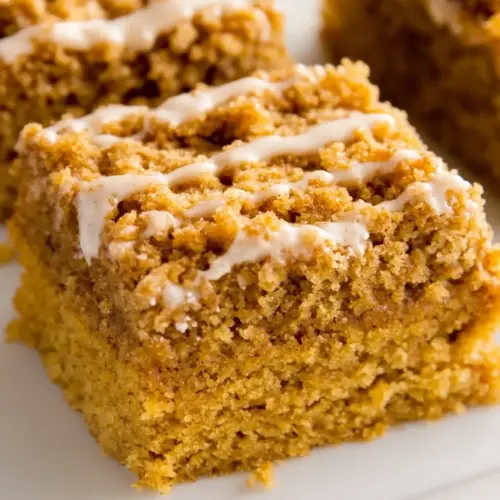
Cinnamon Streusel Pumpkin Coffee Cake
Cinnamon Streusel Pumpkin Coffee Cake is a moist, warmly spiced treat with a crunchy streusel and a sweet icing drizzle. This easy to make coffee cake combines tender pumpkin crumb with aromatic cinnamon for a cozy breakfast or dessert. Perfect for brunches, weekend baking, and holiday gatherings, it offers comforting flavors and simple prep that make it a reliable crowd pleaser.
Equipment
- Mixing Bowls
- 9x9-inch Baking Pan
- Whisk
- Spatula
- Oven
Ingredients
- 2 c flour (250 g) Measure and sift to ensure even texture and proper structure; provides the bulk and framework that holds the cake together while absorbing moisture from wet ingredients. Encourage gentle mixing to avoid overworking gluten and creating a dense crumb.
- 1 1/2 tsp cinnamon Add warm, fragrant spice to the batter and streusel; enhances the warm autumn profile and complements pumpkin while offering subtle depth. Use with other spices to balance sweetness without overpowering.
- 1 1/2 tsp pumpkin pie spice Sprinkle in a balanced spice blend to impart classic pumpkin-pie flavor; contributes aromatic complexity and a seasonal warmth that ties the cake and streusel together. Distribute evenly to prevent pockets of intense seasoning.
- 1/2 tsp salt Season to enhance overall flavors and control sweetness perception; balances the leavening agents and spices while preventing the cake from tasting flat. Dissolve salt into dry mix for even seasoning.
- 2 tsp baking powder Leaven to provide lift and a tender crumb; combines with moisture and heat to create gaseous bubbles that make the cake rise. Ensure fresh leavening for reliable rise and even texture.
- 1/2 c unsalted butter, softened Cream with sugars to incorporate air and richness; contributes moisture, flavor, and tender flakiness to both cake and crumb when softened. Soften to room temperature for proper creaming and even distribution.
- 1 large egg, room temperature Bind and enrich the batter while adding moisture and structure; contributes to emulsification, helping to create a cohesive, tender cake. Bring to room temperature so it mixes smoothly and traps air effectively.
- 1 tsp vanilla Flavor and aromatize the batter; enhances sweetness perception and deepens overall flavor profile with a familiar warm note. Add with wet ingredients to distribute evenly.
- 1/3 c whole milk Moisten and loosen the batter for proper consistency; helps dissolve sugars and incorporate with eggs and butter to create a smooth, pourable batter. Use whole milk for added richness and tenderness.
- 1/2 c brown sugar Sweeten and deepen flavor while adding moisture and chewiness to the streusel or batter; molasses content provides a caramel-like richness that complements pumpkin. Pack slightly when measuring for accuracy.
- 1/4 c white sugar Sweeten and lighten texture in the batter; adds straightforward sweetness and helps with browning during baking. Use granulated sugar to improve aeration when creamed with butter.
- 1 c pumpkin Provide moisture, body, and characteristic pumpkin flavor; contributes tenderness, color, and seasonal taste while adding natural sweetness and moisture to the cake. Puree should be well-drained if overly watery to maintain proper batter consistency.
- 1/2 c flour Add to the streusel to create a crumbly topping; increases bulk and provides a contrasting texture to the cake beneath. Combine with cold butter for a sandy, crumbly mixture.
- 1/4 c unsalted butter, cubed, cold Cut into cold butter to create tender, flaky streusel pieces; cold, cubed butter yields pea-sized bits that create a crisp, buttery topping when baked. Keep chilled until mixing to prevent melting.
- 1/2 tsp cinnamon Add warm spice to the streusel for aromatic lift; reinforces the cake's pumpkin spice profile and ties flavors together between layers. Mix thoroughly into the streusel for even spice distribution.
- 1/2 c brown sugar Sweeten and add chewiness to the streusel; provides depth and a moist, caramelized note that contrasts with granulated sugar and butter. Adjust amount for desired sweetness and texture.
- 1 c powdered sugar Dust and sweeten with a smooth finish; powdered sugar dissolves easily to create a silky glaze that fortifies the cake's sweetness without grittiness. Sift before use to remove lumps for a glossy result.
- 1 tsp melted butter Add richness and help thin the glaze while imparting a buttery flavor; melted butter gives the icing a satiny mouthfeel and slight savory balance to sweetness. Cool slightly before mixing to prevent dissolving powdered sugar excessively.
- 1 – 2 T milk Thin and adjust glaze consistency to desired pourability; milk helps achieve a smooth, spreadable icing that sets with a gentle sheen. Add gradually to control thickness and avoid a runny glaze.
- 1/2 tsp vanilla Flavor the glaze with a final aromatic touch; vanilla deepens sweetness and rounds flavors in the icing, providing a familiar finishing note. Add after liquid to avoid evaporating volatile aromatics during mixing.
Instructions
- Preheat oven to 350°F. Whisk together the flour, baking powder, salt, cinnamon and pumpkin spice for the cake and set aside.: The kitchen should start to fill with a faint warmth that hints at baking to come, and you may notice a slight scent from preheating elements. Preheating ensures even rise and a proper bake, preventing a dense middle. A common mistake is popping the pan into a cold oven, which can lead to uneven texture. Also, position the rack in the center so heat circulates evenly and the top browns without burning.
- In a separate medium bowl, cream the butter and brown and white sugars until creamy and fluffy. Add in the egg, milk and vanilla and beat until incorporated. Add in the pumpkin and mix until combined.: As you whisk, the dry mixture becomes uniform, and you can see pale specks of spice throughout the flour . This even distribution prevents pockets of leavening or spice that would create uneven bursts of flavor. If you skip thorough whisking, you might end up with a dense bite or an overly spiced mouthful. Sift or whisk until the color and texture look consistent; it should smell faintly of warm spices.
- Slowly add in the dry ingredients and beat only until combined. Try not to over mix the batter at this point. Spread the batter evenly into a well greased 9×9 inch baking pan.: When you cream the butter and sugars, you are incorporating air that will help the cake rise and give it a tender crumb. The mixture should lighten in color and smear easily when rubbed between fingers. If it looks grainy or greasy, you either have too cold butter or overmixed. Aim for a pale, fluffy texture to capture the right aeration for the batter.
- Make the streusel topping: Mix the brown sugar, flour and cinnamon to combine. Add the cubed butter. Using a fork or pastry cutter, or fingers, break down the butter until small and crumbly, allowing the flour mixture to coat the little pieces of butter.: At this stage the mixture will smell richer and slightly vanilla forward, and the texture smooths out. The egg brings structure, while the milk loosens the creamed base so the batter blends with the dry ingredients more easily. A common error is adding cold ingredients which can cause the butter to seize; always use room temperature items for harmony.
- Sprinkle the streusel over the coffee cake batter evenly. Bake for about 27-32 minutes or until the crumble topping is golden brown and a toothpick comes out of the center clean.: Folding in the pumpkin introduces moisture and a dense, velvety quality; the batter will darken and smell distinctly of pumpkin. Mix until the color is uniform, but avoid vigorous beating which can make the cake gummy. If the batter feels overly wet, check that you measured the pumpkin accurately and stir gently to retain the desired tender texture.
- Allow to cool for about 10 minutes before adding the icing. Whisk the icing ingredients together, adjusting the milk to desired thickness. Drizzle over top. Serve still warm, or at room temperature.: As the dry mixture disappears into the wet, watch for a smooth, ribbon like batter with no streaks of flour . Over mixing develops the gluten and leads to toughness, so stop as soon as the last flour trace vanishes. A telltale mistake is continuing to mix looking for ultra smoothness, which sacrifices softness. The batter should be slightly thick but pourable for spreading in the pan.
- Store in an air tight container at room temperature for about 2-3 days or refrigerated for about 5-7 days.: Use a spatula to smooth the surface, noticing the batter settle into the corners and the glossy sheen from the butter . Even spreading ensures uniform baking and prevents thinner edges from over browning. If the batter is lopsided, rotate the pan in the oven midway through baking to encourage even color. Overfilled pans will spill and underfilled pans will bake too quickly, so use the recommended size.
- Make the streusel topping: Mix the brown sugar, flour and cinnamon to combine. : The dry streusel mix should smell warmly of cinnamon and feel sandy between your fingers. Combining these ingredients first lets the flavors meld before the cold butter is added. If you skip this step, pockets of unmixed sugar or spice can create uneven flavor. Aim for a uniform sandy texture before adding the cold butter .
- Add the cubed butter. Using a fork or pastry cutter, or fingers, break down the butter until small and crumbly, allowing the flour mixture to coat the little pieces of butter.: As you work, you will see pea sized bits of butter coated in the sugar and flour , which will create crunchy pockets once baked. The sound is a soft crumbling and the texture should be loose. Avoid overworking into a paste, which will produce a dense topping instead of crisp crumbs. If the butter becomes too warm, chill the streusel briefly before topping the cake.
- Sprinkle the streusel over the coffee cake batter evenly.: The streusel should distribute in an even layer, creating contrast between cake and crumb. A visual check ensures you have coverage without piling too much in one area. If it looks sparse, you can lightly press a few crumbs into the batter, but avoid compacting them or they will meld into the cake during baking. Even coverage yields a consistent crunch with each slice.
- Bake for about 27-32 minutes or until the crumble topping is golden brown and a toothpick comes out of the center clean.: As it bakes, you will notice the kitchen filling with a warm, spiced aroma and the top developing an inviting golden color. The edges may pull slightly from the pan when done. Using a toothpick ensures the interior is set, but avoid overbaking which dries the cake. If the top browns too quickly, tent loosely with foil to prevent burning while the center finishes baking.
- Allow to cool for about 10 minutes before adding the icing.: Cooling slightly lets the crumbs set so the icing does not sink in, and the cake will be warm enough that the drizzle softens into glossy ribbons. If you ice while piping hot, the glaze may melt and run off. A common misstep is waiting too long, which causes the glaze to sit thick on top instead of mingling with the warm crumbs. Aim for tepid warmth for best texture.
- Whisk the icing ingredients together, adjusting the milk to desired thickness.: The icing should be smooth and pourable; add milk gradually until you reach a consistency that drizzles but does not puddle. The smell will be sweet and slightly buttery from the melted butter . If the icing is too thin, it will run off; if too thick, it will sit as a heavy layer. Adjust carefully to reach a glossy, clingy glaze.
- Drizzle over top.: The final drizzle adds a sweet, visual finish and a delicate sweetness in each bite. Use a spoon or small pitcher to create irregular lines that look artisanal. Avoid flooding the cake, which drowns the streusel texture and makes the top soggy. The glaze should cling to crumbs and highlight the golden surface.
- Serve still warm, or at room temperature.: Warm slices will have softer crumbs and a more pronounced aroma, while room temperature slices are firmer and easier to slice. Both are delicious depending on preference. A mistake is slicing too soon when hot, which can cause the cake to crumble; wait the recommended cooling time for neat slices.
- Store in an air tight container at room temperature for about 2-3 days or refrigerated for about 5-7 days.: Proper storage keeps the cake moist and preserves the streusel texture as long as it is sealed. If you refrigerate, bring slices to room temperature before serving for the best mouthfeel. Leaving it uncovered leads to drying and a stale crumb, so always use an airtight container.
Notes
- Pan size note: I have tested this pumpkin coffee cake using an 8×8 inch square pan. The cake layer will be thicker and may need about 35 to 37 minutes to bake. Watch the toothpick test so you do not overbake.
- Freezing instructions: You can freeze your coffee cake. Store in an airtight container and thaw within about 2 months. I often freeze individual slices so I can enjoy a single serving later without thawing the whole cake.
- Icing swap suggestion: If you are craving even more pumpkin spice, try adding a pumpkin spice coffee creamer instead of milk into the icing for added warmth and flavor. Start with one tablespoon and adjust for thickness.
- Streusel texture tip: Use a pastry cutter or cold fingers to keep the butter pieces small and cold; this creates a crisp, sandy streusel rather than a paste.
- Storage reminder: Store at room temperature for 2 to 3 days in an airtight container, or refrigerate for up to 5 to 7 days. Bring to room temperature before serving for best texture.