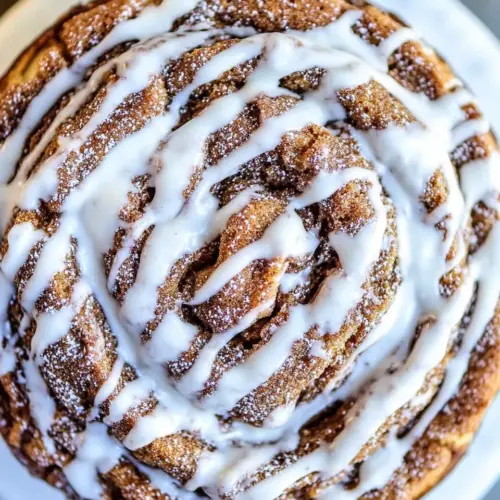
Cinnamon Roll Coffee Cake
Cinnamon Roll Coffee Cake is a tender, cinnamon studded coffee cake with pockets of caramelized brown sugar and a creamy cream cheese glaze. The texture is moist and slightly tangy from sour cream, while the filling gives gooey, cozy bites. It’s an easy crowd pleaser for weekend brunches or casual gatherings, offering bakery style flavor with simple techniques.
Equipment
- Stand mixer
- Paddle attachment
- 9-inch Springform Pan
- Mixing Bowls
- Spatula
- Whisk
- Baking Sheet
Ingredients
- 1/4 cup unsalted butter, softened (half of one stick) Softened to room temperature to cream smoothly with sugar and create a tender, rich crumb; contributes butterfat that enhances mouthfeel and flavor throughout the cake.
- 3/4 cup granulated sugar Granulated sugar provides bulk and sweetness while helping to aerate when creamed with butter, promoting a lighter texture and balanced sweetness in the batter.
- 3/4 cups sour cream, Greek yogurt may be substituted Creamy sour cream adds moisture and acidity to tenderize the gluten for a moist crumb; Greek yogurt can be substituted to maintain tang and thickness.
- 2 large eggs Beaten eggs bind the batter and provide structure through coagulation, adding richness and helping leavening agents create lift during baking.
- 2 tablespoons canola or vegetable oil Neutral vegetable oil contributes extra moistness and keeps the cake tender without affecting flavor, complementing the butter for a soft texture.
- 1 1/2 teaspoons vanilla extract Vanilla extract offers aromatic sweetness and depth, rounding out the other flavors and enhancing the overall aroma of the coffee cake.
- 1 1/2 teaspoons cinnamon Ground cinnamon adds warm, spicy flavor and aroma, contributing key cinnamon-roll character to both the batter and filling layers.
- 1 1/2 cups all-purpose flour All-purpose flour supplies the structure by forming gluten when mixed with liquids; it balances tenderness and strength for a stable cake crumb.
- 1/2 teaspoon baking soda Baking soda acts as a chemical leavening agent that reacts with acidic components (like sour cream) to produce carbon dioxide and lightness.
- 1/4 teaspoon salt, optional and to taste Optional salt adjusts and enhances overall flavor balance, tempering sweetness and brightening other ingredients to improve taste.
- 1/2 cup unsalted butter, extremely soft and almost melted Extremely soft, almost melted butter creates a spreadable filling texture and melts into ribbons that produce tender, buttery layers within the cake.
- 1 cup light brown sugar, packed Packed light brown sugar provides moist, caramel-like sweetness and chewiness in the filling, amplifying depth and a sticky, gooey interior.
- 2 teaspoons cinnamon Additional ground cinnamon intensifies the spiced filling flavor, layering warm notes that mimic classic cinnamon-roll profiles within the cake.
- 2 tablespoons cream cheese, softened (whipped or light are okay) Softened cream cheese adds a slight tang and creamy richness to the frosting or filling, lending a smooth, spreadable texture and flavor complexity.
- 2 tablespoons cream or milk Cream or milk loosens the cream cheese to a spreadable frosting consistency and contributes a touch of dairy richness for a silky finish.
- 1/2 teaspoon vanilla extract Vanilla extract enhances the frosting's aroma and flavor, pairing with cream cheese and sugar to create a balanced, fragrant glaze.
- 1 cup + confectioners' sugar, sifted is ideal Confectioners' sugar sweetens and thickens the frosting, dissolving smoothly into dairy to form a glossy, pipeable glaze that finishes the cake.
Instructions
- Preheat oven to 350 F and prepare a 9-inch springform pan (at least 3 inches high) by spraying well with floured cooking spray (I use Pam for Baking) or grease and flour the pan; set aside.: The air should smell faintly warm and the oven rack will be hot enough to start setting the batter’s exterior right away, which helps the cake rise evenly and develop a delicate crust. Make sure the pan is well greased and floured so the cake releases cleanly later. A common mistake is rushing this step, which can cause sticking; take a minute to coat the sides and bottom thoroughly and tap out excess flour.
- To the bowl of a stand mixer fitted with the paddle attachment, combine butter, granulated sugar, and cream together until pale, light, and fluffy, about 3 minutes on medium-high to high speed.: You will notice the mixture change from glossy to almost aerated, with a paler color and a softer, cloud like texture. This trapped air gives your cake lift, creating a tender crumb. If the mixture seems curdled, it likely means your butter was too warm; chill the bowl briefly and continue beating to recover the texture.
- Add the sour cream, eggs, oil, vanilla, cinnamon, and beat until smooth and incorporated, about 3 minutes on medium-high to high speed.: As you beat, ingredients will emulsify into a silky batter and the aroma of cinnamon and vanilla will bloom. Smoothness indicates proper mixing, while streaks of egg would signal under mixing. Avoid overbeating once the batter is homogenous, because too much air can cause the cake to collapse during baking.
- Add the flour, baking soda, salt, and beat until just incorporated and batter is smooth, about 1 minute on medium speed.: The batter will go from glossy to slightly thicker and will pull away from the sides of the bowl in ribbons. Mixing just until combined keeps the crumb tender; overmixing develops gluten and yields a tougher texture. If you see lumps of flour, fold once with a spatula until they disappear to avoid a dense cake.
- Spread batter into prepared pan; set aside.: The batter should settle into an even layer with a glossy top and slight billow. Use a spatula to smooth the surface so the swirl layer will distribute evenly. A thick peak in the center can lead to uneven baking, so smooth the batter gently to create a level base for the filling.
- In a medium-microwave safe bowl, add the butter and heat on high power until it just begins to melt, about 1 minute.: The butter should be very soft with just-melted edges while still mostly solid, warming the brown sugar without fully liquefying it. This texture helps the filling emulsify with the sugar and fold into the batter. Avoid overheating; fully melted butter can separate and change the filling texture.
- Add the brown sugar, cinnamon, and beat with a spoon or whisk until combined.: You will get a glossy, granular paste that smells intensely of caramel and spice. This paste should be spreadable yet dense enough to hold swirls. If it seems too watery, it may be from overheated butter, and chilling for a few minutes will thicken it back up.
- Spread filling over the top of the cake batter in an even, smooth, flat layer, as if you're frosting a cake. Then, using a table knife, swirl back and forth to marble the filling into the cake batter, going over the cake and going up and back a few times. I swirled fairly aggressively for about 1 minute, in order to try to drive the filling deeper into the cake batter.: The filling should glisten and sit atop the batter. Use a table knife to drag through the filling to create marbled streaks, which lets pockets of caramelized sugar sink in as it bakes. If the filling is too thin, it can seep completely through the batter, leading to an overly moist bottom, so ensure your filling maintains some body before spreading.
- Place pan on a baking sheet (as insurance in case your springform pan doesn't have a perfect seal) and bake for about 45 to 50 minutes, or until topping has set and a toothpick inserted into the center of cake comes out clean. Note that in the final minutes of baking, topping may have a tendency to burn near the edges as the butter browns and the brown sugar caramelizes; watch cake closely.: You will see veins of brown sugar lace through the batter and the surface forming a marbled pattern. The marbling creates pockets of concentrated sweetness once baked. Over swirling can overmix the layers and dilute the distinct swirl, so aim for a few confident strokes rather than frantic mixing.
- Allow cake to cool in pan and rest on baking sheet for at least 30 minutes before glazing it, or before removing it from the pan and serving.: You may catch the scent of caramel as the filling begins to settle into the batter; those deeper pockets will yield gooey centers after baking. Keep an eye on the texture to avoid creating tunnels or air pockets in the batter which can cause uneven baking.
- In a medium bowl, combine cream cheese, cream, vanilla and whisk until combined and smooth.: During baking you will hear almost nothing, but the aroma will intensify and the top will take on a golden brown sheen with caramelized edges. The top should be set to the touch, and a toothpick should emerge clean from the center; sticky residue means it needs more time. A common pitfall is checking too early and opening the oven repeatedly, which causes temperature fluctuations, so resist frequent checks until the last 10 minutes of bake time.
- Slowly add the confectioners' sugar, whisking to incorporate and until smooth. Based on desired glaze consistency, playing with the sugar and cream ratios may be necessary.: You may notice the edges deepen in color faster than the center, and the scent will shift toward nutty, caramel notes. If edges are darkening too quickly, tent the pan with foil for the final 5 to 10 minutes. Leaving it unchecked can yield bitter edges, so vigilance pays off at this stage.
- Evenly drizzle the glaze over cake and serve.: Cooling lets the filling set and prevents the glaze from melting into the cake immediately. The cake will still be warm and fragrant, and the structure firms up so slices hold together. Removing it too soon risks collapse or a gooey center that does not slice cleanly, so patience is essential.
- In a medium bowl, combine cream cheese, cream, vanilla and whisk until combined and smooth: The mixture should be velvety and pale, with a faint tangy aroma from the cream cheese . This base ensures the glaze has body and tang to balance the sweet filling. If the cream cheese is not well softened, you will get lumps, so start with room temperature cheese.
- Slowly add the confectioners' sugar, whisking to incorporate and until smooth: The glaze will thicken as you add the confectioners' sugar , and you can adjust consistency by adding more cream or more sugar. Whisk until silky; a gritty texture indicates insufficient mixing or unsifted sugar. Take care not to overthin the glaze with too much liquid.
- Based on desired glaze consistency, playing with the sugar and cream ratios may be necessary: A thin glaze will spread into crevices and add a sheen, while a thicker glaze gives a creamy ribbon across the top. Consider how you like your texture and adjust, because too thin and it runs off, too thick and it may domeshot when poured.
- Evenly drizzle the glaze over cake and serve: Watch the glaze settle into the marbled grooves, creating glossy highlights over the caramelized swirls. The contrast of warm cake and cool glaze is delightful, and the first bite will contrast tender crumb, gooey pockets, and creamy topping. If you slice immediately, expect a soft interior; letting it rest a short while yields neater slices.
Notes
- Room temperature ingredients: Bring the unsalted butter, cream cheese, and eggs to room temperature so they combine smoothly and create an even batter without lumps.
- Sift confectioners' sugar: Sifting the confectioners' sugar for the glaze prevents grit and helps you control consistency for a silky finish.
- Don’t overmix the flour: Fold or mix the all-purpose flour just until incorporated to keep the crumb tender rather than chewy or dense.
- Watch the final bake closely: As the brown sugar caramelizes it can darken quickly near the edges, so tent with foil if the center needs more time while edges are browning.
- Use a baking sheet under the pan: That catch pan protects your oven from any leaking filling and makes cleanup easier if the springform isn’t leak proof.
- Adjust glaze thickness: Add cream or more confectioners' sugar in small increments to get the glaze you like, whether it’s a thin drizzle or a thicker, creamy coat.