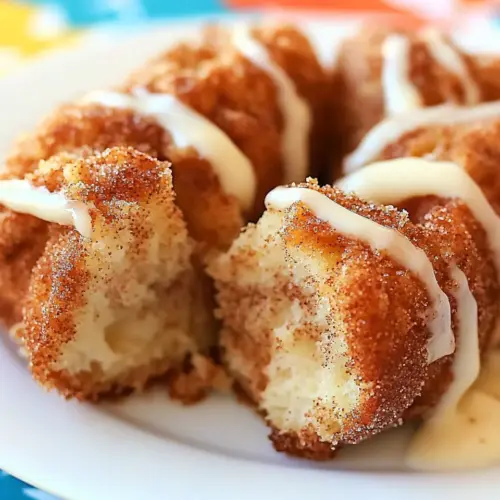
Cinnamon Pull Apart Bread
Cinnamon Pull Apart Bread is a soft, cinnamon layered loaf with a creamy cream cheese glaze, offering a tender crumb and caramelized edges. This easy to share treat delivers warm aromatic spice and sticky glaze, perfect for brunch or a weekend breakfast. Make it for a crowd and enjoy pull apart pieces that vanish quickly.
Equipment
- Mixer
- Microwave-safe Bowl
- Fluted tube pan
Ingredients
- 3 -1/4 cups to 3-3/4 all-purpose flour Measured as a range to adjust dough hydration; contributes structure and bulk to the bread while providing gluten for chew and rise. Use toward the lower end for firmer dough or higher for softer, lighter texture, adding gradually until dough is tacky but not sticky.
- 1/4 cup sugar Provides sweetness to the dough and feeds yeast for fermentation, aiding browning of the crust as it caramelizes during baking. Dissolve into the warm liquid so it incorporates evenly and supports rise and flavor balance.
- 1 packet Fleischmann's® RapidRise TM Yeast Acts as the leavening agent that produces carbon dioxide to raise the dough quickly; formulated for rapid activation at warm temperatures. Sprinkle into the flour or liquid as directed and ensure freshness for reliable proofing and airy crumb.
- 1 teaspoon salt Balances flavor and strengthens gluten network while controlling yeast activity to prevent overproofing; enhances overall dough taste. Dissolve or mix evenly with dry ingredients to ensure even salt distribution throughout the loaf.
- 3/4 cup milk (whole, 2%, 1% OR skim) Adds moisture and richness to the dough while contributing to browning and tender crumb due to milk proteins and fats. Warm slightly before mixing to help activate the yeast and create a smooth, cohesive dough.
- 1/4 cup water Provides additional liquid to hydrate the flour and create the proper dough consistency; helps activate the yeast when combined with milk and sugar. Use warm (not hot) water to encourage yeast activity and ensure proper mixing.
- 1/4 cup butter OR margarine Introduces fat for tenderness, flavor, and softer crumb while improving dough handling and shelf life; solid fats also help create a richer mouthfeel. Soften or melt as specified so it blends uniformly into dough or filling.
- 1 egg Contributes structure, moisture, and richness while aiding emulsification through the yolk's lecithin; supports browning and gives the bread a tender crumb. Beat lightly before adding to ensure even incorporation into the dough.
- 1 cup sugar Used for the sweet filling layer to add pronounced sweetness and help carry the cinnamon flavor, also aiding caramelization in the bake. Mix with cinnamon and butter to form the interleaved filling layers for the pull-apart effect.
- 1 tablespoon Spice Islands® Ground Saigon Cinnamon Supplies warm, aromatic spice that defines the bread’s signature flavor and pairs with sugar in the filling for a classic cinnamon profile. Measure accurately and blend thoroughly with sugar to ensure even distribution in each layer.
- 1/2 cup butter OR margarine melted Provides additional fat and richness for the filling, helping to bind sugar and cinnamon into a spreadable layer; melted form soaks into dough layers for moistness. Apply between dough segments to create distinct, flavorful layers when baked.
- 3 oz cream cheese softened Adds creamy tang and richness to the glaze, giving a slightly tangy flavor and smooth texture that balances the sweetness of powdered sugar. Soften to room temperature so it whips smoothly with butter and sugar for a silky icing.
- 6 tbsp butter softened Contributes a soft, spreadable fat component for the glaze that creates a smooth, rich frosting when combined with cream cheese and sugar. Soften fully to room temperature to prevent lumps and ensure homogeneous mixing.
- 1 tsp vanilla extract Imparts aromatic, sweet vanilla notes to the glaze or dough, rounding out flavors and enhancing the perception of sweetness. Add in small amounts to taste and mix thoroughly for consistent flavor throughout the icing.
- 3 tbsp half and half milk can also be used Provides liquid fat or dairy for thinning the glaze and adding creaminess; useful for adjusting icing consistency to a pourable state. Use to achieve desired glaze viscosity so it drapes over the cooled loaf without being runny.
- 2 cups powdered sugar Sweetens and stabilizes the glaze while creating a smooth, silky texture that adheres to the bread; powdered form dissolves easily for lump-free frosting. Sift before mixing if clumpy and add gradually until the desired thickness is achieved.
- Optional - pinch of salt Optional seasoning to enhance and balance the glaze’s sweetness and the overall flavor profile when included; a small pinch sharpens and rounds flavors. Add sparingly and taste as you go to avoid over-salting.
Instructions
- Combine 2 cups flour, sugar, dry yeast and salt in a large mixer bowl and stir until blended. Combine milk, water and butter in a microwave-safe bowl. Microwave on HIGH in 15 second increments until very warm but not hot to the touch (120° to 130°F. Butter won’t melt completely). Add to flour mixture with egg.: Right away you will notice the warm, slightly sweet aroma from the milk and butter melding with the yeast dusting, which signals gentle activation. I like to run the mixer on low to incorporate the warm liquid slowly so the flour hydrates evenly, creating a tacky batter that will become dough. Watch the temperature carefully, because too hot liquid can kill the yeast and yield a flat loaf; if the bowl feels hotter than warm, let it cool a bit. A common mistake is using water that is too hot, so test it on your wrist before adding. The initial mixture should feel slightly warm and fragrant, not steam hot.
- Beat 2 minutes at medium speed of electric mixer, scraping bowl occasionally. Add 1 cup flour; beat 2 minutes at high speed, scraping bowl occasionally. Stir in just enough remaining flour so that the dough will form into a ball.: As you beat, the mixture shifts from a batter into a more cohesive mass, and you will hear the mixer change tone as the gluten begins to form. Scraping keeps pockets of dry flour from forming, which ensures consistent texture. When the mass cleans the bowl sides and gathers around the paddle or hook, that indicates you are close to the proper hydration. A common error is adding all the flour at once, which can lead to a dry, stiff dough; instead, add gradually until the dough forms a smooth, slightly tacky ball. The dough should feel springy and hold shape when lifted.
- Knead on lightly floured surface until smooth and elastic and dough springs back when lightly pressed with 2 fingers, about 6 to 8 minutes. Cover with a towel; let rest for 10 minutes.: While kneading you will notice the dough becoming silkier and more homogeneous, with faint resistance as gluten strengthens. Pressing two fingers in should leave a gentle indentation that quickly bounces back, a sign of adequate development. Resting allows the gluten to relax, making the dough easier to shape. Avoid overflouring the surface, since extra flour dries the dough and can create a denser crumb. If the dough is sticky after 8 minutes, let it rest covered, which often resolves tackiness as the flour fully hydrates.
- For filling, combine sugar and cinnamon in a shallow bowl.: The mixture should smell intensely of warm spice, and you will see even specks of cinnamon throughout. Mixing the sugar and cinnamon thoroughly ensures every bread piece will have consistent flavor intensity, so take a moment to blend them well. A common slip is using too coarse sugar which may not adhere well; finer sugar works better for a clingy coating. Keep the bowl nearby when you begin shaping so you can work quickly and evenly.
- Cut dough into 36 pieces. Dip each piece into the melted butter and then roll in the cinnamon sugar mixture. Place in fluted tube pan that has been generously sprayed with cooking spray. Combine any remaining butter and sugar and drizzle over rolls. Cover with towel; let rise in warm place until doubled in size, about 45 minutes.: As you cut and dip, you will feel the dough give slightly as it yields to shaping, and the butter will make each piece glossy, which helps the cinnamon sugar cling and caramelize. Arranging the pieces snugly in the pan creates points of contact that lead to those delightful pull apart edges. During the rise watch for the dough to nearly double and become puffy and soft, with a light sheen; that indicates proper proof. Underproofing yields dense centers, while overproofing can collapse in the oven, so avoid extremes. If your kitchen is cool, place the pan near a warm oven or covered with a slightly warm towel to maintain consistent warmth.
- Bake in preheated 375ºF oven for 25 to 30 minutes or until rolls are golden brown. Cool 5 minutes in pan, then invert on serving plate.: While baking, the kitchen will fill with a rich, toasty cinnamon aroma and the top will develop a golden, slightly glossy crust where the sugars caramelize. I look for an even golden color and a hollow sound when tapped lightly on top as cues of doneness. Letting it cool briefly in the pan stabilizes the structure so the loaf keeps form when inverted. Removing too early can cause collapse, so resist the urge to cut immediately. If the top browns too quickly, tent with foil to prevent burning while the interior finishes baking.
- For glaze: Beat cream cheese and butter with a mixer until creamy. Stir in powdered sugar, milk, vanilla and salt. Mix until well combined. If a thinner consistency is desired, add additional milk, one tablespoon at a time. If a thicker consistency is desired, add more powdered sugar, one tablespoon at a time. Drizzle over bread or serve on the side for dipping. Store any remaining glaze in the refrigerator.: Beat cream cheese and butter with a mixer until creamy. Stir in powdered sugar, milk, vanilla and salt. Mix until well combined. If a thinner consistency is desired, add additional milk, one tablespoon at a time. If a thicker consistency is desired, add more powdered sugar, one tablespoon at a time. Drizzle over bread or serve on the side for dipping. Store any remaining glaze in the refrigerator. : The glaze should be glossy and velvety, with a tangy lift from the cream cheese that contrasts the sweet bread. When you drizzle it, it should flow slowly and cling to edges, creating ribbons of sweetness. If the glaze feels gritty, beat it longer or sift the powdered sugar first for a smoother finish. Over thinning makes it run off the loaf quickly, while too thick a glaze will sit like paste, so balance carefully. Refrigerate leftovers to keep the glaze safe, and let it come back to room temperature if you want it more pourable before serving.
Notes
- Use warm liquids: Aim for 120 to 130°F when adding milk and water, because this temperature wakes the yeast without killing it, ensuring a reliable rise and open crumb.
- Adjust flour by feel: Start with the lower flour amount and add just enough to form a smooth, slightly tacky dough; too much flour creates a tough loaf.
- Even coatings: Dip each piece in butter and then into the cinnamon sugar immediately to ensure even coverage and consistent caramelization during baking.
- Pan preparation: Spray a fluted tube pan generously so the loaf releases easily when inverted, preserving the pull apart look and preventing sticking.
- Make ahead: After assembling and placing in the pan, cover and refrigerate overnight for a slow rise that deepens flavor; take out to come to room temperature before baking.