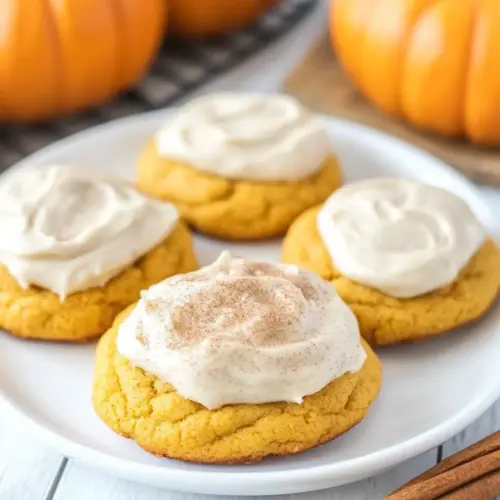
Cinnamon Frosted Pumpkin Cookies
Cinnamon Frosted Pumpkin Cookies are soft, spiced cookies topped with a silky cinnamon frosting, offering a warm, seasonal bite. The recipe is creamy and easy to make, delivering tender texture and aromatic spice perfect for fall gatherings or an easy weeknight treat. Make them for guests or to bake ahead, they freeze well and always disappear fast.
Equipment
- Mixing Bowl
- Measuring Cups
- Measuring Spoons
- Baking Sheet
- Wire Rack
- Spatula
Ingredients
- 1/2 c. shortening Creamy and solid fat that provides tenderness and structure to the cookie dough; helps create a soft, melt-in-your-mouth texture while assisting in leavening through air incorporation when creamed with sugar. Balances moisture and helps carry flavors throughout the batter, contributing to a tender crumb and even browning during baking.
- 1 1/2 c. sugar Granulated sweetener that activates and aerates when creamed with fat, contributing to cookie spread and crisp edges while providing sweetness; also aids in moisture retention. Helps caramelize during baking, giving color and subtle toasted notes to the finished cookie.
- 1 egg Binder and leavening aid that adds moisture and richness, contributing to a tender crumb and cohesive dough; its proteins help trap air for structure while yolk adds fat for flavor. Also enhances browning and contributes a slight custardy flavor which complements pumpkin.
- 1 c. pumpkin Moist puree that provides bulk moisture, natural sweetness, and a soft, tender texture while reducing the need for additional liquid; contributes pumpkin flavor and color. Adds pectin-like structure and helps yield a cakier, more tender cookie compared to plain butter-based cookies.
- 2 1/2 c. flour Dry bulk component that provides structure through gluten development and absorbs moisture to form the dough; contributes to chew and thickness of the cookie depending on mixing. Works with leaveners to support rise and determines final texture from tender to chewy based on handling.
- 1 tsp baking powder Chemical leavening agent that releases gas when heated to help produce lift and a lighter crumb in the cookies; often used to give gentle rise and tender texture. Balances with baking soda to control pH and achieve the desired oven spring.
- 1 tsp baking soda Alkaline leavening agent that reacts with acidic components like pumpkin to produce carbon dioxide for lift, creating a lighter texture and tenderness. Also influences browning and can affect spread and crumb depending on quantity used.
- 1 tsp vanilla Aromatic liquid that enhances and rounds other flavors, adding a sweet floral-vanilla note which complements pumpkin and spices; helps balance sweetness and enrich overall flavor. Small amounts lift and unify the cookie's flavor profile without adding extra moisture.
- 1 tsp cinnamon Warm spice that contributes aromatic cinnamon flavor and depth; enhances the pumpkin's natural sweetness and gives classic seasonal character. Adds warmth and complexity, pairing well with nutmeg and vanilla for a balanced spice profile.
- 1 tsp nutmeg Fragrant spice that provides nutty, warm, slightly sweet tones which deepen the overall spice profile; enhances the cozy, autumnal character of the cookie. Works in combination with cinnamon to create a layered, aromatic spice blend.
- 1/2 tsp salt Flavor enhancer that balances sweetness and strengthens other flavors while controlling the dough's flavor profile; also slightly influences yeast and chemical leavening activity. Helps bring out the spices and pumpkin without tasting overtly salty when used in proper proportion.
- 1/4 c. butter melted Melted dairy fat used in the frosting or glaze to add richness, smooth texture, and a subtle buttery flavor; helps thin and glossy finish when combined with sugar. Aids in achieving spreadable consistency and improves mouthfeel of the topping.
- 1/4 c. shortening Solid fat used in the frosting that contributes structure and stability while creating a spreadable, creamy texture; helps the glaze set and hold its shape. Adds additional richness and can improve the icing's ability to adhere to the cookie surface.
- 1 1/4 c. powdered sugar Finely ground sugar that provides smooth sweetness and structure to frostings and glazes; dissolves easily for a silky finish and helps create a pipeable consistency. When sifted and mixed with fats and liquids, yields a stable, sweet coating that firms on cooling.
- 1 tbsp milk Liquid dairy used to adjust frosting consistency, providing moisture and contributing creaminess while helping powdered sugar dissolve evenly. Allows control over glaze thickness and helps achieve a spreadable, glossy topping.
- 3/4 tsp vanilla extract Concentrated aromatic liquid that strengthens vanilla presence in the frosting, adding depth and a warm, sweet floral note; enhances other flavors in small amounts. Helps balance sugariness and complements pumpkin and spices for a cohesive taste.
- 1/2 tsp cinnamon Warm spice included in the frosting to echo the cookie's spice profile, adding a hint of cinnamon aroma and flavor to the glaze; reinforces the seasonal character. Provides a subtle finishing touch that ties the frosting and cookie together.
Instructions
- Preheat the oven to 375 degrees.: The moment you set the oven to 375 degrees , you will notice the gentle hum and gradual warmth filling the kitchen. A properly preheated oven ensures even rise and predictable browning, and if you skip this the cookies may spread too much or bake unevenly. A common mistake is placing cookies into an oven that is not fully up to temperature, which leads to pale, dense cookies; use an oven thermometer if your oven is inconsistent. You should smell a faint warmth and hear nothing dramatic, but the metal of your baking sheet will be closer to room temperature if you test it before loading. Allow the racks to settle so they are centered for even airflow. I usually set a timer and let the oven come to temperature for a full ten minutes after the indicator clicks, because ovens can plateau briefly before steadying.
- In a large mixing bowl cream together the shortening and sugar. Add rest of the ingredients and mix until combined.: As you cream shortening with sugar , the mixture should lighten slightly and feel airy to the touch when you scrape a spatula across the bowl. That texture helps trap small pockets of air which give the cookie a tender lift. After creaming, add the egg , pumpkin , melted butter , and dry mix, incorporating until the batter looks uniform with streaks of spice distributed. You will notice a soft, slightly glossy batter and the scent of cinnamon and nutmeg will become more pronounced. If you overmix, the cookies may become tough, so stop once the flour is just blended in and there are no dry streaks. A common pitfall is adding hot butter right into the egg mixture which can partially cook the egg, so cool the melted butter slightly before mixing. The batter should fall slowly from the spoon in cohesive dollops rather than being runny.
- Drop by teaspoon onto greased cookie sheet. Bake 10-12 minutes or until edges are golden brown. Let cool on pan 3-5 minutes. Remove to wire rack and let cool.: When you drop batter by teaspoon onto a greased sheet, the pieces should hold a soft mound shape and not flatten immediately. The visual cue to watch for is a rounded top that slightly settles, not a puddle that spreads thin. If your batter spreads too much on the sheet, chill it briefly to firm the fats, which will limit spreading. You will hear quiet, intermittent clinks as the metal pan heats in the oven moments later. For uniform cookies, scoop consistently and leave space between mounds so air can circulate; overcrowding leads to misshapen edges. Greasing is helpful, though I sometimes use parchment for cleaner release.
- For the frosting cream together butter and shortening in mixing bowl. Slowly mix in the rest of the ingredients. Spread over cooled cookies.: During baking you will notice the kitchen fragrance intensify, with the top of each cookie setting and the edges turning a warm golden brown. Look for slightly firm edges and a center that still yields a touch when pressed gently; that indicates a soft interior. The first audible cue is a quiet settling sound as moisture escapes, not sizzling. After removing them from the oven, the cookies continue to cook from residual heat, which is why I let them sit on the pan for 3 to 5 minutes, allowing them to firm up enough to transfer. A frequent error is leaving cookies on the hot pan too long, which can brown the bottoms excessively, so move them to a wire rack within the recommended window. If your cookies seem underbaked, check the next batch and add a minute at a time rather than overbaking all of them.
- For the frosting cream together butter and shortening in mixing bowl.: When creaming melted butter with shortening for the frosting, the texture should become silky and smooth, not curdled. Use room temperature butter that is soft but not melted, and the shortening should be slightly soft as well, which helps achieve a cohesive base for the sugar. The aroma will be rich and lightly buttery, setting the stage for the powdered sugar to bring sweetness. If the fats are too warm the frosting will be runny, and if too cold it will remain lumpy, so aim for a soft, spreadable consistency before adding sugar. A common mistake is rushing to add powdered sugar which can make the mixture dusty and harder to blend evenly.
- Slowly mix in the rest of the ingredients. Spread over cooled cookies.: As you slowly blend in powdered sugar , milk , and vanilla extract , the frosting will thicken and the aroma will change to sweet and fragrant. The sound of mixing is a gentle whir rather than clatter, and the surface should look glossy and smooth without lumps. Begin with small amounts of milk, since the powdered sugar can quickly loosen the frosting; you want a spreadable, pipeable texture that will sit atop the cookie. Frosting warm cookies will cause it to melt and run, so ensure cookies are fully cooled on the wire rack . A typical issue is adding too much milk which yields a runny topping, so correct by adding more powdered sugar to thicken. When spreading, use a small offset or knife and a gentle touch to keep frosting even and avoid tearing the cookie surface.
Notes
- Use consistent scoops: Scoop each teaspoon of batter with the same spoon to ensure even baking and uniform cookie size, which helps with consistent timing across trays.
- Room temperature ingredients: Bring the egg and fats to room temperature for smoother mixing and a more cohesive batter that traps air properly.
- Cool the pan between batches: Allow the sheet to return to near room temperature to avoid early spreading when placing the next set of cookies.
- Adjust oven racks: Position the rack in the center to promote even browning on the top and bottom of the cookies.
- Sift powdered sugar: Sifting the powdered sugar ensures a lump free frosting that spreads easily and appears glossy when set.