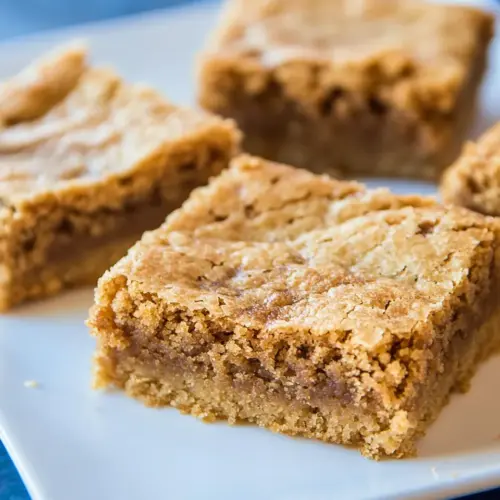
Cinnamon Blondies
Cinnamon Blondies are buttery, warmly spiced bars with a chewy center and a thin golden crust. These easy to make bars highlight packed brown sugar and cinnamon for a cozy flavor, perfect for snacks, brunch, or casual gatherings. Make them for a simple crowd pleaser that stores well and delivers comforting aroma and texture every time.
Equipment
- Mixing Bowls
- Spatula
- 8 inch baking dish
- Wire Rack
Ingredients
- 1/2 cup butter, softened Soften and cream to create a tender, rich base that helps bind sugar and fat for moist blondies; contributes flavor and aids leavening when beaten with the egg.
- 1 cup packed brown sugar Sweeten deeply and add a molasses note that enriches the batter; pack firmly to measure consistently and help produce chewy texture and caramelized edges.
- 2 teaspoons vanilla extract Enhance depth and aroma by adding warm, floral vanilla flavor that rounds out the sweetness; distribute evenly to balance the overall taste profile.
- 1 large egg, room temperature Whisk in at room temperature to help emulsify fats and liquids, providing structure and moisture; beaten egg also aids leavening and gives the blondies a tender crumb.
- 1 -1/3 cups all-purpose flour Provide the primary structure and bulk for the blondies, supplying gluten for chew and crumb; sift or spoon into the cup for accurate measurement and even mixing.
- 1 teaspoon baking powder Lightly leaven to give a modest lift and help create a soft, slightly cake-like texture without making the blondies overly airy.
- 1 teaspoon ground cinnamon Impart warm, sweet-spicy notes that characterize cinnamon blondies; mix into the dry ingredients to distribute the warm flavor throughout the batter.
- 1/8 teaspoon ground nutmeg Add subtle earthy warmth and complexity with a hint of nuttiness, balancing the sweetness; use sparingly to avoid overpowering the cinnamon.
- 1/4 teaspoon salt Season and enhance overall flavor by sharpening sweetness and rounding out spices; ensure even distribution to maintain balanced taste.
- TOPPING: Designate the final finishing layer that will add texture and a burst of flavor contrast when sprinkled on before or after baking.
- 1 -1/4 teaspoons sugar Provide a crunchy, sweet sprinkle that caramelizes slightly when baked or toasted, adding a pleasant contrast to the tender blondie center.
- 1/4 teaspoon ground cinnamon Deliver an extra pop of warm spice on top to reinforce interior cinnamon flavor and create an inviting aroma when baked.
Instructions
- Preheat oven to 350° F and grease an 8-inch baking dish. Cream butter and brown sugar until light and fluffy. Beat in the vanilla. Beat in the egg. In another bowl, whisk together flour, baking powder, spices and salt; gradually beat into creamed mixture. Spread into the prepared pan.: The warm oven smell signals that the environment is ready, and a greased dish ensures easy release. When the oven reaches temperature the heat should feel consistent as you open the door, and the metal pan will feel slightly warm to the touch. Using a glass dish will show bubbling edges sooner than metal, so watch visual cues. A common mistake is skipping greasing, which can make the bars stick; to avoid this, line the dish with parchment for foolproof removal.
- Mix topping ingredients; sprinkle over top. Bake until set and golden brown, 25-30 minutes. Cool completely in pan on a wire rack. Cut into bars.: The mixture will change from dense to airy, and you should hear a gentle, steady whirling as air incorporates. Visually it becomes paler and slightly ribbon like when lifted with a spatula. This step builds structure and depth of flavor as the sugars dissolve into the fat. Overworking at high speed can incorporate too much air and risk a cracked top, so stop when you see a soft, creamy texture.
- Beat in the vanilla: Adding vanilla releases a fragrant note that lifts the batter, and you will notice the aroma deepen immediately. It blends quickly into the creamed base, smoothing the flavor profile. If the vanilla is added when the mixture is too warm, the aroma can dissipate, so keep the butter at softened, not melted, temperature.
- Beat in the egg: As the egg blends in, the batter will look more cohesive and slightly glossy; this emulsion helps with chew and structure. If the egg is room temperature it incorporates seamlessly without curdling. A frequent error is adding a cold egg, which can cause the butter to firm up into lumps; tempering the egg by adding a spoonful of the creamed mixture first prevents that.
- In another bowl, whisk together flour, baking powder, spices and salt; gradually beat into creamed mixture: The dry ingredients should smell faintly of spice when whisked, and adding them gradually prevents flour clouds and over mixing. This technique ensures even distribution of baking powder and cinnamon , which matters for consistent rise and flavor. Avoid vigorous mixing once the flour is added, or the gluten will tighten and make the bars tough.
- Spread into the prepared pan: The batter will be thick and glossy, and smoothing it evenly ensures uniform baking. Use a spatula dipped in warm water for a silky finish if you want a perfectly flat top. An uneven surface can cause thin edges to bake faster than the center, so aim for consistent thickness to avoid an overbaked perimeter.
- Mix topping ingredients; sprinkle over top: Combining the sugar and cinnamon creates a tiny, fragrant dusting that melts partly and crisps during baking, giving that signature sparkle. The aroma of toasted sugar will become evident in the final minutes of baking. Over applying the topping can make the surface too sweet or grainy, so use it lightly for the best contrast.
- Bake until set and golden brown, 25-30 minutes: As the bars bake you will notice the edges pulling away slightly from the pan and the top turning a gentle golden brown, releasing a warm, inviting scent. The center should no longer look wet, though it will remain tender. An inserted toothpick should come out with a few moist crumbs, not raw batter. Opening the oven too often lowers the temperature and lengthens bake time, so resist peeking until at least 20 minutes have passed.
- Cool completely in pan on a wire rack: Cooling allows the crumb to set and finish cooking gently from residual heat, and you will hear a subtle settling silence as steam escapes. The bars firm up and slice cleanly after cooling, which preserves their texture. Cutting too soon is a common mistake that leads to ragged, gooey pieces, so be patient and let them reach room temperature.
- Cut into bars: Use a sharp knife and a confident motion to slice, wiping the blade between cuts for neat edges. The finished pieces should reveal a golden crust with a moist, slightly chewy interior and a sprinkle of topping on each square. If pieces crumble, it usually means they were cut too early or the pan was not greased well enough; chilling briefly can help achieve cleaner slices.
Notes
- Double the recipe: If you need more bars, double the ingredients and bake in a 9x13-inch pan, checking for doneness at about 30 to 35 minutes to account for the larger volume. The center may require a few extra minutes to set, so monitor visual cues rather than relying solely on time.
- Make-ahead and storage: Store cooled bars in an airtight container at room temperature for up to three days, or refrigerate for up to a week. To refresh slightly, warm a piece for a few seconds in the microwave to restore softness and aroma.
- Change the topping: Instead of the simple sugar and cinnamon, try a light sprinkle of coarse sugar for extra crunch. Apply sparingly to avoid overly sweet surfaces and to preserve the balance with the buttery base.
- Adjust spice levels: If you prefer a more pronounced warm profile, increase the cinnamon by a small increment, but avoid adding too much nutmeg as it can overpower the flavor. Small changes go a long way in maintaining harmony.
- Pan choice matters: A metal pan yields crisper edges, while a glass pan bakes more evenly in the center. Choose based on whether you like pronounced edge caramelization or a uniform bake.
- Cutting technique: For clean edges, chill briefly or warm the knife under hot water, dry it, and slice in a single confident motion, wiping the blade between cuts to maintain tidy bars.