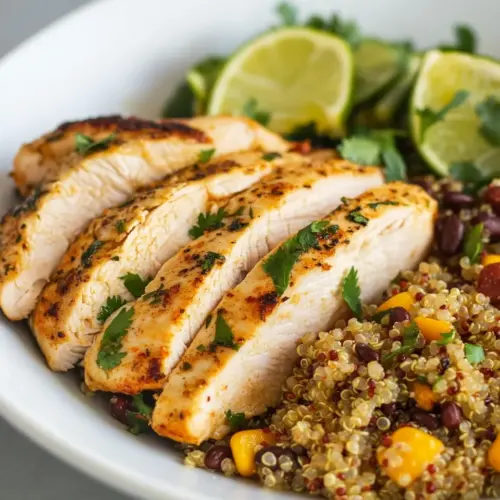
Cilantro Lime Chicken with Mexican Quinoa
Cilantro Lime Chicken with Mexican Quinoa is a bright, easy weeknight dinner that pairs roasted, zesty chicken with a hearty, savory quinoa studded with black beans and tomatoes. The fresh lime and fragrant cilantro keep every bite lively, while the quinoa and beans make it filling and nutritious, perfect for meal prep or casual entertaining.
Equipment
- Baking Sheet
- Foil
- Skillet
- Mixing Bowl
- Fine mesh sieve
Ingredients
- 1 pound boneless and skinless chicken breasts Provide lean protein and serve as the main component of the dish; cook until juicy and slice or dice for serving alongside quinoa, absorbing the cilantro-lime marinade flavors.
- 1 tablespoon olive oil Add healthy fat for cooking and searing the chicken; coat the pan to prevent sticking and help brown the chicken for added flavor and texture.
- 1 teaspoon ground cumin Impart warm, earthy flavor and subtle smokiness; season the chicken and quinoa components to complement the lime and cilantro bright notes.
- 1/2 teaspoon kosher salt Enhance overall seasoning and balance flavors; draw out moisture in the chicken for better browning while bringing out savory notes in the quinoa.
- 1/4 teaspoon crushed red pepper Introduce gentle heat and a touch of complexity; sprinkle into the chicken rub or quinoa to add a mild spicy kick without overwhelming other flavors.
- 2 teaspoons lime zest Provide bright citrus aroma and concentrated lime flavor; zest disperses oils that lift the chicken and quinoa with fragrant, fresh notes.
- 2 tablespoons lime juice Deliver tangy acidity to brighten and tenderize; lime juice marinates the chicken and ties together the cilantro and spices for a lively finish.
- 2 tablespoons cilantro, chopped Contribute fresh herbaceous flavor and a citrusy backbone; chopped cilantro mixes into the marinade and quinoa for green, aromatic freshness.
- 1 tablespoon olive oil Supply additional cooking fat and help sauté aromatics; use to cook garlic and onion for the quinoa and to finish the chicken with a sheen of flavor.
- 2 garlic cloves, minced Offer pungent aromatic depth and savory complexity; sauté until fragrant to build a flavorful base for the quinoa and to season the chicken when combined.
- 1/4 cup red onion, diced Add sharp, slightly sweet onion bite and texture; sauté or fold into the quinoa to provide contrast and a bit of crunch in the finished dish.
- 1 cup quinoa Deliver a gluten-free, protein-rich grain base; rinse and toast if desired then simmer with broth to create fluffy quinoa for the Mexican-style mixture.
- 1 cup chicken broth Provide simmering liquid and savory depth; use low-sodium broth to cook the quinoa, infusing it with rich, balanced flavor without excess salt.
- 15 ounces black beans, can, low-sodium, drained and rinsed Offer additional protein, fiber, and creamy texture when warmed; drain and rinse to reduce sodium and fold into the quinoa for heartiness.
- 15 ounces diced tomatoes, can, low-sodium Contribute juicy acidity and tomatoey body; add canned diced tomatoes to bring moisture, color, and a mild sweetness to the quinoa mix.
- 1 tablespoon chili powder Introduce chili-forward warmth and a classic Mexican spice note; season the quinoa and chicken components for cohesive southwestern flavor.
- 1 teaspoon ground cumin Bring another layer of warm, earthy spice to reinforce seasoning; complement the other cumin addition and deepen the savory profile.
- 1/2 teaspoon kosher salt Provide consistent savory seasoning for both chicken and quinoa; ensure balanced saltiness throughout without overpowering other flavors.
- 2 tablespoons cilantro Add fresh herb flavor and brightness; stir into the quinoa or sprinkle on the finished chicken to enhance freshness and visual appeal.
- 1/2 cup avocado, fresh, chopped Deliver creamy texture and mild buttery flavor; fold in fresh chopped avocado just before serving to add richness and a cooling contrast to spices.
Instructions
- Preheat the oven to 400 degrees. Line a baking sheet with foil and spray with nonstick spray. Place the chicken onto the sheet and brush with oil.: As the oven warms, you should hear a soft hum from the heating element and feel the kitchen air shift from cool to warm. Getting the oven fully to 400 degrees ensures the chicken browns on the outside while staying juicy inside, creating a pleasant contrast in texture. A hot oven shortens the baking time and encourages a light crust to form where the oil and spice rub contact the meat. A common mistake is placing the chicken into an oven that has not reached the target temperature; that leads to longer cook times and dryer meat. For even cooking, I make sure the pieces are roughly the same thickness and I place the baking sheet in the center rack. If you have a convection setting, you can reduce the temperature slightly, but pay attention as the external color will develop faster.
- In a small bowl, combine the cumin, salt, red pepper, and lime zest. Lightly coat the chicken with the mixture. Bake for 15 minutes or until firm and cooked through. Sprinkle with fresh cilantro and drizzle the lime juice over top.: The foil reflects heat and makes cleanup simple, while a light spray creates a nonstick surface so the roasted chicken lifts easily. When I line pans, I press the foil flat to avoid pockets where oil can pool, which promotes even browning. Using foil also helps contain any citrus juices that might run off during roasting, preserving a tidy oven. One trap is to use too much spray, which can cause oil to pool and encourage uneven searing. Apply a thin, even coat and place the chicken spaced apart for proper air circulation.
- In a large skillet, heat the olive oil on medium heat. Once hot, add garlic and onion and cook just until soft, about 2 minutes. Stir in the quinoa, broth, beans, tomatoes, chili powder, cumin, and salt. Bring to a simmer. Cover and cook for 20 minutes or until quinoa is tender and the liquid has been absorbed. Stir in the cilantro and avocado.: Brushing each chicken breast with the olive oil gives the surface something to bind the spice mix and helps the meat caramelize. As the oil warms in the oven, it will begin to shimmer and aid in developing a light golden crust. This crust traps juices inside the chicken , aiding tenderness. A frequent error is skipping the oil and dry rubbing spices directly onto cold meat, which can prevent even browning and cause the spices to burn. Ensure uniform oil coverage so every bite benefits from the same textural contrast.
- Spoon onto serving plates with the chicken on top, enjoy!: Mixing the dry spices with the citrus zest releases aromatic oils, and the salt helps these flavors adhere to the chicken . As you rub the blend, the zest's tiny oil droplets will mingle with the spices, forming a fragrant paste. This paste toasts slightly in the oven, intensifying the aroma and deepening the flavor profile. If you grind the spices fresh or zest the lime immediately before use, the scent will be noticeably brighter. Avoid over-salting here because the chicken will concentrate flavors while roasting.
- Lightly coat the chicken with the mixture: When you rub the spice blend onto the chicken , the surface will feel slightly tacky from the oil and zest, which is perfect because it helps the coating cling. This light coating ensures that every bite gets a balanced seasoning without overpowering the meat. If you press too hard or use a heavy hand, the crust can become dense and mask the chicken 's natural flavor. I recommend a gentle but thorough rub so the aromatics remain pronounced without being abrasive.
- Bake for 15 minutes or until firm and cooked through: As the chicken bakes for about 15 minutes, you will notice the surface turn opaque and slightly golden, and the kitchen will fill with citrus and toasted spice aromas. The center should feel firm but springy to the touch, indicating doneness. Using an instant-read thermometer is the most reliable check, aiming for an internal temperature of 165 degrees Fahrenheit. A common mistake is overcooking, which dries the meat, so check a few minutes before the expected finish time. Let the chicken rest briefly after baking so juices redistribute for moist slices.
- Sprinkle with fresh cilantro and drizzle the lime juice over top: The final shower of fresh cilantro and squeeze of lime juice brightens the roasted meat and adds a fragrant pop right before serving. The citrus juice adds a lively acidity that cuts through any residual oiliness, while the herb provides an aromatic green lift. This finishing touch should be done after baking to preserve the cilantro 's vibrancy. Over-chopping or wilting the herb in the oven will mute its fresh character, so add it at the end.
- In a large skillet, heat the olive oil on medium heat: Heating the skillet until the oil shimmers signals it is ready to bloom the aromatics, producing fragrant steam and a faint sizzle when you add the next ingredients. A properly warmed pan prevents sticking and begins flavor building through gentle toasting. Noise from the pan will be a light sizzle, not a forceful crackle, which indicates the right temperature. Avoid overheating, which can scorch the oil and create a bitter base for the quinoa.
- Once hot, add garlic and onion and cook just until soft, about 2 minutes: The moment the minced garlic and diced red onion hit the pan, their aromas intensify and a savory steam rises. Cooking them for roughly 2 minutes softens the onion and mellows the raw bite of the garlic while releasing sweetness. If you cook too long or at too high heat, the garlic will brown and turn bitter, so keep the heat moderate and stir frequently. Softened aromatics form the flavor foundation for the quinoa and help integrate other components.
- Stir in the quinoa, broth, beans, tomatoes, chili powder, cumin, and salt: Adding the quinoa and liquids together creates a simmer where the grain can absorb flavor. The canned black beans and diced tomatoes contribute body and moisture, while the spice additions blend into the cooking liquid to infuse every kernel. As the mixture heats, you will see small bubbles forming at the edges, and the aroma of tomatoes and chili will fill the kitchen. Common pitfalls include adding too much liquid or not rinsing the quinoa; rinsing prevents a dusty aftertaste and keeps the final texture light.
- Bring to a simmer: A gentle simmer is indicated by small, steady bubbles and a soft rolling movement across the surface. Simmering, rather than a vigorous boil, allows the quinoa to hydrate evenly without breaking apart, ensuring a fluffy texture. This stage is crucial for controlled cooking and flavor melding. If you see vigorous boiling, reduce the heat to avoid stirring the grains into mush. Keep an eye on the pan to maintain a calm simmer throughout the cook time.
- Cover and cook for 20 minutes or until quinoa is tender and the liquid has been absorbed: With the lid on, the quinoa steams gently and absorbs the broth and tomato juices, transforming into a tender, slightly fluffy bed studded with beans. Visual cues include a plump, translucent grain and most of the liquid disappearing from the surface. Fluffing with a fork after resting helps separate the grains. A frequent error is uncovering too often to check, which releases steam and can extend cook time. Trust the 20 minutes and check near the end for doneness.
- Stir in the cilantro and avocado: Folding in chopped cilantro and fresh avocado at the finish introduces cool, herbal, and creamy notes that contrast the warm quinoa. The avocado should be gently folded to retain some chunkiness, offering a silky mouthfeel. Adding them off heat preserves their texture and bright flavors. If you stir them in too early, the avocado can soften excessively and the herb will lose its fresh edge.
- Spoon onto serving plates with the chicken on top, enjoy: Arrange a generous portion of the Mexican quinoa on each plate and nestle the roasted chicken on top, finishing with any reserved cilantro or a light squeeze of lime . The contrast between warm quinoa and roasted meat, with creamy avocado punctuating each bite, is deeply satisfying. Watch for overly large portions that can unbalance the plate; aim for harmony in size so each component can be tasted. Serve immediately to enjoy the textural contrasts at their best.
Notes
- Prep mise en place: Measure out spices, zest the lime, and chop the cilantro and avocado before you start cooking so the workflow is smooth and the aromatics go into the pan at the right moments.
- Even thickness for chicken: If the chicken breasts vary in size, gently pound them to an even thickness so they cook uniformly in the oven, preventing dry edges and underdone centers.
- Rinse quinoa: Rinse the quinoa under cold water in a fine mesh sieve to remove the natural coating that can taste bitter and to improve the final texture.
- Check internal temperature: Use an instant read thermometer to pull the chicken at 165 degrees Fahrenheit to avoid overcooking while ensuring food safety.
- Low sodium canned goods: Use low-sodium black beans and diced tomatoes so you can control the final salt level and avoid over-salting the quinoa.
- Add avocado at the end: Fold chopped avocado in just before serving to keep it fresh and creamy rather than mashed into the warm quinoa where it can lose texture.