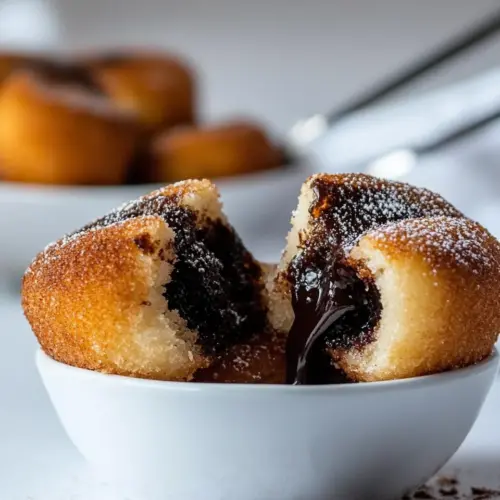
Churro Lava Cakes
Churro Lava Cakes blend crispy cinnamon sugar exteriors with a warm, molten chocolate center for a creamy, crispy dessert experience. This easy recipe uses everyday pantry ingredients for an indulgent finish, perfect for intimate dinners or entertaining. The churro inspired coating adds nostalgic spice while the gooey ganache delivers showstopping texture, making it a must make treat.
Equipment
- Microwave-safe Bowl
- Ramekins
- Muffin tray
- Whisk
- Oven
Ingredients
- 4 oz block chocolate of your choice Melt and temper to create a rich, gooey chocolate center that becomes the molten core when cakes are baked; choose a quality block for smooth texture and deep flavor.
- 1/4 cup canned lite coconut milk or thickened/heavy cream Provide creamy fat and moisture to thin the chocolate when heated, contributing to a silky lava consistency and a tender crumb if incorporated into batter.
- 1 teaspoon pure vanilla extract Enhance and lift surrounding flavors with a concentrated floral note, balancing sweetness and rounding out chocolate and cinnamon aromas in the finished cakes.
- 1 cup plain/all purpose flour Stabilize structure and provide bulk to the batter so cakes hold shape while still allowing a soft, cakey exterior that contrasts with the molten interior.
- 1 tablespoon white sugar, granulated sweetener or coconut sugar Add subtle sweetness and contribute to browning and slight crisping of the exterior; select a preferred granulated sweetener for desired taste and texture.
- 1/4 teaspoons salt Strengthen flavor balance by enhancing other tastes and helping dough development; a small amount prevents blandness and highlights sweetness and chocolate.
- 1/2 teaspoon baking powder Leaven batter slightly to introduce lift and lightness, ensuring cakes rise enough to form a delicate cake shell around the molten center without collapsing.
- 4 tablespoons light butter/spread of choice melted (or canola oil/melted coconut oil) Provide fat for tenderness, richer mouthfeel, and improved browning; melting before mixing ensures even distribution and a smooth batter consistency.
- 1 large egg Bind ingredients together and provide structure through coagulation during baking, while contributing moisture and a richer, slightly custardy texture to the cake.
- 2 teaspoons vanilla extract Impart warm aromatic depth and accentuate other flavors; double vanilla boosts overall sweetness perception and complements chocolate and cinnamon notes.
- 1/2 cup low fat milk or almond milk Contribute liquid for batter consistency and moisture while influencing final texture; choose a lower-fat milk or plant alternative to control richness.
- 1 tablespoon light butter/spread of choice melted Add additional fat and flavor for brushing or folding into batter to increase tenderness, promote browning, and enrich mouthfeel in the finished cakes.
- 1/4 cups sugar of choice Provide a sprinkling of sweetness or dusting for finishing, helping to create a sugary surface contrast that complements the warm cinnamon coating.
- 1 teaspoon ground cinnamon Deliver warm, aromatic spice that defines the churro character; mix with sugar to coat exteriors and give the cakes their signature cinnamon-sugar flavor.
Instructions
- First make the ganache. Break up the chocolate block and combine the chocolate and coconut milk (or heavy cream) together in a microwave safe bowl. Microwave on high for 30 seconds. Stir and heat again for a further 20-30 seconds until cream is hot. Stir again, mixing well to melt the chocolate through the cream. Once ganache is glossy and creamy, stir in the vanilla extract. Cover and place in the refrigerator until set (about an hour).: When the ganache warms and meets hot cream, it releases an immediate aromatic burst of cocoa, and you will notice a glossy surface that thickens as you stir, indicating proper emulsification. The reason we chill it is to firm the center, so the batter can encapsulate a dollop that remains molten but not liquid during baking. A common error at this stage is overheating the mixture, which can make the chocolate grainy or separate, so heat in short bursts and stir thoroughly to maintain smoothness. Listen for a change in texture as you stir, it will go from syrupy to velvety, and visually you want a uniform sheen without streaks. If the ganache seems too thin after chilling, giving it a few extra minutes in the fridge will thicken it without compromising flavor.
- Once ganache has set, preheat oven to 176 C | 350 F. Lightly grease 8 small ramekins (to fit 1/4 cup of batter) or a 12-count muffin tray; wipe over excess with paper towel and set aside.: You will smell the oven warming and feel the anticipation build; a properly preheated oven ensures even rise and a predictable bake time. Greasing the ramekins and wiping away excess prevents a greasy rim which can interfere with the cinnamon sugar adhering later. I always test one ramekin capacity by filling with water to confirm the 1/4 cup volume, that avoids overflowing. A frequent slip is skipping the wipe down, which results in uneven browning and a sticky edge that resists unmolding. Make sure the oven reaches steady temperature before inserting the tray for the most consistent texture.
- In a large bowl, whisk all of the dry ingredients together. Make a well in the centre and add the oil, egg, vanilla and milk. Whisk the batter until smooth and lump free.: As you whisk the dry flour , sugar , salt , baking powder mixture, you will notice a fine, even texture, and the well helps you fold liquids in without overworking. Whisking until smooth ensures the batter is uniform, and a few seconds of sifting or vigorous whisking removes lumps that could disrupt the cake crumb. The goal is a batter that pours easily and envelopes the ganache, so take your time to achieve a glossy, lump free consistency. Avoid overmixing which can create a chewy texture; a common problem is vigorously beating after adding liquid, which activates gluten and makes cakes dense. Your batter should be smooth and slightly thick, but pourable enough to cover the ganache.
- Remove ganache from the fridge; spoon 1 tablespoon of ganache into the centre of each ramekin (or muffin hole); pour 3-4 tablespoons of batter over the ganache to cover.: The first spoonful of ganache will be firmer and glossy; when placed in the ramekin it should sit like a nugget at the center. Pouring batter over it creates a small pocket that will trap the ganache as the cake bakes, enabling that molten core effect. You should be able to see the batter gently settling around the ganache, and the contrast between the pale batter and darker ganache helps with placement accuracy. A typical mistake is adding too much batter, which can bury the ganache too deeply and prevent proper lava flow, or too little, which leads to overexposed ganache. Work confidently but gently so the ganache remains centered and the batter level is consistent across ramekins.
- Bake for 20 minutes, or until they are golden in colour and a toothpick inserted into the sides of a cake comes out clean.: As they bake, the kitchen fills with the scent of warm cinnamon and browned butter if used, and you will notice the edges setting while the centers stay slightly soft and jiggly. The visual cue is a golden exterior with a tender crown, and testing near the side avoids puncturing the molten center. This timing helps the exterior set without cooking the ganache solid, preserving that liquid center you want. A misstep is leaving them in too long, which yields a fully set center rather than a lava core, so err on the shorter end and watch the first batch closely. When removing from the oven, you will often hear a faint sigh as the cakes settle, which is a good indicator they are ready to cool briefly before unmolding.
- Allow them to cool for 5 minutes; loosen the edges of the cakes with a butter knife and transfer them onto a baking tray. Brush each cake over with a light coating of melted butter; combine the sugar and cinnamon together in a shallow bowl; gently roll each cake into the cinnamon sugar mix until evenly coated. (Be very gentle, they are very soft when first taken out of the oven).: The brief cooling period firms the exterior just enough to handle, while the center remains molten. Loosening the edges helps the cakes release cleanly, and brushing with melted butter creates an adhesive surface for the cinnamon sugar blend. Rolling must be done with a delicate touch to avoid tearing a fragile crust; use a gentle touch and steady hands. A common error is trying to unmold while piping hot, which leads to breakage and spills; the five minute rest minimizes that risk and preserves presentation. You should see a warm sheen from the butter and a fine crystalline sparkle from the sugar coating.
- Warm remaining ganache in the microwave (or over stove top) until warm (or to make it liquid in consistency again) or mix in a tablespoon or two of extra milk or cream. Cut a small indent into the tops of each cake, and fill with the ganache.: Reheating the ganache renews its glossy, pourable texture, and the aroma of warm chocolate will deepen as you loosen it. Creating a small indentation enables a neat pool of molten chocolate that enhances the visual drama and flavor contrast. If the ganache is overheated, it can become too thin and run away, so heat in short bursts and stir to reach a velvety consistency. A frequent pitfall is overfilling the cavity, which causes overflow when plated, so aim for a measured spoonful to maintain balance. Serve immediately after filling to preserve the warm, oozing center and the crisp cinnamon sugar shell.
Notes
- Serve with ice cream Warm these cakes slightly and pair with a scoop of cold vanilla ice cream for a classic hot and cold contrast that heightens the molten center experience.
- Vary the chocolate Use a higher percentage dark chocolate for a more bittersweet center or milk chocolate for a creamier, sweeter lava, adjusting sugar in the batter if needed.
- Adjust ganache thickness Chill the ganache longer for a thicker center, or add a tablespoon of milk to loosen it for a dramatic ooze.
- Try alternative coatings Swap the cinnamon sugar for a dusting of powdered sugar or a light cocoa dust for a different final flavour while keeping the churro spirit.
- Make mini versions Use a mini muffin tin to create bite sized portions that are perfect for parties and easier to serve and share.
- Prepare ahead Make ganache and store it chilled, then assemble and bake on the day you plan to serve for fresher lava centers and faster prep.