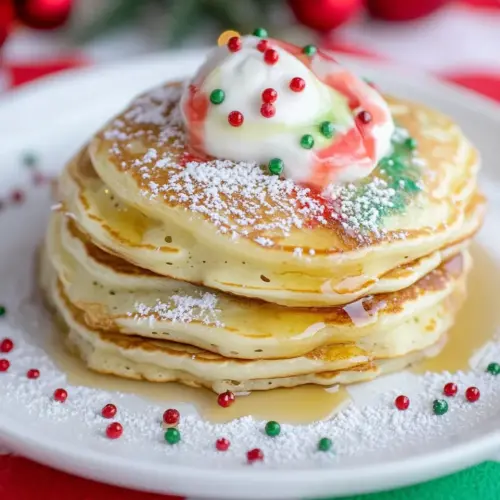
Christmas Pancakes
Christmas Pancakes are a festive, colorful breakfast that combine fluffy, tender batter with joyful Christmas sprinkles, creamy whipped cream, and bright strawberries. This easy recipe produces golden edges, a soft interior, and a playful crunch from the sprinkles, ideal for a holiday morning or easy weeknight brunch substitute. Make them for gatherings to add a cheerful centerpiece to the table.
Equipment
- Mixing Bowl
- Whisk
- Griddle
- Spatula
- Ladle
Ingredients
- 21/4 cups all purpose flour Measure and sift to ensure a light base for the batter; provides structure and bulk to the pancakes while helping them rise evenly when combined with leaveners.
- 1/4 cups sugar Add sweetness and slight browning; helps enhance flavor and caramelization on the pancake surface without overwhelming the batter.
- 4 teaspoons baking powder Leaven and lift the batter for fluffy pancakes; reacts with wet ingredients to create air pockets and soft texture throughout each pancake.
- 1/4 teaspoons salt Balance flavor and enhance other ingredients; a small amount sharpens sweetness and controls overall taste while strengthening gluten slightly.
- 2 cups milk Hydrate the dry ingredients and create the batter; contributes to tenderness and helps dissolve sugar and distribute other components evenly.
- 1/3 cup vegetable oil Bind and add moisture while promoting tender crumb; contributes fat that prevents dryness and helps pancakes brown on the griddle.
- 1 egg, beaten Incorporate protein and additional binding; beaten egg enriches the batter, aids in structure and contributes to a tender, cohesive texture.
- 1 teaspoon vanilla extract Enhance aroma and complement sweetness; vanilla adds a warm, rounded flavor that elevates the overall pancake profile without adding bulk.
- 1/4 cup Christmas sprinkles, plus more for topping Provide festive color and a crunchy contrast; sprinkles add small pops of sweetness and visual interest both in the batter and as a topping.
- whipped cream Add light creaminess and decorative finish; whipped cream delivers airy richness and pairs well with sweet, fruity toppings for indulgence.
- 12 strawberries, tops cut off Garnish with fresh fruit and bright acidity; strawberries add color, freshness and a slightly tart balance to the sweet pancakes and toppings.
Instructions
- In a medium mixing bowl, mix flour, sugar, baking powder, and salt until combined. Add the milk, vegetable oil, egg, and vanilla. Whisk until smooth. Stir in the sprinkles.: You should notice the dry mix look even and slightly powdery, with no pockets of clumped flour or sugar . The aroma will be neutral but slightly sweet from the sugar, and the texture should feel light when you whisk it together. This dry stage ensures the baking powder is evenly distributed so every pancake rises uniformly. A common mistake is to rush and leave lumps of baking powder or dense spots of flour , which causes uneven rise. If you find small clumps, press them through a sieve or break them apart with the whisk before moving on.
- On a hot, greased griddle, ladle the batter into 4-inch pancakes. Once the cakes begin to bubble, it's time to flip. Pancakes are done once each side is golden brown.: As you pour in the milk and vegetable oil , you ll see the mixture darken slightly and start to come together; the beaten egg will add a glossy sheen. The scent of vanilla will rise gently, signaling the batter s aromatic profile. Combine these wet components off to one side before stirring them into the dry ingredients to minimize overmixing. A frequent pitfall is adding hot liquids or too much liquid at once, which can lead to a batter that s too thin; aim for a pourable but slightly thick consistency.
- Keep pancakes warm by covering them with a kitchen towel, placing them in a chafing dish, or in the oven at around 200°F for up to 20 minutes.: The batter should flow steadily from the spoon, with small air bubbles forming on the surface as you whisk. You want a smooth texture, but it s important not to overwork it a long whisk will develop gluten and make pancakes chewy. Listen for the quiet shift from grainy to silky, and stop whisking once the lumps are mostly gone. If the batter is stubbornly lumpy, a few gentle strokes or a quick rest for five minutes will hydrate the flour and help even things out.
- Add a dollop of whipped cream to the center of the pancakes, add a strawberry cut side down, and top with a dot of whipped cream.: When you fold in the Christmas sprinkles , you ll notice bright flecks of color dispersed throughout the batter, offering an immediate festive look. Stir gently so the colors stay localized and do not bleed into the batter too much, preserving points of brightness. Overmixing can cause the colors to melt and tint the whole batter, so fold just until they are incorporated. A typical mistake is using too many sprinkles, which can add extra sugar crunch in an uneven way, so stick to the measured amount.
- On a hot, greased griddle, ladle the batter into 4 inch pancakes: As the batter hits the hot surface, you should hear a soft sizzle, and the batter will spread into neat rounds. Use a ladle for consistent sizes so they cook evenly. The griddle should be hot enough that the pancakes set quickly at the edges but not so hot that they burn; aim for a medium heat where the surface forms small bubbles within a minute or so. One common error is crowding the griddle, which lowers the surface temperature and leads to pale, undercooked centers.
- Once the cakes begin to bubble, it's time to flip: Watch for small bubbles across the top and slightly dry looking edges as your visual cue to flip. When you slide your spatula under the pancake, the underside should be golden brown and slightly crisp. The flip should be confident and swift to avoid deflating the pancake s lift. If you flip too early, the center will be underdone and gummy; if you flip too late, the exterior can become overly dark.
- Pancakes are done once each side is golden brown: After flipping, you ll want to see a warm golden tone rather than a pale or burnt surface. The finished pancakes should spring back slightly when pressed and have a tender, fluffy interior when broken open. The smell will be nutty and sweet, signaling caramelization from the sugar . A frequent misstep is leaving them on the heat too long, which dries them out, so keep a close eye and remove them promptly when done.
- Keep pancakes warm by covering them with a kitchen towel, placing them in a chafing dish, or in the oven at around 200°F for up to 20 minutes: Warm stacks maintain their texture without steaming and becoming soggy. The low oven temperature keeps edges from crisping further while preserving internal moisture. If you pile them directly under a lid, you may trap steam which softens the exterior; use a towel or the low oven for best texture. Avoid storing hot pancakes in a sealed container immediately, which creates condensation and soggy surfaces.
- Add a dollop of whipped cream to the center of the pancakes, add a strawberry cut side down, and top with a dot of whipped cream: The cool, airy whipped cream contrasts beautifully with the warm pancake, and the strawberry adds bright acidity and color. Positioning the berry cut side down creates a stable presentation and a pop of red at the center of the stack. Serve right away so the whipped cream holds its shape; letting it sit will cause it to melt and lose visual appeal. One error to avoid is piping the whipped cream too early, which will melt and flatten before serving.
Notes
- Swap the oil for melted butter, if you want a richer, slightly nutty flavor, use an equal amount of melted butter and allow it to cool slightly before mixing into the batter to avoid cooking the egg.
- Adjust sprinkle placement, for a subtler effect fold half the sprinkles into the batter and reserve the rest to scatter on top of the pancakes as they cook so the colors remain vivid.
- Make mini pancakes, use a teaspoon to drop batter for small, bite sized pancakes that are perfect for assembling a layered tower or serving to children who prefer smaller portions.
- Keep them fluffy, avoid pressing down on pancakes while cooking, as that squeezes air out and results in denser, less tender cakes.
- Prep ahead, you can mix the dry ingredients the night before and refrigerate the wet components separately, then combine and cook the next morning for a quicker start to a holiday brunch.