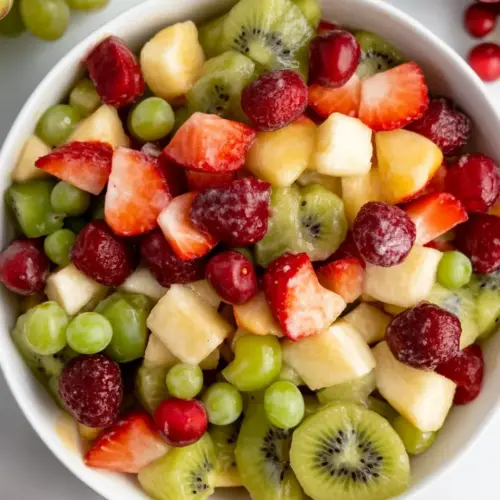
Christmas Fruit Salad
Christmas Fruit Salad is a bright, easy fruit bowl with crisp grapes, tart kiwi, and jewel like pomegranate seeds, finished with a light honey lime drizzle. The mix is refreshing and colorful, perfect for an easy weeknight side or a festive holiday brunch. Make it to add a healthy, crowd pleasing option to your table that disappears fast.
Equipment
- Mixing Bowl
- Serving bowl
- Fork or small whisk
- Spoon or spatula
- Knife
Ingredients
- 4 cups green grapes Provide juicy, sweet base and bulk to the salad; green grapes add hydrating texture and mild flavor that complements tart fruits. Slice or halve for easy eating and even distribution throughout the salad. Hold shape well and contribute pleasant chewiness to contrast softer berries.
- 4 kiwi, peeled and cut into half moons Offer bright, tangy citrusy notes and a slightly firm bite when peeled and sliced; kiwi half moons add vibrant green color and tiny seeds for visual interest. Balance sweetness from grapes and honey with fresh acidity. Provide vitamin C and a pleasant tropical aroma.
- 2 cups quartered strawberries Contribute sweet, fragrant berry flavor and tender texture when quartered; strawberries bring a juicy, meaty component that soaks up lime-honey dressing. Add pop of red color for festive presentation and pair well with raspberries and pomegranate seeds. Enhance overall sweetness while keeping fruit salad light.
- 1 cup fresh raspberries Bring delicate tartness and soft, juicy texture; fresh raspberries add concentrated berry flavor and a slightly seedy bite. Scatter gently to avoid crushing and to maintain visual contrast with larger fruits. Provide antioxidant-rich notes and a subtle perfume to the salad.
- 1/3 cup pomegranate seeds Deliver bright, jewel-like bursts of sweet-tart flavor and a crunchy pop when bitten; pomegranate seeds add festive color and texture contrast. Sprinkle sparingly to distribute bursts of acidity throughout the mix. Intensify the holiday appearance and balance sweetness.
- 1 tablespoon honey Add gentle sweetness and help bind the dressing; honey creates a glossy finish and rounds out tart flavors from lime and kiwi. Whisk with lime juice to form a simple dressing that lightly coats fruit without overpowering natural flavors. Enhance mouthfeel with natural floral notes.
- 1 medium lime Provide fresh acidic brightness and aromatic zest; lime juice and/or zest lift the overall flavor and balance the fruit's sweetness. Squeeze and mix with honey to create a tangy dressing that prevents browning on cut fruits. Offer a clean, citrusy finish that ties the salad together.
Instructions
- In a small mixing bowl combine 1 tablespoon honey with the juice of 1 medium lime. If you find it is hard to mix, heat for 15 seconds in the microwave and mix again.: I love the aroma that rises as the lime is squeezed into the bowl, a bright citrus scent that immediately wakes the senses. The honey melts into the lime creating a silky glaze that gleams when stirred, and that glossy surface is what helps it cling to the fruit instead of pooling at the bottom. When whisking, listen for the quiet rhythm of the fork as the two liquids come together into a smooth emulsion, and you should see no honey lumps. This step matters because proper emulsification ensures the dressing evenly coats each piece, giving balanced flavor in every bite. A common mistake is under mixing so the honey sits on top, which results in uneven sweetness, or using too much lime which can make the dressing overly tart. If the honey is too thick to combine, warm it for a few seconds and mix again to achieve a silky texture.
- In a large serving bowl, combine the prepared 4 cups green grapes, 4 kiwi, 2 cups quartered strawberries, 1 cup fresh raspberries, and 1/3 cup pomegranate seeds.: The small burst of warmth changes the honey from viscous to flowing, releasing more aromatic notes and allowing it to blend readily with the lime juice. You will notice a smoother surface and a slight steam if you heat, so be cautious not to overheat which can scorch the honey. This trick is practical and quick, and it prevents the dressing from separating as it sits on fruit. The why here is simple, temperature affects viscosity, and a warmer mix bonds better. Avoid common error of microwaving too long which can make the honey runny and lose its nuanced flavor.
- Drizzle the honey mixture over the fruit, and gently toss together.: When you add everything to the bowl you will see a vivid mosaic of color and texture, each fruit playing a visual and textural role. The firm green grapes add crunch, while the quartered strawberries and halved kiwi bring juicy, chewable pieces, and the raspberries and pomegranate seeds deliver delicate bursts. The sound of fruit lightly clinking together as you pour them in is oddly satisfying, and the aroma is a layered fruit chorus. This step matters because gentle, uniform mixing depends on the size and preparation of each fruit, ensuring no single flavor dominates. A frequent mistake is overcrowding the bowl and crushing delicate berries, so use a bowl large enough to toss gently without smashing.
- Serve immediately or refrigerate for up to 24 hours before serving.: As the glossy dressing hits the fruit you will see tiny droplets shimmer, clinging to skin and seeds, adding shine and flavor. Use a soft spatula or large spoon, folding from the bottom up to distribute the dressing without pressing out juices, and stop when pieces look evenly glazed. Sensory cues are important here, you want to feel slight resistance as you fold, not a slosh of juice, and the scent should be bright with a honeyed citrus lift. This technique matters because vigorous stirring can break down tender berries and cause a watery salad. Avoid the common mistake of over tossing, which crushes fruit and yields a soggy texture, and if you see excessive juice, fold more gently or serve immediately.
- Serve immediately or refrigerate for up to 24 hours before serving: When served right away the fruit retains its crispness and the dressing sits lightly on the surface, offering fresh texture and lively flavors. If you refrigerate, keep the bowl covered to prevent the fruit from absorbing fridge odors, and expect some softening as juices mingle. The cooling brings out a different dimension, making the salad feel especially refreshing on warm days. This timing matters because extended storage breaks down cell walls in soft fruit, turning the salad mushy, so plan accordingly. A typical mistake is keeping it longer than 24 hours, which results in a loss of texture and fresh appearance, so aim to serve within that window.
Notes
- Adjust sweetener to fruit ripeness If your fruit is exceptionally sweet, reduce or omit the honey, relying on the natural sugars to shine. Conversely, add a touch more honey if berries are tart, but keep it light to preserve the fresh quality.
- Keep dressings minimal The honey lime drizzle should enhance rather than mask fruit, so start with less and taste. Over dressing can make the salad syrupy, especially if fruit is already juicy, so add gradually and toss gently.
- Prep in stages Peel and slice the firmer fruit ahead, but wait to add delicate raspberries and pomegranate seeds until just before serving to maintain their structure. This prevents them from breaking down during storage.
- Chill serving bowl For a crisper result, chill the bowl before assembling the salad, cold surfaces help preserve fruit texture for longer. Avoid freezing elements, as thawing ruins the bite.
- Wash and dry carefully Properly drying fruit is essential, use a towel or salad spinner for berries to remove excess water. Damp fruit dilutes the dressing and shortens the salad lifespan.