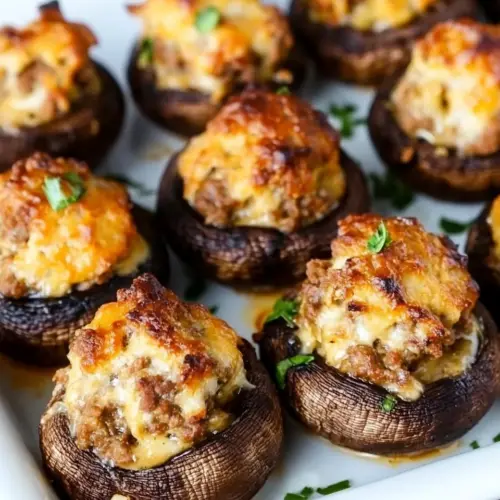
Chorizo Stuffed Mushrooms
Chorizo Stuffed Mushrooms are a savory, creamy appetizer featuring spiced chorizo, soft cream cheese, and crumbled panela, roasting to golden perfection. These bites are perfect for easy weeknight gatherings or as a crowd pleasing party starter, offering a balance of meaty, creamy, and herbaceous notes that make them impossible to resist.
Equipment
- Rimmed Baking Sheet
- Parchment Paper
- Small skillet
- Mixing Bowl
- Spoon
Ingredients
- 1 pound crimini mushrooms Clean and hollow to create sturdy caps for stuffing; offer a meaty texture and absorb surrounding flavors during baking. Provide an earthy base that complements rich fillings and crisp slightly at the edges when roasted.
- 4 ounces cream cheese softened Soften and bind the filling while adding a creamy, tangy body that melts smoothly when heated. Balance spicier and saltier components while contributing a silky mouthfeel to the overall stuffing.
- 3 ounces panela cheese crumbled Crumble and add a subtle milky saltiness with a slightly granular texture that complements cream cheese. Melt partially into the filling to create pockets of savory, mild cheese throughout the mushrooms.
- 5 ounces Mexican chorizo Cook and release savory, spiced fat that flavors the stuffing; break into small pieces to distribute heat and depth. Impart smoky, paprika-forward notes and a chewy, satisfying meatiness to each bite.
- 1 tablespoon fresh thyme leaves Strip and sprinkle fresh leaves to add aromatic brightness and a hint of lemony, woody flavor. Elevate the richness of the filling while providing a fragrant finish and visual contrast.
Instructions
- Preheat the oven to 400 degrees F and line a rimmed baking sheet with parchment paper. Pop all the stems off the mushrooms and lay them up side down on the baking sheet.: As the oven warms, you should notice a faint dry heat when you open the door, which signals it is approaching the correct temperature. Preheating ensures even baking so the mushrooms cook through without becoming soggy. Lining the sheet with parchment prevents sticking and makes cleanup effortless. A common mistake is skipping preheat, which can lead to uneven cooking and a pale, unappealing finish.
- Heat a small skillet to medium-high. Sauté the chorizo, until cooked through. Then place it in a mixing bowl with the cream cheese and thyme. Mix thoroughly, then spoon the chorizo filling into the cavity of each mushroom.: When you remove the stems, you create a clean cavity for the filling; the underside of the caps should feel slightly cool and dry to the touch. Laying them up side down helps the tops brown and keeps the interior space exposed for stuffing. If the caps are crowded, they will steam instead of roast, so give them a little breathing room on the sheet to encourage evaporation.
- Sprinkle the top of each mushroom with crumbled panela cheese and bake for 18-20 minutes. Until the tops are brown and the mushrooms have cooked through. Serve warm.: The skillet should be hot enough that a drop of water sizzles and evaporates almost immediately, which is the perfect searing temperature. A properly heated pan creates Maillard browning, boosting savory aromas when you add the chorizo . Avoid using too low heat since that will cause the meat to steam and not develop that rich, caramelized flavor.
- Sauté the chorizo, until cooked through: As the chorizo sizzles, you will hear a steady crackle and smell the spice oils releasing. Cook until the meat is uniformly browned with small crispy bits, this deepens the flavor and reduces excess moisture. Stir occasionally to break it into small pieces. A pitfall here is undercooking, which leaves a raw texture and reduces flavor, so wait for a clear change in color and a fragrant, toasted aroma.
- Then place it in a mixing bowl with the cream cheese and thyme: Moving the hot chorizo into a bowl allows residual heat to slightly soften and meld with the cream cheese , creating a cohesive filling. The contrast of warm meat and cool cheese will form a silky emulsion if stirred thoroughly. One error is adding cold cream cheese straight from the fridge, which can create lumps; always let it soften a bit first.
- Mix thoroughly, then spoon the chorizo filling into the cavity of each mushroom: As you stir, watch the filling come together into a glossy mass, and smell the herbaceous lift from the thyme . Use a small spoon to pack the mixture so each cap gets an even amount. Overfilling can cause spillover during baking, while underfilling makes the bite feel sparse, so aim for a modest mound that sits neatly inside the cap.
- Sprinkle the top of each mushroom with crumbled panela cheese and bake for 18 to 20 minutes: When you add the crumbled panela cheese , it will look pale and soft against the filling, then transform in the oven into a lightly golden topping. Baking for the recommended time lets the mushrooms release some moisture while the filling bubbles at the edges. Listen for a gentle popping and watch for lightly browned cheese; overbaking will dry the filling, so remove them when tops are golden and the mushroom flesh is tender.
- Until the tops are brown and the mushrooms have cooked through: The finished mushrooms should show a warm, browned surface and a slightly shrunken cap indicating tenderness. Aroma will be deeper and more concentrated than at the start, with toasted meat notes and baked cheese. Cutting into one should reveal a hot, creamy interior. A common mistake is relying only on time rather than visual cues, so always check for a golden top and soft but not collapsed mushroom.
- Serve warm: Warm serving brings out the creamy texture of the filling and the full spice profile of the chorizo . As they cool, the filling firms and flavors settle, so plan to serve soon after baking for the best sensory experience. If they must wait, keep them in a warm oven on a low setting for a short time; reheating too long will dry them out.
Notes
- Advance prep: Prepare the filling and hollowed mushroom caps the day before, store them covered in the fridge, and bake when ready to serve for maximum convenience.
- Cheese adjustment: If you prefer a creamier interior, increase the cream cheese slightly and mix until silky, keeping the panela cheese as a finishing touch for browning.
- Drain excess fat: After cooking chorizo, spoon off any large pools of rendered fat to prevent a greasy filling, but leave some for flavor and mouthfeel.
- Uniform sizing: Select similarly sized crimini mushrooms so they cook at the same rate and present neatly on a serving platter.
- Gentle reheating: Rewarm leftovers in a 325 degree F oven for a few minutes until heated through to preserve texture and avoid drying the filling.