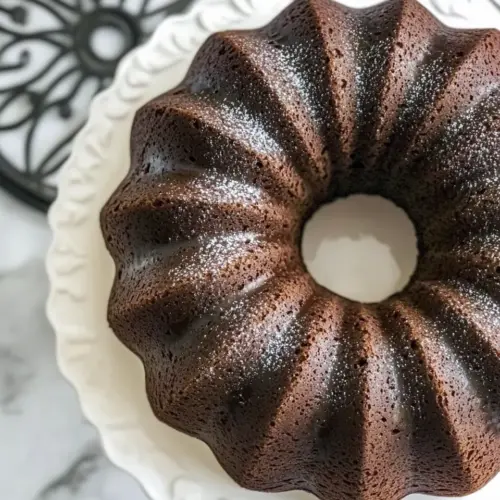
Chocolate Zucchini Bundt Cake
Chocolate Zucchini Bundt Cake is a moist, chocolatey loaf that balances tender zucchini and pockets of melted semi sweet chocolate chips. This easy, crowd pleasing dessert is perfect for casual gatherings or cozy afternoons, delivering a rich crumb and comforting flavor. Make it to transform summer produce into a showstopping cake that's impossible to resist.
Equipment
- Bundt Pan
- Mixer
- Mixing Bowls
- Wire Rack
Ingredients
- 2 1/2 cups flour Measure accurately and provide structure and bulk to the cake batter; flour forms the crumb and helps trap gases released by leaveners. Sift or whisk before using to ensure even distribution and prevent lumps for a tender texture.
- 1/2 cup unsweetened cocoa powder Add bitterness and rich chocolate flavor while contributing to the cake's color; cocoa powder enhances depth without adding fat. Whisk with dry ingredients to evenly disperse and avoid streaks in the batter.
- 2 1/2 teaspoons baking powder Provide lift and help the cake rise by releasing carbon dioxide when combined with moisture and heat; baking powder creates a light, airy crumb. Use the stated amount to balance rise without over-expansion that causes collapse.
- 1 1/2 teaspoons baking soda React with acidic components to produce leavening gas and improve texture; baking soda supports browning and a more open crumb. Dissolve into the wet ingredients or mix well with dry ingredients for even activation.
- 1 teaspoon salt Enhance and balance flavors while strengthening the gluten network slightly; salt brightens sweetness and rounds chocolate notes. Use the precise quantity to avoid over-salting which can mask delicate flavors.
- 3/4 cup butter, at room temperature Cream to incorporate air, tenderize the crumb, and add richness and moisture; butter also aids in flavor and mouthfeel. Bring to room temperature for easier creaming with sugars and even distribution throughout the batter.
- 1 cup sugar Sweeten, assist with creaming to incorporate air, and contribute to tenderization and moisture retention; sugar also helps with browning. Beat with butter until light and fluffy to build structure and aeration for the cake.
- 1 cup brown sugar Add moisture, deeper caramel notes, and contribute to tenderness due to its liquid content; brown sugar also enhances richness and chewiness. Pack slightly when measuring and cream with butter and white sugar for best texture.
- 3 eggs Bind ingredients, provide structure, and add moisture and richness; eggs also help emulsify fats with liquids for a stable batter. Beat gently into the creamed mixture to incorporate without introducing excess air that could cause uneven rise.
- 1 tablespoon vanilla extract Introduce aromatic sweetness and enhance the chocolate and zucchini flavors; vanilla rounds and deepens overall taste. Add to the wet ingredients so the flavor disperses evenly throughout the batter.
- 1/2 cup milk Add liquid to hydrate dry ingredients and create a smooth batter; milk contributes to tenderness and helps dissolve sugars. Use as specified to achieve proper batter consistency without making it too thin or thick.
- 3 cups grated zucchini Contribute moisture, subtle vegetable flavor, and tender texture while reducing the need for additional fat; zucchini melts into the crumb and keeps the cake moist. Grate finely and gently fold in to distribute evenly without overmixing.
- 1 cup semi-sweet chocolate chips Provide concentrated pockets of melted chocolate, adding texture and bursts of sweetness; chocolate chips complement the cocoa flavor. Fold in near the end to avoid sinking and ensure even distribution throughout the cake.
Instructions
- Preheat oven to 350º. Grease and flour a Bundt pan (I spray with Baker's Joy or a similar product).: The warm scent of the oven as it reaches 350º is reassuring, and a properly preheated oven ensures even rise and a consistent crumb. You will notice a gentle blast of warmth when you open the door, and that steady heat helps the cake set from the outside in. If the oven is not fully up to temperature the cake can bake unevenly, leaving a wet center, so use an oven thermometer if your oven runs cool.
- In a medium bowl, whisk together flour, cocoa, baking powder, baking soda, and salt. Set aside.: The tactile motion of coating the pan and tapping out excess flour gives you confidence that the cake will release cleanly. A well greased and floured pan produces a golden crust and defined ridges on the finished cake. If you skip thorough greasing you risk sticking which can tear the cake, so take an extra minute here.
- In a large bowl, cream butter and sugars with a mixer until fluffy.: As you whisk, the dry mixture will smell faintly of cocoa and feel light and powdery, which is perfect for even distribution. Sifting or vigorous whisking prevents pockets of cocoa or leaveners that can create uneven texture. A common mistake is insufficient mixing, which causes streaks of salty or bitter spots in the cake.
- Add eggs, vanilla, and milk to the butter mixture and mix till combined.: Let the dry mix rest briefly while you work on the wet ingredients, so everything is ready to combine. This pause helps you stay organized and prevents overmixing later. Avoid leaving it too long in a humid kitchen, as cocoa can clump.
- Stir in dry ingredients and mix until well blended. Fold in zucchini and chocolate chips.: The creaming process should produce a pale, airy mixture that feels light under the beaters. You will hear the mixer change tone as air incorporates, and the texture will shift from dense to silky. If the butter is too cold it will not cream properly and the cake can be dense, so make sure it is at room temperature.
- Pour into prepared pan. Bake until a toothpick inserted into the center of the cake comes out clean, 50 to 60 minutes.: As you add the eggs one at a time, the batter will smooth out and take on a glossy sheen, while the vanilla adds a warm aroma. The milk loosens the batter so it blends easily. Overbeating at this stage can create too much gluten development, resulting in a tougher crumb, so mix just until uniform.
- Allow to cool in pan for 10-15 minutes before inverting onto a wire rack to cool completely.: When you incorporate the dry mix, the batter will thicken and the cocoa scent becomes more pronounced. Mix until you no longer see streaks of flour, but stop as soon as the mixture is homogeneous to avoid overworking the flour . Overmixing causes a gummy texture, a mistake many home bakers make when they try to chase out every last lump.
- Fold in zucchini and chocolate chips: Folding preserves air while evenly distributing the shredded zucchini and chocolate chips , which will appear as ribbons and speckles throughout the batter. You will feel slight resistance as the zucchini integrates, and little flecks of green should be visible. If you stir too aggressively the batter will deflate and the cake may become dense.
- Pour into prepared pan: As you pour, the batter should flow like a thick ribbon, settling into the pan and filling the ridges. The surface will be glossy and studded with chocolate chips. Smooth the top gently with a spatula for an even rise. Overfilling the pan risks overflow; leave a little room for rising.
- Bake until a toothpick inserted into the center comes out clean, 50 to 60 minutes: During baking you will notice the aroma of chocolate deepen and the edges pull slightly from the pan, signifying doneness. The top should be set and spring back when touched lightly. If you open the oven door too often, the temperature will drop and the cake may sink in the middle, which is a common pitfall.
- Allow to cool in pan for 10 to 15 minutes: Cooling in the pan lets the structure set, so the cake will hold its shape when inverted. You should feel a gentle warmth when you touch the pan, and steam will evaporate, helping the crumb stabilize. If you try to unmold immediately the cake can break apart, so patience is key.
- Invert onto a wire rack to cool completely: Once inverted, the cake will release with a soft thump and reveal its ridged silhouette. Cooling on a rack allows air to circulate, preventing sogginess on the bottom. Let it reach room temperature before slicing, since cutting too soon can create a gummy texture.
Notes
- Make it nutty, fold in toasted chopped nuts for crunch, but toss them with a little flour first so they do not sink to the bottom.
- Adjust sweetness, reduce the granulated sugar by a quarter cup for a less sweet cake, especially if your chocolate chips are very sweet.
- Moisture control, if your zucchini seems overly wet, press it gently in a towel; too much liquid can lengthen bake time and affect texture.
- Pan choice, use a nonstick Bundt pan and ensure it is well greased to maintain the cake's decorative shape during unmolding.
- Serving temperature, serve at room temperature for the best texture, the chocolate chips will be soft but not runny, showcasing the cake's moist crumb.