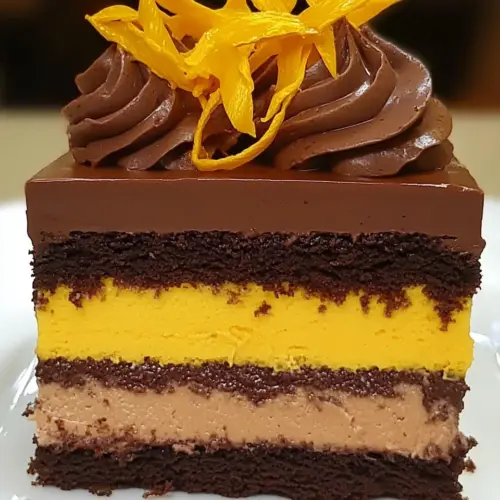
Chocolate Pumpkin Mousse Cake
Chocolate Pumpkin Mousse Cake marries creamy chocolate mousse with a tangy pumpkin cream for a rich yet airy dessert experience. Smooth dark chocolate and warm spices create depth while a tender cake layer holds everything together, making it perfect for fall gatherings and easy weeknight dessert plans. It s showy, comforting, and worth the time to make for friends and family.
Equipment
- Mixing Bowl
- Mixer
- Baking Tray
- Parchment Paper
- Cooling rack
- Saucepan
- Spatula
Ingredients
- 4 eggs Whisk vigorously to incorporate air and provide structure and lift to both cake and mousse layers; eggs also emulsify fats and help bind ingredients for a tender crumb.
- 250 g flour Sift and fold gently to create the cake's bulk and texture; flour forms the gluten network that supports rise and crumb when combined with liquids and leaveners.
- 60 g dark cocoa powder Blend evenly into the dry mix to impart intense chocolate flavor and deepen color; unsweetened dark cocoa also contributes to a slightly drier batter that highlights chocolate notes.
- 220 g sugar Dissolve into the wet ingredients to sweeten the cake and mousse; sugar aids browning, tenderizes the crumb by interacting with gluten, and helps stabilize whipped cream when incorporated.
- 1 tsp baking soda Sprinkle into the dry ingredients to provide additional leavening; baking soda reacts with acidic components to produce carbon dioxide and contribute to lift and browning.
- 2 tsp baking powder Whisk into the flour mixture to ensure reliable rise and a light texture; baking powder supplies double-acting leavening for consistent aeration during mixing and baking.
- 1/4 tsp salt Add sparingly to balance and enhance flavors; salt strengthens gluten structure slightly and intensifies sweetness and chocolate notes when evenly distributed.
- 200 ml strong coffee Pour cooled strong coffee into the batter to intensify chocolate flavor and add moisture; coffee enhances cocoa bitterness and deepens overall taste without adding sweetness.
- 250 g yogurt Incorporate smoothly to add moisture and a slight tang that complements pumpkin and chocolate; yogurt also tenderizes the crumb and contributes to a moist, rich texture.
- 100 ml oil Stream into the wet ingredients to tenderize and moisten the batter; neutral-flavored oil keeps the cake moist longer than solid fats and helps with mouthfeel.
- 100 g pumpkin puree Fold gently into the batter to add moisture, natural sweetness, and autumnal flavor; pumpkin puree also contributes to a dense, tender crumb and pairs well with warm spices.
- 200 g cream cheese Blend until smooth to create a creamy, tangy mousse layer; cream cheese adds richness, stability, and a slight acidity that balances sweetness.
- 1/2 tsp ground ginger Sprinkle and mix into the filling or batter to add warm, spicy notes; ground ginger complements pumpkin and enhances aromatic complexity in both cake and mousse.
- 50 g powdered sugar Sift into the cream cheese or whipped cream to sweeten and smooth textures; powdered sugar dissolves easily and helps stabilize creams without grittiness.
- 200 g 70% dark chocolate Melt gently and fold into the mousse to provide deep chocolate intensity and structure; high-percentage dark chocolate offers firm set and rich flavor when chilled.
- 500 ml whipping cream Whip to medium-stiff peaks to create a light, airy mousse and filling; whipping cream contributes volume, softness, and a creamy mouthfeel that balances dense components.
- 1 tbsp powdered sugar Dust into the whipped cream to add a touch of sweetness and help with stabilization; a small amount of powdered sugar improves texture and flavor balance.
- 1 tsp vanilla extract Stir in to flavor and enhance the aroma of both cake and mousse; vanilla extract rounds out chocolate and pumpkin flavors and adds a warm, sweet note.
Instructions
- Combine the flour with the sugar, baking soda, baking powder, cocoa powder, and salt.: You'll notice the dry mix becomes uniform in color and aroma, with the chocolate and baking agents evenly dispersed, which prevents streaks or pockets of leavener in the final cake. Sifting or whisking these together aerates the mixture, and you should smell a faint cocoa scent. A common mistake here is not mixing thoroughly, which can leave dense spots, so take a minute to whisk until homogenous.
- In a separate bowl, lightly whisk the eggs, add the oil, yogurt, and vanilla, and mix.: The wet ingredients will come together into a glossy, slightly viscous liquid, with the eggs providing structure and the oil adding sheen. The mixture should look uniform without separate streaks of oil. Avoid overwhisking which can create excessive air, leading to a coarse crumb later; gentle, even mixing is key.
- Incorporate the liquid ingredients into the dry ingredients. Finally, add warm coffee.: As you fold the wet into dry, the batter will transform from powdery to smooth, and when you add the warm strong coffee the cocoa will bloom, deepening the color and aroma. You should hear a quiet slurry sound as the batter smooths. Do not overstir, as that will develop gluten and make the cake tough; stop when the mixture is even.
- Preheat the oven to 175 °C (350 °F) and line a large baking tray, 30/40 cm, with parchment paper.: The oven warmth is crucial for predictable rise, and lining the tray prevents sticking and promotes even browning. You'll feel the heat when you open the oven, and the parchment will make sliding the cake out simple. A frequent error is skipping preheating, which can cause uneven lift and a dense center, so always wait until the oven reaches temperature.
- Pour the mixture into the tray and smooth it out. Bake for 25-30 minutes until it passes the toothpick test. Transfer to a cooling rack, then cut into two 30/20 cm pieces.: As the batter bakes, steam will lift the cake and the surface will set, sometimes showing a faint crackle. The toothpick should come out with a few moist crumbs not raw batter, and the edges will start to pull away slightly. Transfer it right away to a cooling rack to stop cooking, and only slice when cool to avoid tearing. Cutting while warm is a common mistake that leads to ragged layers, so patience pays off.
- Using a mixer, combine the cream cheese with the pumpkin purée and powdered sugar and mix until you get a smooth cream. Add the ground ginger and mix some more.: The texture should turn silky and spreadable, with the cream cheese lending tang and the pumpkin puree offering body. The aroma will shift to warm spice as you add ground ginger . Scrape the bowl to ensure no lumps remain; a lumpy filling is the usual pitfall here, so mix until perfectly smooth.
- Put 200 ml (3/4 cup) of the whipping cream over medium heat and bring to almost boiling point. Turn off the heat and add the broken chocolate pieces. After two minutes, stir the mixture and let it cool. Add the vanilla extract and stir again.: The chocolate will melt into a glossy emulsion with a rich chocolate aroma as you stir, forming a warm ganache base for the mousse. Letting it sit off the heat for two minutes helps the chocolate melt gently. If the cream boils, it can scorch the chocolate and create graininess, so watch the pan and remove it just before boiling.
- Mix the remaining whipping cream (300 ml/1 1/2 cup) with the powdered sugar and vanilla sugar until you get a firm whipped cream. Incorporate the whipped cream into the cooled chocolate cream with upward movements.: The whipped cream should be billowy and hold soft peaks, and folding it into the chocolate should create a light mousse with marbled swirls that quickly even out. The motion preserves air, yielding a mousse that feels airy in the mouth. A common mistake is beating the whipped cream too stiff or folding too vigorously, both of which can deflate the mousse.
- Take a piece of the cake and spread 1/3 of the chocolate mousse on top. Smooth it out and cover it with the other piece of cake. Nicely spread the pumpkin cream on top.: As you spread the mousse, you'll feel a cool, satiny texture and see the layer retain its shape without sliding. After stacking and adding the pumpkin cream, the top layer should look even and slightly domed. If you press too hard while spreading, the layers may compress and lose their lightness, so use gentle, even strokes.
- Spread the last layer of chocolate cream and refrigerate the cake for 2-3 hours. Glaze the cake with chocolate ganache and decorate it with chocolate pieces.: The final chill lets the mousse set so slices hold clean edges, and the ganache will form a glossy sheet when poured over the chilled cake. You will hear a quiet settling as the ganache smooths, and the chocolate pieces add a crisp contrast. A common oversight is slicing before full chilling, which leads to messy pieces, so allow the full refrigeration time for best results.
Notes
- Temperature matters Use room temperature eggs and softened cream cheese for smooth batters and fillings, which helps avoid lumps and creates a silkier mouthfeel.
- Whip with care When whipping the remaining whipping cream, stop at soft to medium peaks so the mousse folds in easily without deflating, preserving a light texture in the finished cake.
- Chocolate quality counts Choose a good 70 percent dark chocolate for depth; it makes the mousse and ganache intense and less sweet, balancing the pumpkin layer.
- Make ahead The cake holds well refrigerated for 24 to 48 hours, and flavors often improve after a night, making this a convenient make ahead dessert for gatherings.
- Cutting clean slices Use a warm, dry knife wiped between cuts to get neat slices; this avoids crumb drag and preserves the mousse layers for pretty presentation.