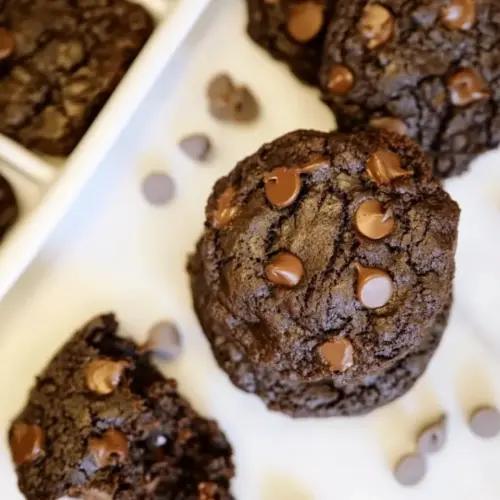
Chocolate Protein Cookies
Chocolate Protein Cookies are chewy, chocolate forward bites that are both satisfying and easy to make. Rich cocoa and nut butter combine with protein powder for a dense, fudgy texture that works as an easy snack or quick post workout treat. They bake fast and travel well, making them a smart choice for busy mornings and on the go fuel.
Equipment
- Oven
- Mixing Bowl
- Cookie Sheet
- Spoon
Ingredients
- 1/2 cup chocolate protein powder (64 g) Provides concentrated protein and chocolate flavor while helping to bind the dough; choose a whey or plant-based variety depending on dietary needs and mix thoroughly to avoid lumps. Enhances nutritional profile by increasing protein per serving and contributes structure when combined with liquid ingredients. Can affect texture so consider the powder's fineness and adjust moisture slightly if mixture seems dry.
- 1/2 cup cocoa powder (40 g) Adds deep chocolate flavor and a dry structure that helps absorb moisture from wet ingredients; sift or whisk into dry mix to prevent clumps. Contributes a rich color and intensifies cocoa notes without adding fat, balancing sweetness in the cookie. Can be natural or Dutch-processed, which will slightly alter acidity and flavor intensity.
- 1/3 cup sugar or xylitol (70 g) Sweetens the cookies and balances bitter cocoa while also contributing to tenderness and browning; substitute xylitol for a lower-calorie option and ensure it dissolves into the wet ingredients. Impacts overall sweetness level so taste the batter if possible and adjust accordingly. Granulated forms provide texture control, while finer varieties dissolve more readily.
- 1/4 tsp salt Enhances overall flavor by balancing sweetness and intensifying other tastes; a small amount is sufficient due to its concentrated taste. Also helps regulate the chemical reactions of leavening agents and supports proper flavor perception in the finished cookie. Measure carefully to avoid oversalting.
- 1/4 tsp baking soda Provides gentle leavening and helps create a lighter texture by reacting with acidic components in the batter; ensure even distribution by whisking into dry ingredients. Works subtly in cookies to give slight lift and prevent excessive density. Use the stated small quantity to avoid leaving an alkaline aftertaste.
- 1/2 cup peanut butter or allergy friendly alternative (120 g) Acts as the primary fat and binder, supplying richness, moisture, and chewiness while helping hold the cookie together; choose peanut butter or an allergy-friendly alternative depending on dietary needs. Contributes flavor and mouthfeel and pairs well with chocolate for classic taste. Smooth varieties blend more uniformly, while chunky types add texture.
- 1/2 cup water (120 g) Supplies necessary hydration to hydrate dry ingredients and create a cohesive dough; add gradually to reach the desired cookie consistency without making it too runny. Water keeps calories lower compared with milk or oil and helps activate protein powder for better structure. Adjust slightly if using a different protein powder that varies in absorption.
- 1 handful chocolate chips (optional) Provides optional bursts of concentrated chocolate flavor and textural contrast when folded into dough; add to taste for extra sweetness and chew. Enhances appearance and indulgence factor while offering small pockets of melted chocolate after baking. Use allergy-friendly or dairy-free chips as needed for dietary restrictions.
Instructions
- To make the chocolate protein cookies, first read through the baking tips above. Preheat your oven to 325 F. If not already runny, gently heat the nut butter until easily stirrable. Mix dry ingredients in a medium bowl, then stir in wet to form a batter. Stir vigorously, breaking up any clumps of nut butter, until it forms a cookie dough texture. Roll into balls or shape into cookies. Flatten with a spoon if desired, then place on a cookie sheet. Bake 8 minutes for soft cookies or 11 minutes for chewy protein cookies. Let cool, then serve and enjoy!: The kitchen should smell faintly of cocoa and warm peanut butter as you prepare, a comforting, slightly roasted aroma that signals the right balance. Use a medium bowl so you can mix vigorously without spilling, and listen for the slight swirl sound as powders combine. A common mistake is skimping on breaking up clumps, so press and rub any stubborn lumps against the bowl with a spoon to avoid gritty pockets.
- first read through the baking tips above: Reading the notes primes you to avoid issues like over baking and helps you decide whether to use sugar or xylitol. Mentally mapping the steps also helps your timing, so you do not find the oven preheated with nothing ready. A frequent error is skipping this pause, which can lead to rushed mixing and uneven cookies.
- Preheat your oven to 325 F: When the oven reaches temperature a steady heat fills the kitchen with warmth and you may notice a slight metallic hum from the element. Preheating ensures consistent rise and even edges, because the batter meets the same heat every time. Putting cookies into a cold oven will change bake times and may leave them underdone or excessively flat.
- If not already runny, gently heat the nut butter until easily stirrable: Warming the peanut butter softens its texture and releases nut oils, yielding a silkier mouthfeel. Do this slowly in a microwave in short bursts or over a warm water bath to avoid scorching, and stir until smooth. A common pitfall is overheating, which can separate oils and alter texture, so stop as soon as it becomes easily pourable.
- Mix dry ingredients in a medium bowl: Combining the chocolate protein powder , cocoa powder , sugar , salt , and baking soda produces a uniformly colored, fine mixture that smells faintly bitter and toasty. Whisking breaks up pockets and aerates slightly, which helps even hydration. If you skip thorough mixing you risk pockets of unblended leavening or cocoa, which will create inconsistent flavor and texture.
- then stir in wet to form a batter: As you add the warmed peanut butter and water , the mixture will transform from dusty powder to glossy, thick batter. At this stage you will notice the batter becoming more cohesive, and small streaks of glossy nut butter will disappear as you fold. If the batter seems too dry, add water in teaspoon increments so you do not over thin the dough.
- Stir vigorously, breaking up any clumps of nut butter, until it forms a cookie dough texture: The vigorous stirring creates a uniform, slightly tacky dough; you will see a sheen and feel resistance when you scoop. The sound is a soft scrape as the spoon moves through slightly sticky batter. Not breaking clumps will leave oily chunks and uneven bake, so press them against the bowl until integrated.
- Roll into balls or shape into cookies: Shaping the dough gives each cookie a uniform volume, which helps them bake evenly. Rolling creates a smooth exterior that browns predictably, while rustic shapes yield more variation in texture at the edges. A mistake here is making sizes wildly inconsistent, so I use a tablespoon measure or a small ice cream scoop for consistency.
- Flatten with a spoon if desired, then place on a cookie sheet: Pressing each ball slightly flattens the center and encourages even spreading, and you will see the dough relax and spread a bit on the sheet. The surface may show small cracks that hint at the chewy interior. Placing too close together will make them merge while baking, so space them with room to spread.
- Bake 8 minutes for soft cookies or 11 minutes for chewy protein cookies: The oven will turn those doughy mounds into cookies that smell richly of cocoa, with edges that may darken slightly and centers that remain tender. For a soft result, remove at the shorter time and allow residual heat to finish them on the sheet; for chewier results, bake a bit longer until edges are set and centers spring back lightly. Over baking dries them out, so check early and use visual cues more than strict timing.
- Let cool, then serve and enjoy: Cooling lets the cookies set and develop final texture, and you will notice the aroma settle into a deeper, roasted chocolate note. Transfer to a rack after a few minutes to avoid the bottoms steaming and becoming soggy. A common misstep is eating them right out of the oven, which can be too soft and fall apart, so give them time to firm up slightly.
Notes
- Use an allergy friendly nut butter if you need to avoid peanuts, such as a seed butter, which will provide similar binding and fat content but may alter flavor slightly.
- Adjust sweetness carefully by reducing sugar if your protein powder is already sweetened, maintaining balance so the cookies do not become cloying.
- Add more moisture sparingly by a teaspoon of water at a time if the batter seems too dry, to prevent running cookies that spread too thin.
- Skip chocolate chips for a cleaner, more intensely cocoa flavor, or add them for pockets of melty chocolate that increase perceived richness.
- Chill the dough briefly if you want thicker cookies and less spread, about 10 to 20 minutes so they hold shape during the initial oven heat.
- Use a cookie scoop for uniform sizes which helps ensure consistent bake time across the batch, especially if you make many cookies at once.