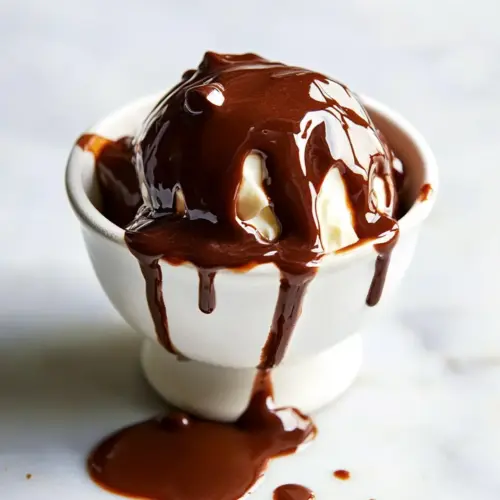
Chocolate Peanut Butter Hot Fudge Sauce
Chocolate Peanut Butter Hot Fudge Sauce is a creamy, glossy sauce that combines deep chocolate and smooth peanut butter for an indulgent topping. It is quick and easy to make with pantry staples, perfect for ice cream, brownies, or fruit, and stores well so you can prep ahead and reheat when needed. Try it to add a rich, comforting finish to your favorite desserts.
Equipment
- Medium Saucepan
- Whisk
- Heatproof Bowl
- Glass jar
Ingredients
- 1 cup granulated sugar 1/3 cup cocoa powder 2 tablespoons flour 1/4 teaspoon salt 1 cup boiling water 1/4 cup light corn syrup 1/2 cup creamy peanut butter 1 teaspoon vanilla Sweetens and provides bulk while caramelizing slightly to help thicken and gloss the sauce; dissolves into the hot liquid to contribute smooth sweetness. Balances cocoa bitterness and supports overall mouthfeel, ensuring the sauce has a pleasant, consistent texture.
Instructions
- Sift together sugar, cocoa powder, flour, and salt in a medium saucepan. Slowly whisk in boiling water until smooth, followed by corn syrup and peanut butter. Bring to a boil over medium heat, whisking occasionally; simmer for 5 to 7 minutes, or until thickened slightly and reduced by half.: The moment the dry ingredients hit the pan you should notice a uniform, velvety powder, which helps prevent grainy spots in the finished sauce. The scent at this stage is dominated by the cocoa, with powdered sugar carrying it lightly, and ensuring even dispersion is crucial, so use a fine mesh sieve or whisk until homogeneous. Why this matters, because well combined dry ingredients dissolve more predictably when wet ingredients are added, giving a smooth final texture. A common mistake is dumping the dry mix into the pan and leaving clumps, which can lead to a lumpy sauce; to avoid that, take an extra minute to sift or vigorously whisk the dry mix.
- Remove from heat and transfer to a heatproof bowl; stir in vanilla. Let cool to room temperature, stirring occasionally, about 20 minutes (don’t refrigerate the sauce before it has completely cooled or it may become grainy).: As you add the boiling water in a steady stream, the mixture will steam and darken, and you will hear a gentle hiss that fades as the powder dissolves. The whisking motion is key to fully hydrating the cocoa powder and flour , creating a glossy emulsion. Adding the corn syrup next increases the shine, and when you incorporate the peanut butter it melts into the warm base, releasing that toasted nut aroma. This sequence ensures the peanut butter blends smoothly rather than separating. A common pitfall is adding all the wet at once, which can trap lumps; taking it slow while whisking prevents that issue.
- When completely cooled, transfer sauce to a glass jar or airtight container and refrigerate for up to 2 weeks. Warm gently in the microwave before serving.: As the sauce comes to a boil you will see steady bubbles and hear a soft rolling boil, and the color deepens to a glossy, almost lacquered finish. Simmering reduces the water and concentrates flavor, while the gentle heat allows the flour to thicken without tasting raw. Stirring occasionally helps prevent scorching on the bottom and encourages even thickening. You want the sauce to coat the back of a spoon, indicating the right viscosity. An easy mistake is keeping the heat too high, which can cause rapid evaporation and scorching, so steady medium heat is your friend.
- Remove from heat and transfer to a heatproof bowl; stir in vanilla: Removing the pan from the burner stops the cooking process immediately, preserving the glossy texture. When you stir in the vanilla off heat you will notice the aroma bloom quickly, adding a delicate warmth to the sauce profile. Transferring to a bowl also prevents residual heat in the pan from continuing to thicken or scorch the sauce. Avoid adding the vanilla while on high heat because it will lose its fragrance and can become bitter.
- Let cool to room temperature, stirring occasionally, about 20 minutes don’t refrigerate the sauce before it has completely cooled or it may become grainy: During cooling you will see the sauce mellow in sheen and thicken to a clingy consistency, and the aroma shifts toward roasted peanut notes. Stirring occasionally keeps the texture uniform and releases trapped heat. If chilled too quickly, the sauce can form a grainy texture from sugar crystallization, which is why gentle cooling at room temperature is recommended. One common oversight is rushing to refrigerate; patience here preserves the sauce's smoothness.
- When completely cooled, transfer sauce to a glass jar or airtight container and refrigerate for up to 2 weeks warm gently in the microwave before serving: Storing the sauce in glass keeps flavors true and makes reheating simple, as the sauce will firm in the fridge but regain fluidity with gentle warming. You will notice that chilled sauce is thicker, and quick bursts of low power in a microwave or a warm water bath will return it to a pourable state while preserving gloss. The main thing to avoid is overheating when reheating, which can separate oils and make the sauce oily; warm slowly and stir frequently to maintain texture.
Notes
- Measure precisely because the balance of sugar and liquid determines gloss and thickness, so weigh or level your cup measures for accuracy.
- Whisk continuously when adding hot water to avoid lumps, and use a balloon whisk to incorporate air and keep the sauce smooth.
- Keep heat moderate as rapid boiling can cause the sauce to reduce too fast, altering sweetness and risking a grainy texture.
- Store in a sealed jar to keep flavor bright and to prevent absorption of odors in the refrigerator for up to two weeks.
- Rewarm slowly over low heat or in short microwave bursts, stirring between intervals to maintain emulsion and sheen.