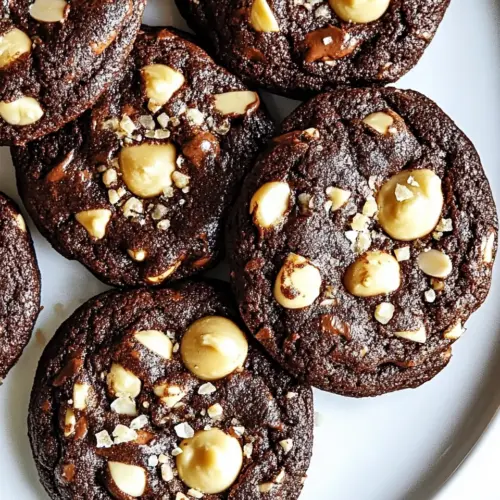
Chocolate Macadamia Nut Cookies
Chocolate Macadamia Nut Cookies are rich, chocolatey, and satisfyingly crunchy with buttery macadamia pieces and melty chocolate chips. These easy to make cookies balance deep cocoa flavor with a touch of flaky salt for complexity, making them perfect for gatherings or an indulgent snack. Try them for a cozy treat that looks and tastes special, and you will want to bake a second batch.
Equipment
- Stand mixer
- Mixing Bowl
- Cookie Scoop
- Baking Sheets
- Parchment Paper
- Cooling rack
Ingredients
- 1 cup (125 g) all-purpose flour (spoon & leveled) Provide structure and bulk to the cookie dough; sifted or spooned-and-leveled helps ensure accurate measurement and a tender crumb when mixed with the wet ingredients.
- 2/3 cup (55 g) unsweetened cocoa powder Contribute deep chocolate flavor and intensify the cookie's cocoa profile; unsweetened powder balances sweetness and creates a rich, slightly dry texture that pairs well with butter and sugar.
- 1 teaspoon baking soda Act as a leavening agent to help cookies spread and rise slightly; baking soda reacts with acidic components and promotes browning and a lighter interior.
- 1/8 teaspoons salt Enhance overall flavor by bringing out sweetness and balancing bitterness; small amount of salt sharpens the chocolate and rounds the cookie's taste.
- 1/2 cup (8 TBS) unsalted butter, room temperature Provide fat for richness, tenderness, and mouthfeel; room-temperature butter cream incorporates air when creamed with sugars, contributing to texture and flavor development.
- 1/2 cup granulated sugar Add sweetness and contribute to creaming structure; granulated sugar helps create crisp edges and aids in spreading during baking.
- 1/2 cup packed light or dark brown sugar Impart deeper, caramel-like sweetness and moisture to the dough; packed light or dark brown sugar adds chewiness and complexity from the molasses content.
- 1 large egg, at room temperature Bind ingredients together and add moisture; room-temperature egg helps emulsify fats and contributes to structure and a slightly cakier crumb if overused.
- 1 teaspoon vanilla extract Deliver aromatic sweetness and enhance other flavors; vanilla extract complements cocoa and brown sugar, adding depth and a rounded finish to the cookie.
- 1 tablespoon milk Adjust dough consistency for easier mixing and chewiness; a small amount of milk softens the dough and can slightly affect spread and tenderness.
- 3/4 cups semi-sweet chocolate chips, plus a few more for optional topping Introduce concentrated chocolate pockets and melty texture; semi-sweet chips provide bursts of sweetness and chocolate contrast throughout the cookie, with some reserved for topping if desired.
- 1 cup macadamia nuts, chopped, divided Add crunch, buttery flavor, and a tropical note; chopped macadamia nuts are folded into the dough and some are reserved for garnish to provide texture variation.
- flaky salt Finish cookies with a bright, savory accent that enhances sweetness; flaky salt sprinkled on top creates contrast and elevates the overall flavor experience.
Instructions
- Preliminary note: This cookie dough requires at least 3 hours of chilling, but you can get by with freezing for 45 minutes. The colder the dough, the thicker the cookies.: The dough s coldness directly affects spread and texture, colder dough yields thicker, chewier cookies while warmer dough spreads thin. You should notice the dough firming up and becoming easier to shape after chilling. A common mistake is skipping the chill which results in flat cookies, so resist the urge to bake immediately. If you do use the quick freeze option, wrap the bowl and check after 45 minutes for firmness; the aroma will be muted when cold but will bloom as the dough warms slightly at room temperature.
- Dry ingredients: Whisk the flour, cocoa powder, baking soda and salt together in a medium mixing bowl. Set aside.: When you whisk these together you ll smell the cocoa and see an even, slightly darker dust that will distribute evenly into the wet mix. Dry whisking prevents pockets of baking soda or cocoa, which can otherwise give uneven flavor or strange dark streaks. Avoid dumping them directly into the wet mix without whisking, because that can create lumps. A good sign you re ready to proceed is a uniform color and texture in the bowl.
- Cream butter and sugar: In a stand mixer fitted with a paddle attachment, (may use a large bowl and hand-held mixer) cream the butter, granulated sugar and brown sugar together on medium-high speed until fluffy, about 2 minutes.: You will see the mixture lighten in color and become airy, and you may hear a soft, steady beat from the mixer as air gets incorporated. This step matters because it traps air that helps the final cookies rise and gives a tender crumb. If you skimp on creaming time the cookies can be dense, while over beating can make the dough too soft. Scrape the bowl sides occasionally to ensure everything is evenly mixed and the texture is homogenized.
- Add wet ingredients: Reduce speed to medium and beat in the egg, vanilla and milk just until combined, scraping the sides of the bowl as needed.: Once you add the egg and milk the mixture will smell richer and will smooth out visually, the butter and sugars forming a glossy emulsion. This step provides structure and moisture, but over mixing can incorporate too much air and change the cookie s texture. If you notice separation or curdling, stop and scrape, then mix gently until combined. The batter should be cohesive and slightly thick after this step.
- Add dry ingredients: With the mixer running on low speed, gradually mix in the dry ingredients until a few streaks of flour remain. Increase speed to medium and mix in the chocolate chips and 3/4 cup chopped macadamia nuts just until combined (don’t overmix). The dough will be very thick and sticky.: As the dry ingredients disappear into the wet, watch for a uniform color with a few pale streaks which is the cue to slow down. The dough will become very thick and sticky, studded with chocolate chips and chopped macadamia nuts . Mixing too long develops gluten and yields tougher cookies, so stop as soon as the add ins are distributed. The scent at this point becomes distinctly chocolate forward with a hint of buttery richness from the nuts.
- Chill: Cover the dough tightly with plastic wrap clinging to the surface of the dough. Chill in the refrigerator for at least 3 hours up to 3 days or freeze for 45 minutes before rolling.: Chilling firms the dough making it easier to scoop and controls spread in the oven, producing a chewier center. You ll notice the dough darkens slightly and firms at the edges after chilling. A frequent error is not sealing the dough, which can dry the surface, so press plastic wrap directly onto the dough. If you chill for longer periods, allow the dough to warm a bit at room temperature before scooping so it remains scoopable without crumbling.
- Preheat oven: When ready to bake, preheat the oven to 350°F. Remove cookie dough from the refrigerator and allow to sit at room temperature for 10 minutes. If the cookie dough chilled longer than 3 hours, let it sit at room temperature for about 20 minutes. Line baking sheets with parchment paper or silicone baking mats. Set aside.: Preheating ensures even bake and the correct oven spring, and the brief rest at room temperature softens the dough slightly so it spreads just right. You should sense a mild chocolate aroma as the dough warms, and the surface will become a touch less glossy. Not preheating can lead to under baked centers or unevenly baked edges. Using lined sheets prevents sticking and encourages even browning.
- Scoop: Using a 1 1/2 tablespoon cookie scoop, scoop the cookie dough and roll into balls. The dough is sticky, so it can be helpful to wet your hands or spray hands with cooking spray. Place the balls on the baking sheet, leaving about 3 inches in between, 6 balls per half sheet. At this point, push the reserved 1/4 cup chopped macadamia nuts onto the top of each ball, strictly for looks (this is optional). I also do the same with some extra chocolate chips.: You will feel the resistance of the sticky dough as you portion, and wetting your hands makes the process smoother. Leaving space between dough balls gives them room to spread and brown. A common slip is placing them too close which yields merged cookies, so maintain spacing. Pressing extra nuts or chips on top creates attractive domes and concentrated melty pockets after baking.
- Bake: Bake the cookies for 10-12 minutes or until the edges appear set and the centers still look soft (cooking times will vary based on how chilled your dough is). Tip I use every time: If they aren’t really spreading by minute 8, remove them from the oven and lightly bang the baking sheet on the counter 2-3 x. This helps initiate that spread. Return to the oven to continue baking.: During baking you ll notice the edges turning matte and slightly shiny centers becoming less jiggly, that is your cue to remove them soon for a soft interior. The small bang trick helps the cookie settle and spread evenly. Overbaking is the most common mistake here, which yields dry cookies, so err on the shorter side and allow carryover cooking on the sheet to finish them.
- Cool: Cool cookies for 5 minutes on the baking sheet. During this time, sprinkle with flaky salt if desired. Transfer to cooling rack to cool completely.: Cooling on the sheet lets the cookie set and finish cooking gently, and the texture transitions from tender to perfectly set. Sprinkling flaky salt while warm helps it stick and bloom in flavor. Moving too soon can cause them to fall apart, while leaving them on the hot pan too long can over crisp the bottoms, so aim for the five minute window before transferring.
Notes
- Storage tip Store cookies at room temperature in an airtight container for up to five days, placing a sheet of parchment between layers to prevent sticking. To maintain freshness, tuck a slice of bread in the container to help retain moisture for the first couple of days, discarding it after two days to avoid off flavors.
- Freezing dough The cookie dough can be chilled for up to three days; portion into balls and freeze on a lined sheet before transferring to a sealed bag. When ready to bake, add an extra minute to the bake time if baking from frozen, and no thawing is necessary.
- Freezing baked cookies Baked cookies freeze well for up to three months; flash freeze them on a tray before packing into airtight containers to keep them from sticking together. To revive, warm individual cookies in the microwave for about ten seconds for that just baked sensation.
- Make ahead strategy If you want fresh baked cookies for an event, prepare the dough the day before and keep it chilled; let it soften slightly at room temperature before scooping to make shaping easier and ensure consistent spread.
- Decoration and presentation Press extra chocolate chips and reserved chopped macadamia nuts onto the tops of dough balls before baking for a polished look and concentrated flavor pockets, then finish with a light sprinkle of flaky salt.