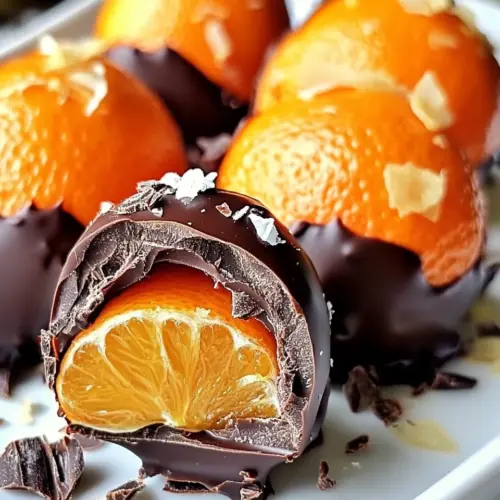
Chocolate Dipped Oranges
Chocolate Dipped Oranges deliver bright citrus notes paired with glossy dark chocolate for a simple, elegant treat. Juicy orange segments meet rich, melty chocolate to create a light, satisfying dessert or snack that is easy to make and eye catching. Perfect for gifting or a quick sweet finish, this recipe is an approachable and elegant choice to brighten winter gatherings.
Equipment
- Double boiler or microwave safe bowl
- Spatula
- Baking Sheet
- Parchment Paper
Ingredients
- 6 ounces Dark Melting Wafers Melted and smooth, provides rich chocolate coating for dipping and sets with a glossy finish; melts easily in a double boiler or microwave and can be tempered for extra snap. Enhances presentation and flavor contrast when paired with bright citrus segments. Can be flavored or sprinkled with sea salt before hardening to elevate the final bite.
- Orange Segments blood orange, naval or clementines Firm and juicy, supplies bright, tangy citrus segments that balance the sweetness of dark chocolate and add refreshing acidity; choose blood orange, navel, or clementines for varying sweetness and color. Easy to segment and pat dry so the chocolate adheres without sliding; offers vibrant color and juicy texture when served chilled.
- Parchment paper Nonstick and breathable, provides a surface to place dipped segments while the chocolate sets without sticking or tearing; parchment paper helps catch drips and keeps the workspace tidy. Allows for easy transfer to a platter once the chocolate hardens and prevents condensation from ruining the coating.
Instructions
- Line a baking sheet with parchment paper and set aside.: The parchment creates a clean surface that protects the glossy underside of the chocolate as it cools. You should notice a smooth, dry layer ready to receive the dipped pieces, and the sheet should be completely flat so the segments sit without rolling. If the parchment wrinkles, smooth it with your hand to avoid uneven setting, because a tilted surface can make the chocolate pool on one side. Avoid using oiled or greasy sheets since that can cause the chocolate to lose its shine and stick. A common oversight is placing warm trays on top, which can soften the chocolate prematurely.
- Place chocolate wafer in a double boiler over low heat. Stir until smooth and melted.: As the chocolate warms, you will see it become glossy and begin to flow gently. Keep the heat low so you only hear a faint simmer from the water beneath, not a vigorous boil, because direct high heat risks seizing the chocolate . Stir with a heatproof spatula in slow, steady strokes until the mixture is silken, and note a uniform sheen without grainy bits. The reason this technique works is gentle, even heat prevents moisture from condensing into the chocolate, preserving texture and gloss. If you spot any steam dipping into the bowl, lift the bowl to avoid water splashing, which causes graininess. One error people make is leaving the bowl over heat unattended, which can lead to burning at the rim.
- Place chocolate wafers in a microwave safe bowl. Microwave on defrost for 30 seconds. Stir and repeat process until completely melted and smooth.: When the chocolate is properly melted, it will pour in a lustrous ribbon from your spatula and smell deeply of cocoa rather than bitter scorched notes. This step is about patience, using continual stirring to combine any residual lumps into a unified mass. The sound is nearly silent, but you may hear a faint slosh as the bowl moves; that indicates even melting. The why here is that consistent agitation spreads heat evenly and removes any cooler pockets, ensuring shine and a clean snap once set. Avoid rapid, aggressive stirring which can introduce air and tiny bubbles. If you encounter small grains, remove the bowl from heat and stir off the heat until smooth to prevent overheating.
- Dip each piece of orange segment in melted chocolate and set on prepared baking dish. Let cool and if desired sprinkle with chopped nuts or a touch of sea salt. Enjoy right away.: If you choose the microwave route, arrange the wafers in a shallow bowl so they melt evenly and you can reach them easily with a spoon. Use short bursts to prevent hot spots and watch as the surface transitions from matte to glossy. The bowl will feel warm to the touch between bursts, so use a towel or pot holder to avoid burns. This technique works for speed, but it requires attention because uneven heating can leave chunks that fog the final texture. A common mistake is microwaving for long continuous times, which causes scorching. Instead, pause and stir frequently to distribute the heat and maintain a uniform consistency.
- Microwave on defrost for 30 seconds: After the first burst, stir immediately to distribute the heat and press any remaining solid pieces into contact with the warm chocolate. The smell should become richer and smoother, losing the chalky scent of unmelted wafers. Continue this cycle because it helps you control temperature without exceeding the point where oils separate. This is important because overheated chocolate can look oily and dull once it cools. Be careful not to microwave at full power or for too long, which is the usual cause of seizing. If small unmelted fragments persist, stir them into the residual heat of the melted chocolate instead of adding more microwave time.
- Stir and repeat process until completely melted and smooth: With each stir the mixture should become progressively silkier, and you will notice the bits disappear into the glossy mass. The visual cue is a uniform, reflective surface with no grainy texture, and the smell will be a deep cocoa aroma. This phase matters because the final mouthfeel depends on achieving that uniform smoothness, giving you a satisfying snap and shine. If the chocolate seems too thick, allow it to rest briefly off heat and stir, rather than applying more intense heat which risks ruin. A common troubleshooting point is accidental water contact; if that occurs, start over with fresh wafers because the chocolate will seize.
- Dip each piece of orange segment in melted chocolate and set on prepared baking dish: As you dip, you will feel the weight shift from the juicy orange to the added shell of chocolate . The chocolate should coat cleanly and cling to the segment, leaving a smooth outer layer. Place each piece gently on the parchment so they sit flush and maintain their shape. You may hear a faint tack as the chocolate touches parchment, which is normal. The why is that the quick contact with a cool surface helps the outer layer begin to set before internal cooling, preserving a glossy finish. Avoid overcrowding the tray, because contact between pieces can mar the coating. A common mistake is dipping wet segments which causes the chocolate to slide off or not adhere.
- Let cool and if desired sprinkle with chopped nuts or a touch of sea salt: As the chocolate firms, you will observe it change from glossy and slightly warm to a firmer, quieter surface that yields a satisfying snap when bitten. If you choose to add toppings, do so immediately while the surface is tacky, so they adhere well. The interplay of crunchy or salty toppings with the juicy orange and rich chocolate is what elevates the flavor experience, adding texture and contrast. Don’t wait too long to add garnishes or they may not stick, and avoid heavy toppings that can weigh the coating down. If humidity is high, cool briefly in a dry spot to prevent sweating.
- Enjoy right away: The first bite should deliver a bright burst of orange followed by the melting, bittersweet chocolate . The temperature contrast is part of the charm, so serve slightly chilled or at cool room temperature for best texture. Savor the shifting textures, and store any leftovers on parchment in a single layer to preserve their shine. A common error is stacking them while still warm, which causes sticking and dull spots; always let them set fully before packing.
Notes
- Choose high quality melting wafers, because they are formulated to melt evenly and will give you the shiny finish that makes the chocolate set with a professional look.
- Pat segments dry, because moisture on the surface interferes with adhesion and can cause the chocolate to slide off or look dull instead of glossy.
- Stir frequently in the microwave, short bursts with stirring prevent hot spots and ensure a uniform texture without scorching the chocolate.
- Temperature matters, keep the double boiler water barely simmering so the chocolate melts gently and retains shine and smoothness.
- Add toppings while tacky, sprinkle nuts or sea salt immediately after dipping so they adhere and look natural, rather than falling off once the chocolate hardens.