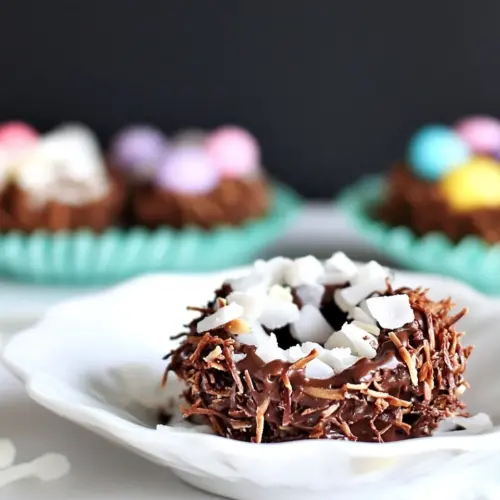
Chocolate Coconut Nests
Chocolate Coconut Nests are a crunchy, chewy, and festive treat featuring glossy chocolate, crisp chow mein noodles, and sweet coconut flakes topped with tiny egg shaped candies. This easy no bake dessert is perfect for holiday gatherings and makes a lovely gift. Quick to assemble and visually charming, these nests are a must make for simple celebratory baking.
Equipment
- Sheet Pan
- Parchment Paper
- Mixing Bowl
- Spoon or spatula
Ingredients
- 24 ounce s (672 g) chocolate chips, your preference for milk, semi-sweet or dark Melted and smooth, provides the rich chocolate base that binds the nests together and delivers the primary flavor; choose milk for creaminess, semi‑sweet for balanced sweetness, or dark for intense cocoa notes. Temper gently to avoid scorching and ensure a glossy finish that helps the nests set properly.
- 2 cup s (112 g) chow mein noodles Crisp and airy, supplies the crunchy structure of each nest while keeping them light and delicate; gently fold into warm chocolate to evenly coat without crushing the strands. Handle carefully to maintain texture so the nests hold their shape once chilled.
- 2 cup s (240 g) sweetened coconut flakes Toasted and chewy, contributes a tropical coconut flavor and additional texture that complements the chocolate and crunch; sweetened flakes add extra sweetness and help fill out the nests visually. Stir in after coating with chocolate so the flakes remain distinct and distribute evenly throughout.
- 72 (306 g) small egg shaped chocolate candies Colorful and decorative, provides the small egg-shaped candies used as festive toppers that create visual appeal and a fun contrast of texture and sweetness. Press gently into each nest before the chocolate fully sets so they adhere securely and present attractively.
Instructions
- Prepare two sheet pans with parchment paper. Set aside.: When you lay out the parchment you create a nonstick surface that lets the nests release cleanly, and the sight of two lined pans helps you plan assembly rhythm. The parchment also protects your counters from stray drips of chocolate , which can set quickly and be hard to remove later. A common error is skipping the parchment and placing the clusters directly on a metal pan, which can make removing them difficult and risk breaking the nests when lifted. If your kitchen is warm the pans may need to be moved to a cooler area to prevent the chocolate from spreading too thin.
- Melt chocolate chips according to package instructions. Add chow mein noodles and coconut to the melted chocolate and carefully combine until noodles and coconut are well-coated with the chocolate.: Once the chocolate is melted it should be silky and smooth, with a glossy sheen that signals it is ready to coat the other ingredients. Stir frequently to maintain even heat, and use low, gentle heat to avoid seizing. You will notice a cocoa aroma intensify as the chocolate warms, which is a nice cue that it is nearly ready. If the chocolate becomes grainy, remove from heat and stir in a teaspoon of neutral oil to regain smoothness. Do not allow moisture to touch the chocolate , as even a single drop can cause it to seize and become unusable.
- Heap teaspoons full of mixture and drop onto parchment paper. Carefully press 3 small egg shaped chocolate candies into each, forming a “nest”. Allow to cool.: When folding the chow mein noodles and coconut flakes into the warm chocolate , use a gentle hand to avoid breaking the noodles into powder. The ideal texture is clusters of coated strands, not a paste. You should hear a muffled rustle as the noodles are incorporated and see glossy strands glistening under the warm chocolate . Overmixing can crush the noodles and result in a denser bite, so fold just until evenly coated. If some bits remain uncoated, return briefly to the heat in short bursts while stirring, but watch carefully to maintain the glossy finish.
- You may also put into the freezer for 10 minutes to firm more quickly, if desired.: As you drop each spoonful, you want a slightly domed cluster with an indent in the center for the candies. The clusters should hold their shape when scooped, and the surface will begin to dull slightly as the chocolate cools. Use the back of the spoon to nudge a small well in the center while the mixture is still warm so the egg shaped candies sit securely. One common mistake is waiting too long before forming nests, which makes the mixture stiff and hard to shape. Conversely, making them while the chocolate is piping hot can cause the candies to melt when placed in the center.
- Serve or store in an airtight container.: Press the candies just enough to seat them without flattening the nest. As the chocolate cools you will see it lose gloss and become matte, and the candies should remain suspended in the cluster rather than sinking. Cooling on the counter usually yields a slightly longer set time, but it helps avoid condensation. A common error is pressing the candies too deep, which can cause them to sink as the chocolate settles. If your kitchen is warm, move the trays to a cool corner to finish setting.
- You may also put into the freezer for 10 minutes to firm more quickly, if desired.: Freezing is a useful shortcut when you need these ready fast, and it firms the chocolate quickly while locking the shape. You will notice a faint snap when removing the nests from the freezer, and allowing them to sit at room temperature for a few minutes prevents condensation forming on the surface. Avoid leaving them in the freezer too long, which can cause frost or textural change. If you see condensation after moving them out, blot gently with a paper towel to maintain an attractive finish.
- Serve or store in an airtight container.: Proper storage keeps the nests crisp and prevents the chocolate candies from blooming or sweating. Place a layer of parchment between layers if stacking, and store in a cool, dry place away from direct sunlight. If stored too warm the nests can lose shape or stick together, and if stored too cold they may develop condensation when brought out. A good rule is to serve within a week for best texture, though they often remain enjoyable longer when properly sealed.
Notes
- Chocolate choice matters: Picking milk, semi sweet, or dark chocolate changes the final sweetness and cocoa depth. For a balanced result, try mixing two types of chips to mellow intensity while preserving texture.
- Temperature control: Keep the chocolate warm but not hot when folding in the chow mein noodles and coconut flakes. If it is too cool it will not coat evenly, and if too hot it can soften the noodles and coconut excessively.
- Portioning technique: Use a teaspoon to portion the mixture and form a shallow well for candies. Consistent sizing helps with even setting and attractive presentation.
- Quick firming option: If you need these ready fast, chill the trays in the freezer for about ten minutes, but bring them back to room temperature briefly before serving to avoid condensation.
- Storage tip: Layer nests with parchment in an airtight container and keep them in a cool, dry spot for up to a week for best texture and appearance.