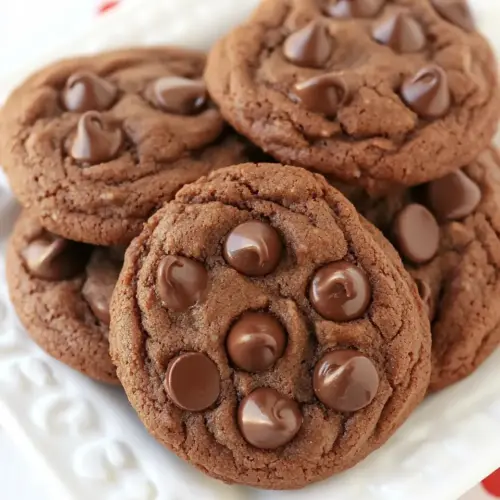
Chocolate Chocolate Chip Pudding Cookies
Chocolate Chocolate Chip Pudding Cookies are soft, chocolatey treats with a slightly crisp edge and a tender, pudding enriched center. These easy cookies use pantry staples to create a plush, chewy texture and deep chocolate flavor, perfect for an easy weeknight bake or batch for sharing. Make them when you want reliable comfort with minimal fuss.
Equipment
- Electric Mixer
- Mixing Bowls
- Baking Sheets
- Parchment Paper
- Cooling rack
Ingredients
- 1 cup (2 sticks) unsalted butter, at room temperature Creamy and softened to provide richness and structure, helps create tender, chewy cookies by coating dry ingredients and trapping air when creamed with sugar.
- 3/4 cup packed brown sugar Moist and caramel-sweet, adds depth of flavor and helps retain moisture for softer cookies while contributing to slight chewiness and color.
- 1/4 cup granulated white sugar Granular and sweetens while contributing to light crisp edges; also assists in creaming with butter to incorporate air for lift.
- One 3.4-ounce package chocolate instant pudding (the dry mix- not prepared!) Powdered and intensely chocolate-flavored as a dry instant pudding mix; contributes cocoa flavor, additional sweetness, and helps keep the interior soft and cakey.
- 2 large eggs Beaten to bind ingredients and add moisture, contributes to structure and lift through protein coagulation when baked, creating a tender crumb.
- 1 teaspoon vanilla extract Aromatic and sweet, enhances overall flavor profile by rounding and intensifying chocolate notes while contributing a warm background aroma.
- 2 1/4 cups all purpose flour Starchy and building, provides the bulk of the cookie dough, develops gluten for structure, and balances wet ingredients to achieve proper dough consistency.
- 2 tablespoons unsweetened cocoa powder (optional-- if you want the cookies extra chocolatey) Bitter and concentrated cocoa powder that heightens chocolate flavor; optional for deeper color and a more intense chocolate profile without extra sweetness.
- 1 teaspoon baking soda Leavening and reactive, produces carbon dioxide with acid to help cookies spread and rise slightly, contributing to a lighter texture and crumb.
- 1/2 teaspoon salt Salty and flavor-enhancing, balances sweetness and intensifies chocolate and other flavors while moderating the overall taste of the cookie.
- 2 cups chocolate chips Melty and chocolatey, creates pockets of melted chocolate throughout the cookie, adding texture contrast and rich bursts of flavor in every bite.
Instructions
- Preheat the oven to 350 degrees F. Line 2 baking sheets with parchment paper or silpat mats.: The oven warming produces an even bake and prevents underdone middles, and lining your pans gives you predictable release and cleaner bottoms. You should feel a warm hum from the oven as it reaches temperature, and the racks should be positioned so air circulates freely. A common mistake is crowding the pans, which traps steam and prevents proper browning.
- In a large bowl, use an electric mixer to combine the butter and sugars until creamy. Mix in the pudding, eggs and vanilla. In a separate bowl, whisk together the dry ingredients: flour, cocoa, baking soda and salt. Add the dry ingredients to the wet ingredients and mix until well combined. Stir in the chocolate chips.: At this stage you will notice the butter lightening in color and taking on a silky texture as air is incorporated, making the batter appear fluffy. The sugars will dissolve slightly into the fat, giving a slightly glossy sheen. When you add the pudding powder, the mixture becomes denser and smell of chocolate may blossom, followed by the rich perfume of vanilla . Overmixing here can cause the dough to be too aerated, leading to flatter cookies, so mix until just smooth.
- Scoop out spoonfuls of the cookie dough and roll into balls. Place on the baking sheets 2-inches apart. Bake 10 to 12 minutes, or until lightly browned and set in the middle. Let the cookies cool on the baking sheet for about 10 minutes before moving to a cooling rack to cool completely.: flour, cocoa, baking soda and salt. : Whisking distributes the baking soda and salt evenly and removes lumps from the flour and cocoa, ensuring even rising and consistent flavor. You should see the light cocoa dust settle and the flour take on a uniform color. If you skip this step, you risk pockets of unblended leavening, which can cause uneven lift and flavor surprises.
- Add the dry ingredients to the wet ingredients and mix until well combined.: As the flour incorporates, the dough will shift from glossy to more structured and slightly stiff, with a muted flour scent. The dough should hold together without being crumbly, and it should not be excessively sticky. If it seems too loose, chilling briefly can help. A typical pitfall is overmixing which develops gluten and yields tougher cookies.
- Stir in the chocolate chips.: Folding in chocolate chips distributes pockets of meltable chocolate through the dough, and the visual contrast of chips against the dough is satisfying. Use a gentle motion to avoid smashing the chips, and make sure they are evenly spread so every cookie gets chocolate. A mistake to avoid is adding chips only to the top of the scooped dough, which gives uneven chocolate distribution.
- Scoop out spoonfuls of the cookie dough and roll into balls. Place on the baking sheets 2 inches apart.: When you shape the dough, you will notice the smooth surface and a soft, pliable texture. The spacing allows the cookies to spread without merging, so they develop neat edges. If the dough is overly warm and spreading too rapidly, chill the balls five to ten minutes to firm them up. Crowding the pan is the most common error and leads to merged cookies lacking crisp edges.
- Bake 10 to 12 minutes, or until lightly browned and set in the middle.: During baking the kitchen will fill with a toasty chocolate aroma and you may see the edges gently darken while the centers remain slightly domed. The surface should look set and not wet, and the bottoms will have a pale golden hue. Remove them when they are set but not overbrowned to keep the centers soft. Leaving them too long results in dry, brittle cookies.
- Let the cookies cool on the baking sheet for about 10 minutes before moving to a cooling rack to cool completely.: Cooling on the sheet allows residual heat to finish the bake while the cookie firms and the flavors settle. You will notice the cookies lose a little sheen as they cool and become easier to transfer. Move them carefully to avoid breaking warm cookies, and transfer before they become completely hard to prevent cracking. A common slip is transferring immediately, which can cause them to fall apart while soft.
Notes
- Measure flour correctly: Spoon the all purpose flour into your measuring cup and level it off rather than scooping directly from the bag. This prevents packing too much flour into the cup which would produce dry, dense cookies.
- Room temperature butter matters: Let the butter sit until it is soft but still cool to the touch. Soft butter creams evenly with the sugars to trap air which helps with structure and tenderness.
- Chill if needed: If the dough feels runny or the kitchen is warm, chill the dough balls for 10 to 20 minutes. This helps the cookies hold their shape and develop a better texture.
- Choose pudding mix intentionally: Use a chocolate instant pudding that smells and tastes good to you, as it contributes both flavor and moisture to the cookies.
- Don’t overbake: Pull the cookies when the edges are lightly browned and the centers look set but still soft. They will continue to finish on the baking sheet during the resting period.
- Storage tip: Keep the cooled cookies in an airtight container at room temperature for up to five days, or freeze for longer storage. Thaw at room temperature for best texture.