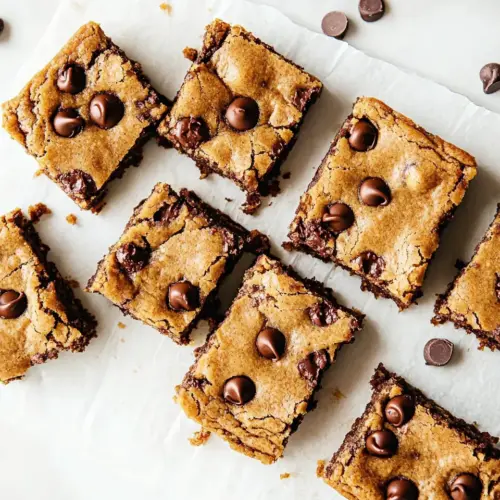
Chocolate Chip Zucchini Bars
Chocolate Chip Zucchini Bars are moist, spiced bars with rich browned butter and melty chocolate, perfect as an easy makeahead treat. These tender squares balance brown sugar depth with warm spices and shredded zucchini for a subtle veggie boost and satisfying texture, ideal for quick snacks, lunchboxes, or gatherings. Try them for a crowd pleasing dessert that feels homely yet elevated.
Equipment
- Medium Saucepan
- Mixing Bowls
- 9x13-inch Baking Pan
- Whisk
- Spatula
Ingredients
- 1 cup unsalted butter, cut into tablespoon pieces Soften and brown in the pan to provide a rich, creamy fat base that helps bind and tenderize the bars; distribute evenly by cutting into tablespoon pieces before creaming with sugars. Add moisture and flavor to create a tender crumb while helping melted chocolate shine through. Help achieve a desirable mouthfeel and support browning during baking for appealing color and aroma.
- 2 cups all-purpose flour Provide structure and bulk to the batter by supplying gluten and starches that set as the bars bake. Sift or whisk with leaveners and spices for even distribution and to prevent dense spots. Work with the butter and eggs to create the cake-like framework that holds inclusions like zucchini and chocolate chips.
- 1 1/2 teaspoons baking powder Leaven and lift the batter by releasing carbon dioxide when heated, ensuring lightness throughout the bars. Combine with the flour beforehand to distribute evenly and avoid uneven rising. Balance with the amount of mixing to produce a tender but well-risen texture.
- 1 1/2 teaspoons cinnamon Warm and aromatic spice that complements zucchini and chocolate while adding depth to the flavor profile. Mix thoroughly into the dry ingredients to infuse the entire batter with subtle sweetness and warmth. Enhance the perception of richness without overpowering delicate zucchini notes.
- 1 teaspoon salt Enhance overall flavor balance by brightening sweetness and rounding other spices while controlling fermentation and elevating flavor layers. Dissolve into the batter to ensure uniform taste and help develop structure in combination with leavening agents. Help temper sweetness so other flavors remain distinct.
- 1/4 teaspoon ground nutmeg Add a subtle, nutty warmth that deepens the spice profile and pairs well with cinnamon and ginger. Use sparingly to avoid overpowering the batter while contributing to overall complexity. Blend with other spices to create a nuanced aromatic backbone.
- 1/4 teaspoon ground ginger Bring a sharp, zesty note that brightens and balances sweeter elements like chocolate and brown sugar. Incorporate into the dry mix to distribute its warm heat evenly and prevent concentrated pockets. Complement cinnamon and nutmeg for a rounded spice character.
- 1 cup brown sugar Contribute molasses-rich sweetness and moisture that enhances tenderness and gives a slightly caramelized flavor when creamed with butter. Help create a moist crumb and deeper color in the finished bars. Work with granulated sugar to balance sweetness and texture.
- 1/4 cup granulated sugar Provide quick-dissolving sweetness and help with creaming to trap air for lightness in the batter. Combine with brown sugar to achieve proper sweetness and assist in structure formation during baking. Help ensure even caramelization and surface texture.
- 1 large egg Bind ingredients together and add moisture and structure through coagulation when heated, helping the bars set properly. Beat with sugars to incorporate air for a lighter texture and to aid in emulsifying fats. Contribute subtle richness and improve mouthfeel.
- 1 egg yolk Enrich the batter with extra fat and richness, intensifying tenderness and improving texture without adding significant liquid. Blend with the whole egg to increase silkiness and create a more custard-like interior. Help stabilize the batter for a moist finish.
- 1 tablespoon vanilla extract Infuse the batter with floral, sweet aromatics and enhance the perception of other flavors without adding moisture. Stir into the wet ingredients to evenly distribute its scent and flavor, elevating the overall profile. Tie together the sweetness of sugar and warmth of spices.
- 1 cup shredded zucchini Provide moisture and mild vegetal complexity while keeping bars tender; shred finely to integrate without excess water. Add subtle freshness and a delicate texture contrast to the rich, sweet elements, helping reduce overall density. Squeeze gently if overly wet to prevent batter dilution but retain enough moisture for a soft crumb.
- 1 1/2 cups chocolate chips, divided Supply rich pockets of chocolate flavor and textural contrast; divide so some chips melt into streaks while others remain firmer for bite. Fold part into the batter and reserve some for sprinkling on top to create visible, molten chocolate spots. Enhance decadence and satisfy chocolate cravings throughout the bars.
Instructions
- Preheat oven to 350 degrees. Grease a 9×13-inch baking pan and set aside.: As you prepare, the kitchen should begin to warm and you may notice a faint, comforting heat building; this preheating ensures the pan and oven environment are stable so the bars rise evenly and bake through. Always position the rack in the center of the oven for balanced heat circulation, and avoid opening the door frequently while baking because temperature swings can lead to uneven set and sunken centers. If your oven runs hot, lower the temperature by 10 degrees to prevent overbrowning.
- Place the butter in a medium saucepan and melt over medium heat, stirring often, until it foams, smells nutty, and browns. This will take about 5 to 7 minutes. Scrape the browned butter into a large bowl. Let cool for about 10 minutes.: The greased pan promotes easy release and a slightly crisp edge where the batter meets the metal, giving you a pleasant contrast. Use an even coat of grease on corners and sides so slices come out cleanly; missed spots can cause sticking. If you like, line the pan with parchment for foolproof removal, but be careful to keep the parchment from folding as that can create uneven edges.
- In a medium bowl, whisk together the flour, baking powder, cinnamon, salt, nutmeg, and ginger. Set aside.: As the butter melts, you will hear gentle bubbling and see milk solids separate; when they turn golden brown you will smell a toasty, nutty aroma that signals the Maillard reaction, which deepens flavor dramatically. Swirl and stir to prevent hot spots and burning; if the solids darken too quickly, reduce heat immediately. A common error is walking away during browning, leading to charred bits and a bitter taste, so stay attentive.
- Add the brown sugar and granulated sugar to the cooled brown butter and whisk until smooth. Add the egg, egg yolk, and vanilla extract. Stir in the zucchini and mix until well combined.: When you scrape the browned butter into the bowl, you should see amber colored strands and smell a warm, caramel like scent that will infuse the bars. Letting it cool slightly prevents cooking the eggs when they are added, which keeps the batter silky. If you add eggs to piping hot butter the eggs can scramble, so cool the butter for about 10 minutes until it is warm but not hot to the touch.
- Add the dry ingredients and stir until just combined, don’t over mix. Fold in 1 cup of the chocolate chips.: During this resting phase the butter temperature drops and the aroma mellows, which makes it safe to combine with cold ingredients. This pause also gives you time to prep the next steps, like shredding and measuring, so you maintain rhythm. Rushing this step risks scrambled eggs and a lumpy batter, which will affect final texture.
- Pour the batter evenly into the prepared pan. Top with remaining chocolate chips. Bake for 25 to 32 minutes or until bars are set and a toothpick comes out clean when inserted into the center.: As you whisk, the dry mixture should look uniformly pale and lightly spiced, with no clumps of leavening. Thoroughly combining ensures even lift and a balanced spice distribution so each bite has the intended flavor. Sifting is optional; if you see lumps, break them up to avoid pockets of baking powder that can create uneven holes in the bars.
- Remove from the oven and let cool. Cut into squares and enjoy!: Letting the dry mix rest while you finish the wet components keeps your mise en place organized and prevents overworking the batter once combined. This small pause helps maintain a calm workflow and prevents last minute scrambling that can introduce mistakes. If you skip this, you may end up mixing flours imperfectly into the wet mix, causing streaks of dry flour.
- Add the brown sugar and granulated sugar to the cooled brown butter and whisk until smooth: The sugars dissolve into the warm butter, creating a glossy, slightly thickened base that carries flavor and moisture; you should see a uniform, satin like texture when properly combined. The aroma will deepen, and whisking helps incorporate air for a lighter crumb. If sugar grains remain visible, whisk longer to dissolve them into the butter; undissolved sugar can create unexpected crunchy spots.
- Add the egg, egg yolk, and vanilla extract: When you whisk in the egg , extra egg yolk , and vanilla , the mixture will loosen slightly and become silkier, and you will notice a thicker, cohesive batter forming. Combine quickly but thoroughly so eggs emulsify the butter and sugars, creating a stable matrix that traps air for structure. If the butter is still too hot, the eggs can scramble, so ensure the butter is warm not hot before adding.
- Stir in the zucchini and mix until well combined: Adding the shredded zucchini introduces visible green flecks and additional moisture; stir gently until the strands are evenly distributed through the batter. The zucchini should be shredded fine so it melds into the crumb rather than creating pockets of wetness. If your zucchini seems overly watery, squeeze out excess moisture to avoid a soggy center or prolonged baking time.
- Add the dry ingredients and stir until just combined, don’t over mix: With the dry mix incorporated, the batter will thicken and take on a uniform, slightly dense sheen; stop mixing when no streaks of flour remain to preserve tenderness. Over mixing develops gluten and yields tougher bars, so fold with care. A common misstep is vigorous mixing that creates a chewy texture rather than the desired tender crumb.
- Fold in 1 cup of the chocolate chips: Folding in the chocolate chips creates pockets of chocolate without breaking them, and you should see chips dispersed through the batter for even distribution. Use a spatula and fold gently to maintain air bubbles and prevent overworking. If you use a spoon and stir aggressively, you can crush chips against the bowl and create uneven chocolate clumps.
- Pour the batter evenly into the prepared pan: Spreading the batter so it sits level in the pan ensures even baking and consistent edges, and you may tap the pan lightly on the counter to settle the batter and release any trapped air bubbles. Even thickness prevents thin edges from overbaking while the center remains underdone. Avoid scraping every last bit of batter into one corner, which can cause uneven thickness across the pan.
- Top with remaining chocolate chips: Sprinkling the remaining chocolate chips on top yields glossy pockets of melt and an attractive finished surface as the chips soften in the oven. This visual cue also helps you judge doneness, since the chips will have melted slightly and the surface will look set around them. If you bury all chips inside, you miss that appealing top layer and textural contrast.
- Bake for 25 to 32 minutes or until bars are set and a toothpick comes out clean when inserted into the center: During baking you will notice the edges pull away slightly from the pan and the top turn a warm golden brown, while the kitchen fills with a nutty, spiced scent. Use the toothpick test inserted in the center; if it emerges with a few moist crumbs but no raw batter, the bars are done, as residual heat will finish them. Overbaking makes them dry, so check at the lower end of the time range and add minutes only if the center appears unset.
- Remove from the oven and let cool: Cooling lets the crumb finish setting and prevents the bars from crumbling when cut; you will notice the interior firm and the surface lose its glossy sheen. Cooling also allows flavors to meld, improving texture and sliceability. Cutting while too warm risks tearing and a gooey interior that does not hold shape.
- Cut into squares and enjoy: Once cooled, the bars should slice into clean squares with a tender interior and slightly firmer edges, and you will see pockets of melted chocolate chips that add gooey contrast. Serve at room temperature so the texture is at its best. If you store them warm, condensation can make the surface sticky, so always let cool fully before wrapping.
Notes
- Brown the butter carefully Browning butter adds deep, nutty flavor; keep stirring and watch the color closely to avoid burning the milk solids which creates bitterness.
- Measure flour properly Spoon your all-purpose flour into the measuring cup and level it off to avoid packing in too much, which keeps the bars tender not dense.
- Squeeze excess moisture from zucchini If your shredded zucchini seems wet, press it in a towel to remove extra water so the batter does not become overly loose and the bars bake evenly.
- Mix gently after adding flour Fold the batter just until the dry streaks disappear to prevent gluten development that would make the texture chewy rather than tender.
- Use a center toothpick test Insert a toothpick into the center; a few moist crumbs indicate done, while wet batter means give it a few more minutes to avoid an underbaked gooey center.