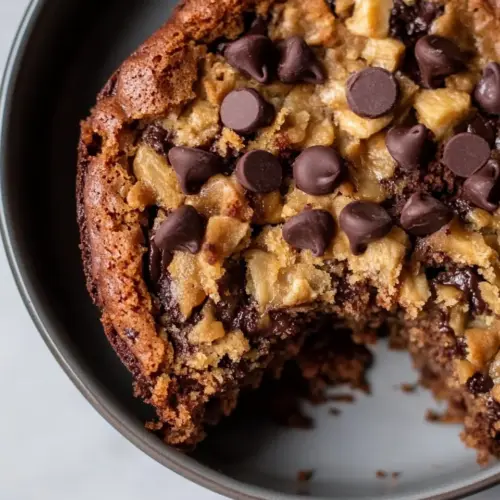
Chocolate Chip Banana Cake
Chocolate Chip Banana Cake is a tender, moist dessert that combines ripe bananas, tangy Greek yogurt, and pockets of semi-sweet chocolate chips. This creamy, easy to make cake works for brunch or an easy weeknight dessert, and the glossy chocolate ganache gives it a special finish. It’s a crowd pleaser with approachable ingredients, perfect when you want a comforting treat that feels a little indulgent.
Equipment
- Sieve
Ingredients
- 3 large overripe ripe bananas Mash thoroughly to provide natural sweetness, moisture, and a strong banana flavor that binds the batter. Use overripe bananas for optimal softness and intensified taste that enhances the cake's crumb.
- 3/4 cup unsalted butter room temperature Cream until light and fluffy to add richness, tenderize the crumb, and incorporate air for a softer texture. Keep at room temperature so it blends smoothly with sugars and wet ingredients.
- 3/4 cups sugar Cream with butter until pale and aerated to contribute sweetness, structure, and caramelized notes when baked. Adjust creaming time to control cake lightness and overall sweetness level.
- 1/2 cup brown sugar packed Add depth and molasses-like sweetness that complements bananas; press firmly when measuring to ensure accurate sweetness contribution. Brown sugar also helps retain moisture for a moist, tender cake.
- 3 large eggs room temperature Beat to provide structure and emulsification, helping to trap air and hold the batter together during baking. Use at room temperature so eggs incorporate evenly and contribute to a stable rise.
- 2 teaspoons vanilla extract Stir in to enhance overall flavor with warm, sweet aromatics and to round out the cake's profile. Use pure vanilla extract for the cleanest, most balanced flavor boost.
- 1 1/2 cups Greek yogurt room temperature Fold in gently to add tang, moisture, and a denser, tender crumb compared to milk; helps balance sweetness with acidity. Bring to room temperature to prevent curdling and ensure even mixing.
- 3 cups all-purpose flour Sift and combine as the primary dry structure agent that provides bulk and gluten for the cake's crumb. Measure accurately to maintain the correct balance between structure and tenderness.
- 1 teaspoon baking powder Whisk in to provide a mild lift and help the cake rise evenly by producing carbon dioxide when combined with wet ingredients. Use fresh baking powder for reliable leavening performance.
- 1 teaspoon baking soda Dissolve into batter to react with acidic components and create additional lift and browning through released carbon dioxide. Check expiration to ensure consistent rise and texture.
- 1/2 teaspoon cinnamon Sprinkle for a warm, aromatic note that complements banana and chocolate while subtly enhancing perceived sweetness. Use sparingly so the spice supports rather than dominates the cake flavor.
- 1/2 teaspoon salt Add to control overall seasoning and to enhance the other flavors while strengthening gluten network at the correct balance. Use measured amounts to avoid over-salting which can suppress sweetness.
- 1 1/2 cups semi-sweet chocolate chips Fold in to introduce pockets of melted chocolate and textural contrast, enhancing sweetness and chocolate intensity throughout the cake. Distribute evenly to avoid clumping and ensure even bites.
- 1/2 pound chocolate chips Melt or sprinkle for an extra boost of chocolate flavor and richness beyond the semi-sweet chips; adds more intense chocolate pockets. Consider melting some for a ganache or swirling into batter for variety.
- 1 cup heavy cream Warm and whisk to create a rich pourable component for ganache, glaze, or to enrich batter; contributes fat for glossy finish and smooth texture when combined with chocolate. Heat gently to avoid scalding and separate curdling.
Instructions
- Preheat the oven to 350 degrees Fahrenheit. Grease and line a 13 x 9 x 2-inch baking pan with parchment paper.: As you preheat, notice the warm oven smell beginning to bloom in the kitchen, it signals the environment the cake needs to set its structure while baking. Ensuring the oven reaches a steady 350 degrees Fahrenheit prevents the cake from baking unevenly, which can cause doming or dense centers. A common mistake is placing the cake in too cool an oven, which makes it overmoist and collapse as it slowly warms. If your oven runs hot or cold, use an oven thermometer to verify temperature, and do not open the door frequently during the initial rise because that releases heat and affects lift.
- Add 3 large overripe ripe bananas to a large bowl and use a fork to lightly mash. Add 3/4 cup unsalted butter, 1/2 cup brown sugar, and 3/4 cup sugar. Lightly beat with a hand mixer till light and creamy. Add 3 large eggs, and 2 teaspoons vanilla extract and beat until combined. Add 1 1/2 cups Greek yogurt and beat the mixture to combine. It'll start looking a little grainy but don't worry everything will come together.: Rubbing the pan with a little softened butter then pressing parchment down ensures the cake releases cleanly and the sides remain intact, which preserves the clean edges for slicing. I look for parchment that hugs the pan without folding over, so the batter distributes evenly. A frequent oversight is skipping parchment, which can lead to tearing when you remove the cake; if you do not have parchment, grease thoroughly and dust with a light flour coating to reduce sticking.
- Place a sieve on top of the bowl and add 3 cups all-purpose flour, 1 teaspoon baking powder, 1 teaspoon baking soda, 1/2 teaspoon cinnamon, and 1/2 teaspoon salt. Sieve it into the bowl, and mix the entire mixture with a spatula until just combined. Mix in 1 1/2 cups semi-sweet chocolate chips.: When you mash the bananas , aim for a mixture that still has a few small lumps to give texture and bursts of banana in the crumb. The aroma of ripe bananas will become more pronounced as they break down, and their moisture will integrate more easily in the next steps. Overmashing into a puree can make the batter too wet in some cases, so stop once they are evenly broken down but not completely liquefied.
- Pour the batter into the baking pan and bake for 50 minutes or till a skewer inserted into the center comes out clean. Let the cake cool completely.: Cream these together with the mashed bananas until the blend looks light and slightly aerated; that change in texture is subtle but important for a tender crumb. The sugars should dissolve into the fat so the batter won’t be gritty, and the brown sugar adds moisture and depth. A typical mistake is using cold butter , which won’t cream properly; make sure it is at room temperature for even incorporation.
- Meanwhile, heat 1 cup heavy cream for a minute or so in the microwave until hot but not boiling. Pour it over 1/2 pound chocolate chips and let it sit for a minute. Whisk the chocolate and cream together until smooth.: You want to introduce some air without overworking the batter, so stop once the mixture loosens and shows a paler color. The sound of the mixer will change as the texture becomes creamier, and visually you’ll see a smoother surface. Overbeating here can toughen the cake because it develops gluten from the flour later, so keep this step gentle and controlled.
- Pour ganache over the cake and spread it evenly on the cake. Refrigerate until ready to serve. If the cake is cold, let it sit outside for 15 minutes to let it come to room temperature before serving.: Incorporating the eggs and vanilla extract creates an emulsion that binds the mixture, giving stability and body. The batter should become slightly more fluid and glossy, which helps with even baking. A common error is adding cold eggs which can seize the butter; bring them to room temperature first to ensure smooth blending.
- Add 1 1/2 cups Greek yogurt and beat the mixture to combine: The Greek yogurt will make the batter thicker and slightly tangy, improving tenderness and keeping the crumb moist. After adding, the batter may look a bit grainy, but as you fold in the dry ingredients it will smooth out. Avoid overmixing once the flour is added because excessive stirring can make the cake dense.
- Place a sieve on top of the bowl and add 3 cups all-purpose flour, 1 teaspoon baking powder, 1 teaspoon baking soda, 1/2 teaspoon cinnamon, and 1/2 teaspoon salt: Sifting these dry elements together aerates them and removes lumps, ensuring uniform distribution of leavening and spice. As you sift, you will see a light cloud of flour settling into the wet mix which helps prevent clumps. A common slip is skipping the sieve; that risks uneven pockets of baking soda or flour that lead to textural inconsistencies.
- Sieve it into the bowl, and mix the entire mixture with a spatula until just combined: Use a gentle folding motion to bring the batter together, stopping when streaks of flour are no longer visible to avoid gluten development. You should see a cohesive batter that is thick but pourable, with ribbons that settle back slowly. Overmixing at this stage is the most typical mistake, which can produce a tight, rubbery crumb instead of a tender one.
- Mix in 1 1/2 cups semi-sweet chocolate chips: Folding in the semi-sweet chocolate chips distributes pockets of molten chocolate that create pleasurable textural contrast after baking. Aim for even distribution so each slice gets chocolate, and watch for chips sinking to the bottom which can happen if the batter is very thin. To prevent sinking, gently fold rather than aggressively stir, and avoid adding chips that are warm or melting.
- Pour the batter into the baking pan and bake for 50 minutes or till a skewer inserted into the center comes out clean: As the cake bakes you will notice the top turning a warm golden color and the center setting while the aroma of bananas and chocolate fills the kitchen. The skewer test is the most reliable indicator, but also look for slight pullaway around the edges. Removing the cake too early yields a gummy center, while overbaking dries it out, so check at around the 45 minute mark if your oven tends to run hot.
- Let the cake cool completely: Cooling allows the crumb to settle and makes slicing cleaner, because cutting warm cake can compress and tear the structure. Cooling also prepares the surface for ganache application, ensuring it does not run off excessively. A rushed cut can lead to a crumbly presentation, so be patient and let it rest until it reaches room temperature.
- Meanwhile, heat 1 cup heavy cream for a minute or so in the microwave until hot but not boiling: Heat the heavy cream until small steam ribbons form and it is very warm, but stop before it reaches a full boil to avoid scalding and separation. The aroma of warmed cream is subtle and comforting; when poured over chocolate it melts the chips into a glossy emulsion. Boiling the cream can change its fat structure and create a grainy ganache, so warm it gently.
- Pour it over 1/2 pound chocolate chips and let it sit for a minute: Allowing the hot cream to rest on the chocolate chips softens them before whisking, which produces a shiny ganache with minimal effort. The heat will gently melt the chips into a smooth pool; patience here reduces the need for aggressive whisking. Stirring too soon can result in uneven melting, so wait the minute before combining.
- Whisk the chocolate and cream together until smooth: Whisk patiently until the ganache becomes glossy and velvety, a texture that spreads easily across the cake. The sheen indicates proper emulsification of fat and chocolate, and a few slow whisk strokes will bring everything together. If the ganache seizes or looks grainy, warmth rather than forceful stirring usually rescues it; place the bowl over low warm water and whisk gently.
- Pour ganache over the cake and spread it evenly on the cake: Pouring while the ganache is slightly warm helps it level into a smooth coating that drips slightly over the edges, giving a polished look. Use a spatula to guide the ganache, and let it bed into the cake for a glossy finish. If the cake is still too warm the ganache can melt and run off, so ensure the cake is cooled adequately for best results.
- Refrigerate until ready to serve: Chilling sets the ganache and firms the cake, which makes neat slices easier to achieve. Refrigeration also deepens the flavor as the elements meld, but keep it covered to prevent drying. Avoid overchilling that causes the ganache to become overly firm; if chilled, let the cake sit at room temperature for about 15 minutes before slicing for optimal texture.
- If the cake is cold, let it sit outside for 15 minutes to let it come to room temperature before serving: Bringing the cake slightly closer to room temperature softens the ganache and allows the flavors to bloom so each bite feels luscious rather than chilled. You will notice aromas returning as it warms, and the texture becomes creamier. Serving straight from the fridge can mute the flavors and make the ganache too firm for a pleasant mouthfeel.
Notes
- Room temperature ingredients matter: Allow eggs, butter, and Greek yogurt to sit out for about 30 minutes before starting; they combine more smoothly and create a more even batter.
- Measure flour correctly: Spoon the all-purpose flour into the measuring cup and level it off, avoid scooping directly with the cup to prevent a dense cake from too much flour.
- Protect your oven environment: Preheat to a steady 350 degrees Fahrenheit and try not to open the door during the first 30 minutes to maintain consistent rise and texture.
- Prevent chocolate sinking: Fold the semi-sweet chocolate chips in gently and consider tossing them in a teaspoon of flour if your batter is very thin, this helps keep them suspended.
- Warm cream slowly: Heat the heavy cream until steaming but not boiling; overheating can lead to grainy ganache while gentle warmth yields a silky finish.
- Store properly: Keep leftovers covered in the refrigerator for up to five days, and bring slices to room temperature for best texture and flavor before serving.