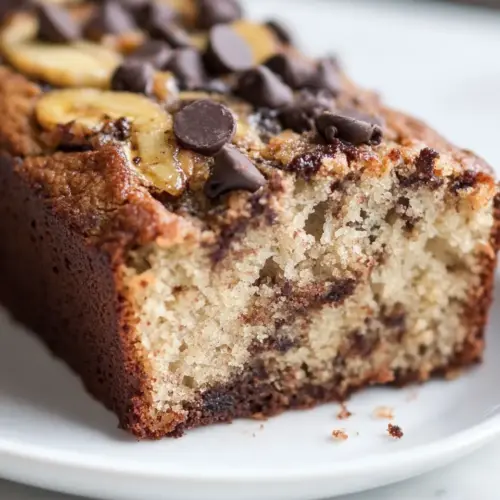
Chocolate Chip Banana Bread
Chocolate Chip Banana Bread is a moist, tender loaf filled with melty chocolate pockets and rich banana flavor. This easy, comforting bake uses pantry staples to deliver a bakery style result, perfect for breakfast or an easy weeknight treat. Make a double batch to share, and enjoy slices warm for maximum gooey chocolate appeal.
Equipment
- Loaf pans
- Mixing Bowls
- Spatula
- Measuring Cups
Ingredients
- 1 cup butter softened Softened to creamy consistency and used to provide richness, moisture, and tender crumb; creaming with sugars helps incorporate air for a lighter loaf. Adds flavor depth and helps distribute other ingredients evenly throughout the batter.
- 1 cup brown sugar packed Packed to ensure accurate measurement and used to add moisture and a deep caramel-like sweetness; helps with browning and contributes to a moist texture in the bread. Balances the sweetness profile when combined with granulated sugar.
- 1 cup granulated sugar Granulated for bulk sweetness and structure; helps with aeration when creamed with butter and promotes a tender crumb. Balances the stronger sweetness of brown sugar for an even flavor.
- 4 very ripe bananas mashed Mashed until smooth and added for natural sweetness, moisture, and banana flavor; acts as part of the liquid component binding the batter. Contributes to softness and helps keep the bread moist during storage.
- 3 large eggs Beaten and added to bind ingredients together, provide structure, and help the bread rise; eggs contribute moisture, richness, and a tender crumb. Also help emulsify fats and liquids for a consistent batter.
- 2 teaspoons vanilla Added for warm aromatic flavor and to enhance sweetness; vanilla deepens the overall flavor profile and complements banana and chocolate. A small amount significantly improves the perception of sweetness.
- 3 cups all purpose flour Measured and sifted or stirred to provide the main structure via gluten formation and dry bulk; contributes to crumb and density control. Works with leavening agents to determine final rise and texture.
- 2 teaspoons baking soda Used as a chemical leavening agent to produce carbon dioxide and help the bread rise; reacting with acidic components creates lift in the loaf. Proper measurement ensures even texture without metallic taste.
- 1 teaspoon salt Added in small amount to enhance flavor balance and strengthen gluten formation slightly; helps control yeast and chemical leavening effects. Also accentuates other flavors and prevents flatness in taste.
- 1/2 cup sour cream or plain greek yogurt Included for added tenderness, moisture, and slight tang; provides richness and reacts with baking soda to assist leavening. Offers a creamy acidity that balances sweetness and contributes to a softer crumb.
- 2 cups chocolate chips divided (I used semi sweet) Divided to provide bursts of chocolate throughout and on top for visual appeal and texture contrast; semi-sweet chips add rich chocolate flavor without overwhelming sweetness. Reserving some for sprinkling on top creates a decorative, melty finish.
Instructions
- Preheat oven to 325 degrees. Grease two light colored loaf pans (8 1/2" x 4 1/2" x 2 3/4” high) with non-stick cooking spray and line the bottom and longest sides with parchment paper. Spray lightly again with cooking spray and set aside.: The kitchen will begin to warm and you may notice a faint scent as the oven approaches temperature, which helps the crust form evenly while the interior cooks through. Setting the oven to 325 degrees ensures a gentle bake that prevents the exterior from over browning before the center sets. One reason this matters is a lower temperature promotes an even rise and a tender crumb, rather than a dome that splits. Common mistakes include skipping the preheat or placing pans in too early, which can lengthen bake time and yield an undercooked center.
- In a large bowl, mix butter and sugars until well combined. Stir in eggs, vanilla, and banana until smooth. (It may turn a little lumpy, but this is completely normal.): You will feel the slight tack of the cooking spray and see the parchment fit snugly inside the pan, creating clean release points. Light colored pans are recommended because they reflect heat, promoting even browning rather than darkening too quickly. Lining and greasing prevents sticking, helping you remove loaves without tearing the crumb. A frequent error is not securing the parchment, which can shift during pouring and cause uneven edges.
- Gently stir in dry ingredients and sour cream until a uniform batter has formed. Scrape sides to ensure no lumps are present. Stir again briefly if needed. Fold in 1 1/2 cups of chocolate chips into batter. Divide evenly between prepared pans. Top each loaf with 1/4 cup chocolate chips (or more) if desired.: The mixture should go from dull to slightly fluffy and you will hear a soft creaming sound if using a mixer, or notice smoother texture with a spatula. Creaming incorporates tiny air pockets that help with lift, and it dissolves sugar into the fat for even sweetness. If the butter is too warm it will not aerate properly, so aim for soft but not melted. Over creaming can create a weaker structure, so stop once it looks light and even.
- Bake for 50 to 60 minutes in the lower half of the oven or until completely baked. If your loaves are getting too dark for your liking, you can tent with foil. Remove from oven and cool at least 20 minutes before removing from pan. Slice and serve.: As you add the eggs , the batter will look glossy, and once the mashed bananas are incorporated you will see streaks of fruit that blend into a uniform batter. These ingredients add moisture and richness, and thorough blending ensures even texture and flavor. The batter may appear slightly lumpy from the bananas, which is normal and not a sign of error. Avoid over mixing here, as excessive stirring can develop gluten and make the loaf dense.
- Gently stir in dry ingredients and sour cream until a uniform batter has formed: You should see the batter thicken and become smooth, with no visible streaks of flour, and feel a silky texture on your spatula. The sour cream adds tang and keeps the loaf tender, while the dry mix supplies structure. Mixing gently protects the air pockets formed earlier and keeps the crumb light. A common pitfall is vigorous mixing, which can make the final loaf tough rather than soft.
- Scrape sides to ensure no lumps are present: Running a spatula around the bowl will reveal any pockets of unmixed flour or butter, and scraping helps you achieve an even batter that bakes uniformly. This action prevents dry spots and ensures each loaf has consistent texture. People sometimes skip this and end up with dense bits of flour in the baked bread; taking the extra moment avoids that issue.
- Fold in 1 1/2 cups of chocolate chips into batter: Folding creates delicate swirls and pockets of melted chocolate chips without deflating the batter, and you will see chips distributed through the mix rather than clumped. This gentle motion preserves the airiness while ensuring chocolate in every bite. Over stirring when adding chips can crush them and concentrate chocolate in one area, which may weigh down the loaf.
- Divide evenly between prepared pans: Pour the batter slowly and level the surface so both pans have equal volume, which promotes even baking and similar finish times. You may tap the pans lightly to settle the batter and release trapped air bubbles visible as small surface ripples. Uneven division can lead to one loaf finishing much sooner than the other, so use a scale or measuring cups if precision is needed.
- Top each loaf with 1/4 cup chocolate chips if desired: Adding chips on top creates a glossy, chocolate studded crust as they melt and set, giving an attractive finish and extra pockets of chocolate on the surface. You will see the chips soften and sink slightly while baking, then form a pretty mosaic when cool. Avoid over topping, which can cause the top to brown excessively or create an uneven bake.
- Bake for 50 to 60 minutes in the lower half of the oven or until completely baked: During baking you will notice the aroma rise and the tops turn a warm golden brown, with a slight give when gently pressed. Baking lower in the oven protects the tops from browning too fast while allowing the centers to cook fully. The loaves are done when a toothpick inserted near the center comes out clean or with a few moist crumbs attached, and the internal temperature approaches a set finish. A typical mistake is removing loaves too soon, which results in a gummy center; if unsure add 5 to 10 minutes and check again.
- Tent with foil if loaves are getting too dark: If the tops brown too quickly you will see darker edges forming; tenting with foil shields them while the interiors finish baking. Cover loosely so steam can escape, preserving crust texture without burning. Leaving them uncovered risks over browning or a bitter crust, so monitor closely in the last part of the bake.
- Remove from oven and cool at least 20 minutes before removing from pan: As the loaves rest you will notice the structure set and the steam subside, making them easier to unmold intact. Cooling prevents the crumb from tearing when you remove the parchment, and it lets flavors settle so slices cut cleaner. Trying to remove hot loaves is a common error and often causes collapse or sticking.
- Slice and serve: Once cooled, the loaf will yield neat slices with chocolate pockets and a moist crumb, and the aroma will be comforting but not overpowering. Serving slightly warm enhances the melty chocolate chips experience, while room temperature slices showcase the tender crumb. Cutting too soon can compress the loaf, so wait the recommended resting time for best results.
Notes
- Swap chocolate types Try dark or milk chocolate chips in place of semi sweet for different sweetness and depth, adjusting to personal preference.
- Add nuts for crunch Fold a half cup of chopped walnuts or pecans into the batter for a toasty texture contrast, if you like added bite.
- Top with coarse sugar Sprinkle a little coarse sugar on top before baking to create a subtle crunch and glossy finish on the loaf crust.
- Mix in spices A teaspoon of cinnamon or a pinch of nutmeg added to the dry ingredients will give a warm note that complements the bananas.
- Swirl in nut butter Spoon small dollops of peanut or almond butter across the batter and swirl lightly for a marbled, nutty accent.