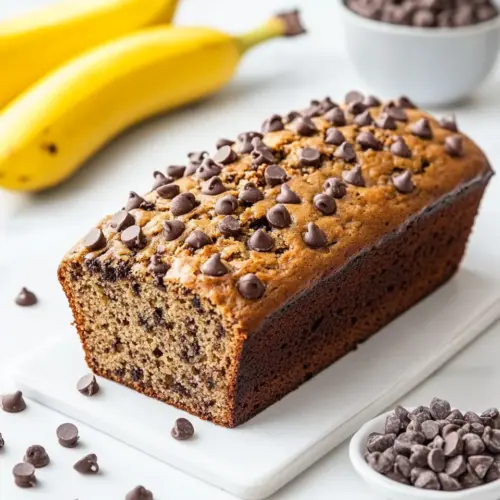
Chocolate Chip Banana Bread
Chocolate Chip Banana Bread is a moist, tender loaf studded with melty mini chocolate chips and rich banana flavor. This easy, comforting loaf uses simple pantry ingredients to create a soft crumb and caramelized crust, ideal for breakfast, snack, or sharing at gatherings. Bake a batch for an easy weeknight treat that feels homemade and heartfelt.
Equipment
- Hand Mixer
- Mixing Bowl
- Stand mixer
- 9×5 Loaf Pan
- Nonstick spray
- Spatula
- Measuring Cups and Spoons
Ingredients
- 1 cup granulated sugar Sweeten the batter and help caramelize the crust during baking; granulated sugar also contributes to tender crumb by dissolving into the wet ingredients and assisting with moisture retention. Measure accurately to balance sweetness and texture in the banana bread.
- 1/2 cup butter softened Soften to provide richness and promote a tender, moist crumb; butter also helps carry flavors like vanilla and banana throughout the loaf. Creaming it with sugar incorporates tiny air pockets that aid leavening and structure.
- 2 eggs room temperature Bind the ingredients and provide structure while adding moisture; eggs also help emulsify fat and liquid for a uniform batter. Use room-temperature eggs to mix evenly and promote even rise during baking.
- 4 ripe bananas mashed, room temperature Provide natural sweetness, moisture, and intense banana flavor; mashed ripe bananas also contribute to the batter's density and tender texture. Use fully ripe bananas for best sweetness and aroma, and bring them to room temperature for even incorporation.
- 2 cups all-purpose flour Form the bulk of the dry structure and create the crumb; all-purpose flour supplies gluten for binding while allowing a tender loaf when not overmixed. Spoon and level the flour when measuring to avoid adding excess that could dry the bread.
- 1 teaspoon baking soda Leaven the batter by releasing carbon dioxide when activated by moisture and acids, helping the loaf rise and develop a light texture. Measure precisely to avoid an overly soapy or metallic flavor and uneven rise.
- 1/4 teaspoons salt Season the loaf subtly to enhance sweetness and balance flavors; salt also strengthens gluten and improves overall taste perception. Even a small pinch ensures the banana and chocolate flavors are more pronounced.
- 3/4 cup mini chocolate chips divided Contribute bursts of chocolate throughout the bread and add texture contrasts between soft crumb and melty chips; reserving some for the top creates an attractive finish. Fold most chips into the batter and sprinkle the remainder on top before baking.
Instructions
- Preheat oven to 350 degrees Fahrenheit.: Warmth fills the kitchen quickly, and you should notice the air becoming steady and slightly dry as the oven reaches 350 degrees Fahrenheit . This preheat is crucial because it establishes the initial burst of heat that helps the loaf rise and form a nice crust. If you skip full preheating, the loaf can bake unevenly and collapse in the center, so wait until the oven signals readiness.
- Spray a 9×5 inch loaf pan with non-stick spray or line it with parchment paper (leave hanging over sides of pan) sprayed with non-stick spray. Set aside.: When you grease and line the pan you create a satin surface that the batter will release from easily, and you might notice a faint glossy sheen from the non-stick spray. Proper lubrication prevents tearing when you lift the loaf out. A common mistake is under-greasing, which causes sticking, so be thorough around corners and edges.
- In a large bowl, cream sugar and butter or in a stand mixer until smooth and creamy, about 2 minutes. Add eggs and bananas into mixing bowl, mix until completely combined.: As you cream sugar and softened butter , you will see the mixture become pale and fluffy, and it may produce a slight, sweet butter aroma. This aeration helps create a lighter crumb by trapping tiny air bubbles. Avoid overcreaming to the point of becoming greasy, which can cause the loaf to collapse during baking.
- Mix in baking soda, flour and salt until combined. Fold in 1/2 cup chocolate chips with spatula.: Once you fold in the eggs and mashed bananas , the batter will soften and emit a sweet, fruity smell. The mixture should appear cohesive and slightly glossy. If you notice streaks of unmixed egg white, continue gently folding; under-mixing leaves pockets of uncooked egg, while overmixing will toughen the batter.
- Pour batter into a greased 9'' x 5'' loaf pan. Top with remaining 1/4 cup chocolate chips.: Adding the dry baking soda , all purpose flour , and salt will mute the batter’s sheen and thicken it into a scoopable consistency. You might feel resistance as the flour integrates, and the aroma will shift to a more bready scent. Mix just until no streaks of flour remain, because overmixing develops gluten and yields a denser loaf.
- Bake at 350 degrees Fahrenheit for 1 hour or until the bread tests done. Let cool for about 30 minutes before enjoying.: Folding in the mini chocolate chips should be gentle and deliberate, leaving visible pockets of chips through the batter. The batter will take on little dark specks of chocolate, and you should hear a soft, slightly tacky texture under the spatula. Avoid vigorous stirring which causes the chips to break and sink, concentrating chocolate at the bottom.
- Pour batter into a greased 9'' x 5'' loaf pan.: As you transfer the batter, notice how it settles into the pan, smoothing into corners and leveling itself. Use a spatula to gently even the top so it bakes uniformly. A common slip is overfilling, so keep an eye on the batter height; too full a pan can spill and bake unevenly.
- Top with remaining 1/4 cup chocolate chips.: Sprinkling the reserved mini chocolate chips on top creates a glossy, inviting surface that will melt slightly and form little pockets of shine. These chips give visual appeal and a textural contrast, crisping at the edges. If you press them slightly into the surface they will adhere better, but pressing too deep makes them sink and lose the pretty top.
- Bake at 350 degrees Fahrenheit for 1 hour or until the bread tests done.: During baking you will notice a warm, sweet aroma filling the kitchen, and the top will turn golden brown with slightly darker edges. The center should spring back lightly and a tester inserted should come out with a few moist crumbs, not wet batter. Common errors include removing it too early, which results in a gummy center, or leaving it too long, which dries the crumb.
- Let cool for about 30 minutes before enjoying.: As the loaf cools, steam escapes and the crumb firms up to a sliceable texture, and the chocolate pockets settle. Cooling prevents the loaf from tearing and allows flavors to meld, enhancing the final taste. Cutting too soon is a frequent mistake, causing crumbly slices and melted chocolate pools; patience here improves presentation and texture.
Notes
- Swap sugar carefully — If you prefer a less sweet loaf, reduce the granulated sugar by a few tablespoons, but avoid removing it entirely, because it also helps with crust color and structure.
- Butter temperature matters — Use softened but not melted butter so it creams properly with sugar, ensuring a tender crumb and even rise.
- Banana ripeness — Use very ripe, spotted bananas for the most aromatic and moist loaf; greener bananas will reduce both flavor and moisture.
- Chocolate distribution — Divide the mini chocolate chips as instructed so some melt into the crumb and some remain on top for a pleasing texture contrast.
- Baking time tolerance — Ovens vary, so start checking the loaf with a tester at about 50 minutes to avoid overbaking and dryness.