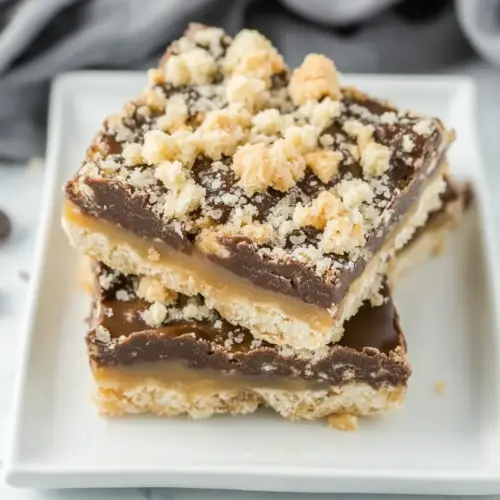
Chocolate Caramel Bars with Streusel
Chocolate Caramel Bars with Streusel deliver a buttery crust, gooey homemade caramel, and pockets of melty chocolate for a rich, crunchy treat. These bars are creamy, crispy, and comforting, perfect as an easy bake for gatherings or a sweet finish to an easy weeknight meal. Make them for a crowd pleasing dessert that is both nostalgic and irresistible.
Equipment
- 9 x 13 pan
- Saucepan
- Mixing Bowl
- Spatula
Ingredients
- 2 sticks (1 cup) butter at room temperature Soften and cream to provide richness and a tender, moist crumb while helping bind the streusel and bar base together; at room temperature it incorporates easily with sugar for a smooth texture and even baking.
- 1/2 cup sugar Sweeten and assist in creaming to aerate the dough, contributing to a balanced sweetness and lightness in both the streusel and bars; sugar also helps with caramelization and browning during baking.
- 1 teaspoon vanilla Enhance and deepen flavor by adding warm aromatic notes that complement chocolate and caramel; vanilla rounds out the overall taste profile and masks any potential bitterness.
- 2 1/2 cup s flour Combine and structure the dough by supplying gluten and bulk for the crust and streusel; all-purpose flour creates the framework that holds the bars together and gives them a pleasant bite.
Instructions
- Line a 9 x 13 pan with non-stick foil or regular foil (spray with non-stick spray). Buttered parchment will also work.: The kitchen will smell of warm foil and butter if you skip proper lining, and cleanup becomes harder. Properly lining and spraying ensures the bars lift out cleanly, showing neat layers. A common mistake is leaving the foil loose so the dough presses unevenly, so press the foil firmly into the corners and smooth any folds before adding the crust.
- Preheat the oven to 350º.: You will notice a steady, even warmth in the oven once it reaches temperature, which helps the crust bake evenly without soggy spots. Preheating ensures the bottom crust starts setting immediately, creating a crisp edge. Avoid placing the pan into an oven that is still heating, since that can lead to uneven baking and a denser texture.
- Beat the 2 sticks of butter with the sugar till light and fluffy, about two minutes. Add vanilla, then slowly add in flour, scraping the sides of the bowl till the dough is smooth and flour incorporated.: Crèaming butter and sugar traps tiny air pockets that translate to a tender, slightly airy crumb. The mixture should take on a pale color and a light, billowy texture; scraping the bowl prevents streaks of dry flour. If you overmix the dough once flour is added, the crust can become tough, so stop as soon as the flour is incorporated and the dough is smooth.
- Put 3/4 of the dough into the prepared pan and pat firmly to form the bottom crust. Set aside the remaining dough and chill the crust as you prepare the caramel.: When you press the dough into the pan, you should feel slight resistance, and the surface will look even and compact. Chilling helps the crust hold its shape and reduces spreading during baking. A frequent error is pressing too thin, which yields a fragile base that can break when cutting, so aim for even thickness across the pan.
- Combine all filling ingredients except vanilla and chocolate chips in a saucepan. Bring to a simmer, stirring occasionally. Then allow the mixture to boil gently, stirring often, for about 10 minutes, until it starts to darken and thicken.: As the filling simmers, steam will rise and the aroma of cooked sugar will deepen to a toasty scent that signals caramelization. Frequent stirring prevents scorching, and gentle bubbling indicates you are in the right window for thickening. If the heat is too high the sugars can burn quickly, producing a bitter flavor, so keep the heat moderated and stir often.
- Remove from heat, add vanilla, and allow to cool for about 10 minutes.: After removing from the stove, the mixture will steam and settle; adding vanilla at this point preserves its aroma without evaporating. Cooling slightly prevents the caramel from liquefying the crust when spread. A common misstep is spreading piping hot caramel, which soaks into the crust and makes the bars soggy; waiting the full cooling time ensures cleaner layers.
- When the caramel has cooled slightly, spread it evenly over the prepared crust. Sprinkle with chocolate chips, then reserved crumbs.: Spreading should feel smooth under your spatula, and the caramel will take on a glossy sheen. The scattered chocolate chips will begin to soften from the caramel warmth, creating pools of melted chocolate after baking. Pressing the crumbs gently into the top helps them adhere, while leaving some loose for a crunchy finish. If the caramel is uneven, the bars will cut irregularly, so aim for an even layer across the panel.
- Bake for about 30 minutes, until the filling is bubbly. Cool in the pan, then remove the bars to a cutting board using the foil and slice to the desired size.: While baking, you will see the edges of the crust deepen to a light golden brown and the filling will bubble at the edges, a clear visual cue that it is set. Cooling allows the caramel to firm, so the bars slice neatly without dragging. Cutting too soon is a routine error, leading to sticky, messy pieces; allow ample cooling before slicing.
- Store at room temperature for a day or two, then refrigerate. Wrap well and freeze any you will not eat within a week.: At room temperature the texture remains tender, with the caramel slightly yielding, while refrigeration firms the bars for longer storage. Wrapping tightly preserves freshness and prevents the crust from absorbing other odors. A mistake many make is leaving them uncovered in the fridge, which can dry the surface and dull the flavors, so wrap or use an airtight container.
Notes
- Room Temperature Butter Matters Use softened butter rather than melted to achieve the ideal creamed texture and a tender crust.
- Even Pressing Press the crust into the pan with consistent pressure so the base bakes evenly and supports the caramel without cracking.
- Watch the Caramel Keep the heat moderate and stir often, since the caramel can go from perfect to scorched quickly, which ruins the flavor.
- Cool Before Cutting Allow the bars to cool until the caramel firms slightly, this ensures tidy slices and better presentation.
- Store Properly Keep the bars wrapped or in an airtight container at room temperature for short term, then refrigerate to extend freshness.