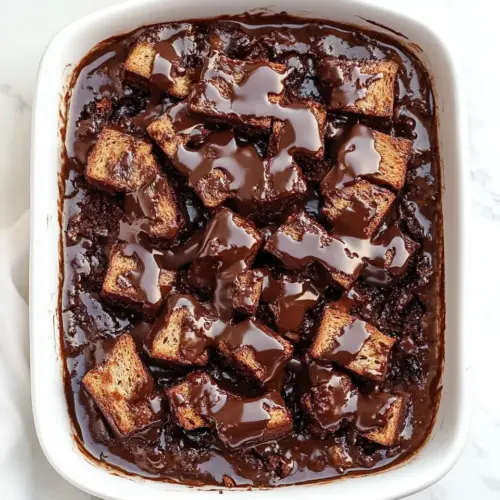
Chocolate Bread Pudding
Chocolate Bread Pudding is a creamy, chocolate forward comfort dessert that balances custardy richness with pockets of melted chocolate, creating warm, gooey bites perfect for weekend brunch or easy entertaining. It is indulgent yet approachable, delivering nostalgic flavors with a glossy ganache finish and simple pantry ingredients to make it a must try dessert.
Equipment
- Large Baking Sheet
- Medium mixing bowl
- Large Mixing Bowl
- 9x13 casserole dish
- Microwave-safe Bowl
- Whisk
Ingredients
- 1 pound brioche or challah cut into 1-inch cubes (see notes) Cut into 1-inch cubes and slightly stale to better absorb custard; provides rich, tender crumb and structure to the pudding while soaking up custard flavors evenly.
- 1 3/4 cup heavy cream Pour into the custard to add richness and a silky mouthfeel; contributes fat that creates a creamy texture and helps set the final custard.
- 1 3/4 cup milk (not nonfat) Combine with heavy cream in the custard base to balance richness and lighten the texture; supplies liquid and milk solids that contribute to flavor and custard stability.
- 12 ounces semi-sweet baking chocolate Melt into the custard or incorporate in chunks to supply deep chocolate flavor and a glossy, fudgy quality; contributes cocoa butter that enhances texture and sheen.
- 4 large eggs Whisk into the custard to help thicken and set the pudding; provides protein that coagulates gently during baking to produce a custardy, custard-backed structure.
- 2 egg yolks Blend into the egg mixture to enrich and increase custard stability; adds extra yolk fat for a silkier, more luxurious texture and deeper color.
- 1 cup granulated sugar Dissolve into the custard to sweeten and balance chocolate bitterness; helps control texture and caramelizes slightly during baking for added depth.
- 1/4 cup unsweetened cocoa powder Sift into the custard or mix with melted chocolate to intensify chocolate notes; adds concentrated chocolate flavor and slight dryness that enhances overall richness.
- 2 teaspoons vanilla extract Stir into the custard for aromatic warmth and to enhance other flavors; adds fragrant vanilla complexity and rounds out sweetness.
- 1 teaspoon ground cinnamon Sprinkle into the custard to impart warm, earthy spice that complements chocolate; enhances aroma and adds subtle depth without overwhelming.
- 1/2 teaspoons salt Season the custard to sharpen and balance sweetness and chocolate flavors; strengthens other tastes and helps prevent cloying sweetness.
- pinch of nutmeg (optional) Optionally grate or pinch into the custard for a bright, nutty warmth; adds aromatic complexity and pairs nicely with cinnamon and chocolate.
- 1/2 cup heavy cream Whisk in or use to finish the chocolate sauce for extra creaminess; provides additional richness and a silkier mouthfeel when served.
- 4 ounces semi-sweet baking chocolate, chopped Stir into melted chocolate or scatter over the pudding for pockets of intense chocolate; adds texture contrast and boosts chocolate concentration.
- 1 tablespoon corn syrup (optional, see notes) Use to stabilize and glossy-finish the chocolate sauce if desired; adds shine and prevents crystallization while contributing slight sweetness.
Instructions
- Preheat oven to 350 degrees F. Add bread cubes to a large baking sheet in a single layer. Bake for 15 minutes, stirring halfway through, or until toasted; set aside.: You will notice a warm, toasty smell once the oven reaches temperature, which primes the pan for evenly drying the brioche . Toasting the bread first helps it form a slight crust and prevents sogginess, giving textural contrast. A common mistake is skipping the toasting, which can leave the interior overly wet and the top under textured; toast in a single layer so the cubes cook evenly.
- Meanwhile, chop 12 ounces of chocolate. Add 8 ounces chopped chocolate to a medium mixing bowl, set remaining 4 ounces chocolate aside.: The visual cue you want is evenly spaced cubes so hot air can circulate and dehydrate each cube uniformly. As they toast, you will hear faint sizzling and smell a nutty, warm aroma that signals the Maillard reaction is starting. Avoid overcrowding, which traps steam and prevents crisping.
- Microwave the heavy cream and milk (preferably in a glass liquid measuring cup) until simmering, but not boiling, about 2 minutes. Pour over 8 ounces chopped chocolate in the bowl and let stand for 3 minutes, then vigorously whisk until chocolate is completely smooth; set aside.: Expect the cubes to take on a light golden hue and a firm, dry texture when done, which tells you they will absorb custard without disintegrating. Stirring midway ensures even color. A mistake is leaving them too long until deeply brown, which can make the pudding dry in places.
- In a large mixing bowl, whisk together the eggs, egg yolks, sugar, cocoa powder, vanilla extract, cinnamon, salt and nutmeg. Slowly whisk in the chocolate mixture until smooth (this is now the chocolate custard).: When you chop chocolate, the pieces melt more predictably and give you pockets of melted chocolate within the pudding. The sound is silent but the benefit is visual, a mix of smooth custard and glossy melted streaks. Do not use uneven giant chunks that will not melt through the custard.
- Add half of the bread cubes, half of the remaining chopped chocolate (2 ounces), and half of the chocolate custard to a lightly greased 9×13 casserole dish. Stir until evenly coated. Add the remaining bread cubes and chopped chocolate (2 ounces) to the chocolate custard in the bowl. Stir until evenly combined then pour into the pan and spread into an even layer.: Having the reserved chopped chocolate allows you to fold in bits that soften but do not fully disappear, creating texture contrast. The bowl should be dry and warm from your hands to prevent seizing. If the chocolate gets warm from your hands, it melts too quickly and can become clumpy.
- Cover the pan with foil and allow to sit at room temperature for 45-60 minutes, until the bread soaks up most of the custard.: You want small bubbles around the edges but no rolling boil, which keeps the dairy from scalding and producing off flavors. A sweet, milky steam will rise and the mixture will wobble slightly when moved. Overheating can cause a film or tiny curdling, so watch closely.
- Bake the covered bread pudding for 45-50 minutes, until the edges appear set and a toothpick inserted in the center comes out with few moist crumbs, but no raw/wet custard. The last 5 minutes of cooking, make the ganache.: After resting, the chocolate will soften and the aroma deepens into rich cocoa. Vigorously whisking creates a glossy emulsion, smoothing fat and liquid together. If bits remain, letting it sit another minute then whisking will rescue it; don’t over whisk into aeration which can make the ganache less silky.
- Add heavy cream and corn syrup (if using) to a microwave safe bowl and microwave for 2 minutes or just until simmering. Add chocolate and give it a swirl so the chocolate is covered. Let stand for 3 minutes. After 3 minutes, vigorously whisk in circular motions until chocolate is melted and completely smooth.: The mixture should become pale and slightly thickened, releasing fragrant spices that lift the chocolate . This step builds the backbone for the custard, and whisking evenly prevents pockets of dry cocoa. A common error is under whisking, leaving streaks of cocoa powder that will clump in the custard.
- Drizzle desired amount of ganache over entire bread pudding or on individual servings. Serve with other desired toppings such as whipped cream, ice cream and/or berries.: As you combine them, you will sense the temperature evening out and the custard gaining viscosity, becoming glossy and pourable. The smell moves from eggy to fully chocolate. Adding too fast risks cooking the eggs, so slow incorporation protects the custard texture.
- Add half of the bread cubes, half of the remaining chopped chocolate (2 ounces), and half of the chocolate custard to a lightly greased 9×13 casserole dish: The first layer soaks and settles, absorbing flavors; the visual will show bread turning darker as custard penetrates. Distributing chocolate pieces creates pockets of molten joy. Avoid pressing down hard, which can compress the bread and result in uneven soak.
- Stir until evenly coated: You will notice the bread darken and glisten, and small ribbons of chocolate will be visible. This tactile motion ensures every cube is saturated. Commonly people skimp on stirring then find dry pockets after baking, so be thorough but gentle.
- Add the remaining bread cubes and chopped chocolate (2 ounces) to the chocolate custard in the bowl: The second layer finishes distributing custard and chocolate so flavor is consistent from top to bottom, and you can see the mixture becoming cohesive. If some cubes are especially dry, press them lightly to help absorption.
- Stir until evenly combined then pour into the pan and spread into an even layer: Look for an even surface and consistent color, a sign the custard is uniformly distributed. A level layer bakes more predictably. Uneven distribution leads to some areas that set while others remain soupy.
- Cover the pan with foil and allow to sit at room temperature for 45 to 60 minutes, until the bread soaks up most of the custard: This resting time is crucial; the texture evolves from separate elements to one cohesive pudding. You will see the bread swell slightly and become saturated; the aroma will mellow and deepen. Skipping this means a less integrated texture and pockets of dry bread.
- Bake the covered bread pudding for 45 to 50 minutes, until the edges appear set and a toothpick inserted in the center comes out with few moist crumbs, but no raw or wet custard: As it bakes the top will slightly puff and the edges will firm, giving audible gentle crackles as moisture escapes. The interior should be custardy not runny. A common mistake is pulling it out too early, leaving a raw center; rely on the toothpick test rather than time alone.
- The last 5 minutes of cooking, make the ganache: Prepare the ganache while the pudding finishes so it is warm and pourable when the dessert comes out, creating a glossy finish that melds with the hot surface. If you wait too long and the ganache cools, it will thicken and lose shine, so time it with the oven.
- Add heavy cream and corn syrup if using to a microwave safe bowl and microwave for 2 minutes or just until simmering: You will see small bubbles form around the edges signaling readiness. Warm cream extracts and softens chocolate flavors without scorching. Boiling will break the emulsion, so stop at simmer.
- Add chocolate and give it a swirl so the chocolate is covered: This action ensures even melting and prevents dry pockets. After a short rest the chocolate will bloom into the cream, releasing a rich scent. If chocolate looks grainy, allow a little extra rest before whisking.
- Let stand for 3 minutes then vigorously whisk in circular motions until chocolate is melted and completely smooth: The whisking action creates a silky, shiny ganache and you will notice its glossy surface and fluid ribbon when lifted. Overcooling can thicken it; if that happens, brief gentle warming restores gloss.
- Drizzle desired amount of ganache over entire bread pudding or on individual servings: The warm ganache will settle into crevices and add a decadent sheen, enhancing both look and mouthfeel. Drizzling while warm creates a beautiful glossy finish. If you over pour, the pudding can become overly sweet and soggy, so apply with restraint.
- Serve with other desired toppings such as whipped cream, ice cream and or berries: Serving warm contrasts textures and temperatures, the chilled whipped cream or ice cream melting into the warm pudding for a perfect bite. Choose one accent to keep the balance. Serving straight from the fridge removes the pleasure of warm custard, so reheat slightly if needed.
Notes
- Choose your bread carefully — Brioche or challah gives richness and tenderness; if you must substitute, use French bread cut into the same size, but avoid savory loaves that clash with chocolate.
- Adjust chocolate intensity — Use a higher percentage semi sweet baking chocolate for more cacao bite, or a slightly milkier baking chocolate if you prefer a softer, sweeter profile.
- Make it ahead — You can prepare the custard and toast the bread the day before, then assemble and refrigerate for a short soak before baking for convenience without flavor loss.
- Glossy ganache trick — Adding the optional tablespoon of corn syrup to the ganache helps it stay shiny and pourable longer, which is great if you plan to transport the pudding.
- Serving temperature — I love this warm from the oven with cold whipped cream or ice cream, but it also holds up well at room temperature if you need to serve later.
- Storage and reheating — Store tightly covered in the refrigerator for up to 4 to 5 days, and reheat gently in the microwave in short bursts to preserve texture.