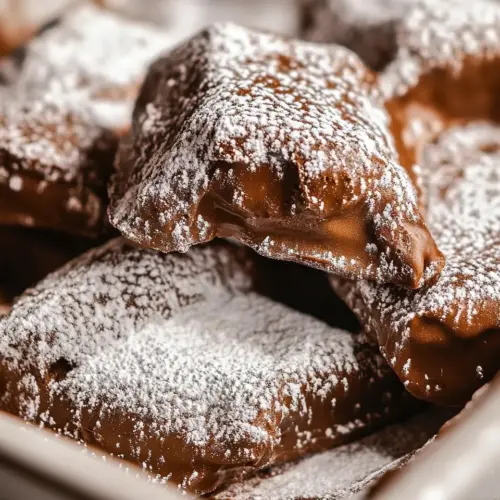
Chocolate Beignets
Chocolate Beignets are crisp outside and pillowy inside with layered chocolate flavor from cocoa in the dough and a silky semisweet filling. This recipe is rich yet approachable, offering a festive treat for brunch or gatherings, and flexible make ahead options for easier hosting. Try them for an impressive, chocolate forward dessert that feels luxurious yet homey.
Equipment
- Stand mixer
- Paddle attachment
- Large enameled cast iron pan
- Thermometer
- Slotted Spoon
- Piping Bag
Ingredients
- 1 and 1/2 cups warm water, between 110 and 115 degrees (F) (340 grams) Combine warm water with yeast and sugar to activate fermentation; water temperature between 110 and 115°F helps dissolve sugar and wake the yeast without killing it. Use the measured weight for consistency and to ensure dough develops proper structure and rise. Warm water also helps dissolve other dry ingredients and hydrate flour evenly.
- 2/3 cup granulated sugar (131 grams) Dissolve granulated sugar into the warm water to feed yeast and sweeten the dough slightly; sugar improves browning and flavor in the beignets. Measure by weight for accurate sweetness balance and consistent fermentation activity. Sugar also tenderizes the crumb by competing with flour for water.
- 2 and 1/4 teaspoons active dry yeast Activate active dry yeast in the warm sugar water to leaven the dough and produce airy, light beignets; allow it to bloom until foamy before mixing. Use the specified amount for predictable rising times and structure. Proper yeast activation is crucial for texture and volume.
- 7 cups bread flour (845 grams) Whisk bread flour into the dough to provide high gluten content for a strong, elastic structure that traps gas and yields airy beignets. Use the exact weight to maintain hydration ratios and dough consistency. Bread flour's protein supports repeated handling and frying without collapsing.
- 1 and 1/2 teaspoons salt Add salt to balance sweetness and strengthen gluten, improving dough flavor and dough structure; incorporate it into dry ingredients. Use the specified small amount to avoid inhibiting yeast while still enhancing taste. Salt also controls fermentation rate and improves texture.
- 1/4 teaspoon ground cinnamon Sprinkle ground cinnamon into the dough for warm, aromatic spice that complements cocoa and chocolate flavors, adding subtle complexity. Use sparingly to avoid overpowering the chocolate notes while enhancing overall aroma. Cinnamon also pairs well with sugar coatings after frying.
- 1/4 cup Dutch-process cocoa powder (23 grams) Sift Dutch-process cocoa powder into the dry mix to impart deep chocolate flavor and darker color without acidity; Dutch-process yields a mellow, rich taste. Measure by weight to keep dry-to-wet balance intact and prevent dry lumps. Cocoa integrates with flour to distribute chocolate flavor evenly.
- 2 large eggs, at room temperature Beat in large eggs at room temperature to enrich the dough, add fat and protein, and improve structure and tenderness; room-temperature eggs incorporate more smoothly. Use two eggs to contribute moisture, color, and binding properties for a richer beignet. Eggs also assist in emulsifying butter into the dough.
- 2 and 1/2 teaspoons pure vanilla extract Stir in pure vanilla extract to enhance and round out the chocolate and sugar flavors, providing aromatic depth. Use the specified amount for a balanced vanilla presence without dominating. Vanilla's volatile compounds amplify perceived sweetness and complexity.
- 1 cup evaporated milk (227 grams) Pour evaporated milk into the dough to add concentrated dairy richness and a slightly caramelized flavor while maintaining dough hydration. Use the measured weight for consistent dough moisture and a tender crumb. Evaporated milk contributes to browning and a silky mouthfeel.
- 5 tablespoons unsalted butter, at room temperature, cut into tiny pieces (71 grams) Cut unsalted butter into tiny pieces and soften into the dough to add richness, tenderness, and improved mouthfeel without adding extra salt. Use the specified weight for consistent fat content and even distribution when kneading. Butter also aids in creating a delicate, melt-in-the-mouth texture.
- 5 cups peanut oil, for deep frying (992 grams) Heat peanut oil for deep frying to achieve high smoke point and neutral flavor, allowing beignets to fry to crisp, evenly browned exteriors. Use the specified quantity to maintain safe frying depth and consistent temperature control. Peanut oil's stability helps prevent off-flavors during repeated batches.
- 1 cup (170 g) semisweet chocolate, finely chopped Melt semisweet chocolate finely chopped into a ganache or dip for coating and adding intense chocolate flavor and smooth texture to finished beignets. Use the weight measurement for consistent chocolate-to-cream ratios when making ganache. Finely chopping helps melt evenly and prevents grainy texture.
- 1/8 teaspoons salt Season with a pinch of extra salt to balance sweetness in the chocolate components or finishing touches; use the small measure to enhance flavor layers. Sprinkle or incorporate into ganache or dusting to elevate the chocolate's complexity without making it savory. Salt rounds out sweetness and intensifies overall flavor.
- 2 tablespoons (25 g) confectioners' sugar Dust with confectioners' sugar to provide a classic sweet finish and delicate texture contrast on the hot beignets; powdered sugar dissolves slightly and creates a tender coating. Measure by weight for consistent sweetness across servings. Confectioners' sugar also adheres well to warm surfaces for attractive presentation.
- 1/2 teaspoon espresso powder, optional Optional: dissolve espresso powder into chocolate components to intensify chocolate flavor and add subtle bitter notes that deepen overall profile; use sparingly. Espresso enhances perceived richness without making the final product taste like coffee. It dissolves readily into warm liquids for ease of incorporation.
- 1 cup (227 g) heavy cream Heat heavy cream to make ganache or enrich fillings, providing smooth mouthfeel and stable emulsion when combined with chopped chocolate. Use the measured weight for accurate ganache ratios and to achieve proper set and consistency. Cream contributes fat and stability, yielding glossy, cohesive chocolate coatings.
- 1 teaspoon vanilla extract Add vanilla extract to the ganache or cream mixture to brighten and enhance chocolate notes with aromatic sweetness; small amounts go a long way. Use the specified teaspoon for balanced flavor integration. Vanilla lifts and rounds the intense cocoa flavors for a more complex finish.
- 1 and 1/2 cups confectioners' sugar (170 grams) Coat or finish beignets with confectioners' sugar to create a snowy, sweet exterior that contrasts crisp fried dough with soft interior; measure for even sweetness distribution. Use the specified weight for consistent presentation and sugar coverage. Powdered sugar also dissolves slightly on warm beignets for a classic look.
- 1 tablespoon cocoa powder, unsweetened or Dutch-process Sprinkle unsweetened or Dutch-process cocoa powder into a dusting or blend with confectioners' sugar to add chocolate bitterness and visual contrast on top of the beignets. Use the tablespoon measure to avoid overpowering the sweet coating while introducing cocoa depth. Cocoa powder creates a professional, chocolatey finish.
Instructions
- In a medium-sized bowl, add the warm water, sugar, and yeast and whisk well to combine. Set aside for about 10 minutes, or until the mixture has bubbled up and become foamy.: The first sensory cue is a gentle yeasty aroma as the sugar dissolves, followed by tiny bubbles forming on the surface after about 10 minutes, indicating a lively, active starter. This foaming is crucial because it confirms the yeast is alive and ready to leaven the dough, ensuring the future beignets puff beautifully. If the mixture remains flat, that means the yeast may be old or water temperature was off, so discard and restart to avoid dense dough. Stirring too vigorously after adding yeast can knock it back, so whisk gently and watch for that foamy crown.
- In a large bowl sift together the bread flour, salt, cinnamon, and cocoa powder, set aside until needed.: You will notice the cocoa and flour blend into a uniform, darker flour with a rich chocolate scent that hints at the beignets to come. Sifting eliminates lumps and aerates the flour which aids in consistent mixing and a tender final texture. If you skip sifting, clumps of cocoa can remain, creating uneven pockets of flavor and color in the dough. Take the time to break up any lumps and ensure an even distribution of salt and cinnamon for balanced flavor throughout.
- In the bowl of a stand mixer fitted with the paddle attachment, beat the eggs until smooth. Beat in the vanilla and evaporated milk.: As you beat the eggs , they will become glossy and slightly puffed, providing richness and stability to the dough. Incorporating them fully before adding other liquids helps create an emulsion that carries the evaporated milk and vanilla more evenly. Using cold eggs can cause separation and uneven texture, so bring them to room temperature for the smoothest incorporation. Overbeating is unnecessary here, aim just for smooth and even.
- On low speed, beat in half of the flour mixture (about 3 and 3/4 cups). Then slowly pour in the yeast mixture (careful here - this mixture can splash up if added too quickly!) and beat until smooth.: Once the vanilla and evaporated milk join the eggs, the mixture will smell fragrant and feel silkier, offering a small preview of the doughs tender crumb. The evaporated milk adds concentrated dairy body without extra water, helping maintain dough hydration. If you pour in the milk too fast into cold eggs, you might see slight curdling, so add slowly and ensure a stable mixture before combining with dry ingredients. Gentle mixing keeps the batter smooth and ready for flour integration.
- Add in the butter and beat until incorporated. Finally, beat in the remaining flour mixture. Beat until dough is smooth and cohesive; about 2 minutes.: You will see the mixture thicken as the flour hydrates and the yeast mixture integrates, creating a cohesive, slightly sticky batter. Adding the yeast mixture slowly prevents splashing and ensures even fermentation throughout the dough. If you rush this step, the yeast liquid can separate and cause inconsistent rising, and splashes can make cleanup messy. Keep the mixer on low so you encourage gluten formation without overworking the dough.
- Cover the bowl tightly with plastic wrap and refrigerate for at least 2 hours, or up to 24 hours.: As the small pieces of butter blend into the dough, it takes on a richer, slightly glossy appearance and becomes more supple to the touch. Butter gives tenderness and flavor, distributing small pockets of fat that create a delicate crumb. If the butter is too warm, it can make the dough greasy; if too cold, it will not incorporate smoothly. Aim for soft but firm pieces so they meld properly without melting during mixing.
- Line a large rimmed baking sheet with three layers of paper towels, set aside.: The dough should transform into a smooth, slightly elastic mass that cleans the sides of the bowl, signaling adequate gluten development. This short beating period encourages structure while keeping the dough tender. Overbeating here can lead to excess gluten, making the beignets tough rather than pillowy, so stop once the dough looks uniform and cohesive. If the dough feels extremely sticky, a light dusting of flour helps, but avoid altering hydration too much.
- In a large enameled cast-iron pan, heat the oil until it reaches 360 degrees (F).: Chilling calms the dough, allowing flavors to meld and the gluten to relax, which improves handling and final texture. You will notice the dough becomes firmer and easier to roll after refrigeration, with a deeper, more rounded flavor. Rushing this rest can result in a dough that is harder to shape and less flavorful, so plan ahead. If refrigerated longer than 24 hours, the yeast activity may change the flavor profile slightly, so try to fry within the recommended window.
- Remove the dough from the refrigerator. Scrape the dough out onto a lightly floured surface and knead once or twice, just until it comes together in a neat ball.: Preparing an absorbent station helps the beignets drain excess oil and remain crisp rather than soggy, and you will appreciate the tidy workflow as each batch comes out of the fryer. The layered towels also protect the beignets from cooling too fast and losing their interior steam. Using insufficient absorbent material can leave beignets oily to the touch, so have this setup ready before you start frying to keep everything moving smoothly.
- Roll the dough out into a 1/4-inch thick rectangle and then cut the dough into 3-inch squares.: When the peanut oil reaches about 360 degrees Fahrenheit , you will see a faint shimmer across the surface and small wisps of steam. Maintaining steady heat is critical for even puffing and golden color; too cool and the beignets will soak up oil, too hot and they will brown too fast without cooking through. Use a thermometer to monitor temperature and adjust the burner as needed to avoid temperature spikes which cause uneven frying and potential burning.
- Working in batches, fry the dough until they puff up and are golden brown in color, turning halfway through, about 30 to 45 seconds on each side.: The chilled dough will feel cool and slightly tacky, and a brief knead helps redistribute any pockets of butter and relax the gluten for easier rolling. You want a smooth ball without overworking the dough, which preserves tenderness. Over-kneading warms the dough and can make it tougher, so limit to a couple gentle folds until it holds together neatly.
- Using a slotted spoon, transfer the beignets to the prepared baking sheet and repeat with remaining dough.: Rolling to an even 1/4 inch ensures uniform frying, and cutting to 3 inch squares gives a satisfying bite size that puffs attractively. You should see even thickness and clean edges, which help the beignets expand uniformly in the oil. If the dough is sticking or tearing, chill briefly and dust the surface lightly to avoid damaging the structure. Uneven thickness leads to some pieces overcooking while others remain raw inside.
- Finely chop the chocolate and place it in a shallow, heatproof bowl. Add in the salt and confectioners' sugar and set aside.: Listen for a soft sizzle when the dough hits the oil, and watch as the pieces rapidly inflate and take on a warm golden hue. Turning halfway encourages even color and puff; the interior should feel hollow when tapped lightly, a sign they are cooked through. Frying time can vary slightly by batch, so rely on visual cues rather than the clock alone. Crowding the pan drops oil temperature and causes soggy, greasy beignets, so fry in manageable batches for consistent results.
- In a small saucepan heat the heavy cream and espresso powder (if using) until the cream just comes just short of a rolling boil. Remove from heat and pour the hot cream over the chopped chocolate mixture. Let sit for 2 minutes, then stir smooth with a spatula or spoon. Stir in the vanilla.: The spoon will allow oil to drip back into the pan, and the paper towel lined sheet will catch the rest while preserving the crisp exterior. Allow the beignets to rest a minute before filling, as extreme heat can melt the filling too quickly. If you pile them, steam can make them lose their crispness, so arrange in a single layer for best texture. Handle gently to avoid deflating the puffed interior prematurely.
- Refrigerate until cold and stiff enough to pipe, about 2 hours, or up to 24 hours. If the filling gets too hard, simply microwave for a few seconds, and then stir smooth.: The chopped semisweet chocolate should fragrance the air with cocoa notes and sit ready to melt when the hot cream arrives. Combining the salt and confectioners' sugar ahead of time ensures the ganache will be smooth and balanced once the cream is added. If the chocolate chunks are too large, they will take longer to melt and create uneven pockets; aim for a uniform fine chop to encourage even melting.
- Scrape the chocolate filling into a piping bag fitted with a piping tip of your choice (design doesn't really matter here). Poke a small hole onto the side of each beignet, insert the piping tip into the hole, and squeeze the filling into the center. Repeat with all beignets.: You will see the cream steam and the edges just tremble before bubbling, the moment to remove it from heat, then pour over the chocolate to coax it into a silky emulsion. The residual heat melts the chocolate gently, preserving shine and avoiding grainy texture. Boiling the cream can scorch it and ruin the ganache, so stay attentive and transfer promptly. If the cream is too cool, the chocolate will take longer and may not form a glossy emulsion.
- In a large bowl sift together the confectioners' sugar and cocoa powder. Repeat a few times, until smooth and well combined. Dust on top of beignets and serve at once! Beignets are best eaten within a few hours of being made.: After a brief rest, the chocolate will begin to melt and the mixture will merge into a glossy, velvety ganache as you stir. Adding vanilla now brightens the chocolate and balances the sweetness. Stir patiently until smooth, then taste; if grainy spots remain, continue stirring gently rather than reheating aggressively which can separate the mixture. If the ganache appears too thin after cooling, refrigerate briefly to thicken before piping.
- Refrigerate until cold and stiff enough to pipe about 2 hours or up to 24 hours: Chilling firms the ganache so it can be piped without oozing, resulting in a neat, creamy center when inserted into the beignets. The texture becomes dense and spreadable, and the aroma deepens into a richer chocolate note. If the filling becomes too firm, a few seconds in the microwave and a quick stir will restore pipeable consistency. Avoid leaving it out at room temperature for long, as that can soften the filling excessively.
- Scrape the chocolate filling into a piping bag fitted with a piping tip of your choice poke a small hole onto the side of each beignet insert the piping tip into the hole and squeeze the filling into the center: When you pipe, you should feel gentle resistance and then the satisfying give as the filling balloons the interior, which you can sense by a slight expansion in the beignet. The small side hole keeps the exterior intact while delivering a generous, even center. Overfilling can burst the shell, so pipe steadily and check each piece; if a beignet leaks, dust quickly with confectioners' sugar to salvage its appearance.
- In a large bowl sift together the confectioners sugar and cocoa powder repeat a few times until smooth and well combined dust on top of beignets and serve at once: The final dusting adds a visual flourish and a pleasant contrast on the palate, the fine sugar and cocoa settling into crevices and adding a soft first bite. Serve immediately to enjoy the contrast between warm dough and cool filling, and note that beignets are best eaten within a few hours for optimal texture. If powdered sugar clumps, resift to ensure an even, cloudlike finish that invites the first bite.
Notes
- Temperature control: Keep the frying oil steady at about 360 degrees Fahrenheit, using a thermometer so you avoid undercooked interiors or overbrowned exteriors.
- Dough chilling: Refrigerate the dough for at least 2 hours and up to 24 hours to improve handling and flavor, and bring it out right before rolling so it is firm but pliable.
- Yeast proofing: Always proof your active dry yeast in warm water and sugar and wait for a foamy head to guarantee an active rise; flat proof indicates expired yeast.
- Oil choice: Use a high smoke point oil such as peanut oil for neutral flavor and consistent browning, and top up between batches to maintain depth and temperature.
- Filling texture: If your ganache becomes too firm after chilling, microwave briefly in 5 to 10 second bursts and stir to restore pipeable consistency without overheating.
- Dusting finish: Sift the confectioners' sugar and cocoa together for a silky dusting that looks professional and avoids clumps on the warm beignets.
- Batch pacing: Fry in manageable batches and rest finished beignets on paper towels in a single layer to preserve crispness and streamline filling.
- Chocolate quality: Choose a decent semisweet chocolate for the filling to ensure shine and flavor depth; low quality chocolate can result in graininess or off flavors.
- Cutting technique: Use a sharp cutter or knife and avoid overhandling cut pieces to keep edges neat and prevent deflation when frying.
- Make ahead: Prepare the dough and ganache a day early, then fry and fill on serving day to keep the experience fresh and stress free.