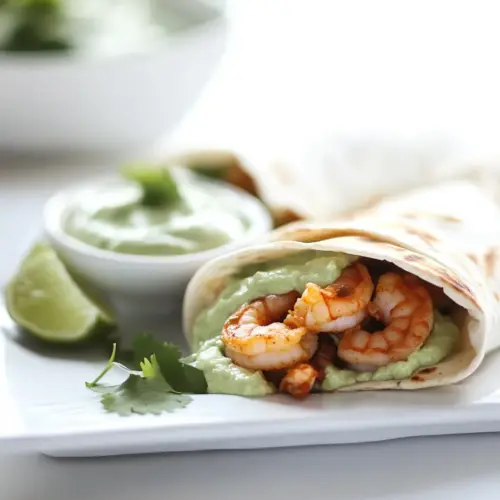
Chipotle Shrimp Burritos with Simple Avocado Crema
Chipotle Shrimp Burritos with Simple Avocado Crema deliver smoky, creamy, and bright flavors in every bite. Tender shrimp tossed in a chipotle adobo marinade pairs with fluffy cilantro lime rice and a silky avocado crema for an easy weeknight dinner that feels indulgent. Quick to cook and perfect for gatherings, these burritos are a flavorful handheld meal you will want to make again and again.
Equipment
- Food processor or blender
- Gallon Ziploc bag
- Heavy bottom skillet or cast iron skillet
- Blender
- Microwave or skillet to warm tortillas
Ingredients
- 1 pound medium shrimp, shells and tails removed (51-60 shrimp per pound) Provide tender, protein-rich shrimp that cook quickly and develop a slightly sweet, briny flavor when seared for the burritos; devein and pat dry to ensure even cooking and proper seasoning adherence.
- 4 canned chipotle peppers in adobo sauce Add smoky, spicy depth and a complex, slightly tangy heat when blended into marinades or sauces; mince or chop finely for even distribution and to control intensity.
- 1 tablespoon adobo sauce Contribute concentrated smoky heat and help create a smooth, cohesive marinade when combined with chipotle peppers; measure carefully to avoid overpowering the dish.
- 1 clove garlic Deliver a sharp, aromatic bite that brightens the marinade and pairs well with smoky chipotle flavors; mince or grate to release maximum pungency and avoid raw garlic bursts.
- 1 tablespoon honey Introduce a touch of natural sweetness that balances the heat from chipotle and adobo; whisk into the marinade to build layers of flavor and a glossy finish on the shrimp.
- 3 tablespoons extra-virgin olive oil, divided Provide a rich, fruity fat for cooking and emulsifying the marinade; reserve a portion for sautéing the shrimp and another for dressing rice or finishing the burrito.
- 1/2 teaspoon cinnamon Impart a warm, earthy background note that enhances the smoky and sweet elements in the marinade; use sparingly to avoid an overtly spiced profile.
- 3 cups cooked white rice Offer a neutral, starchy base that adds substance and soaks up sauces; fluff before assembling so the rice mixes evenly with other fillings and retains a pleasant texture.
- 1/2 cup cilantro leaves plus more for garnish Contribute a fresh, herbaceous lift that brightens the filling and pairs with lime to balance richness; chop just before serving to preserve vibrant color and aroma.
- 1 lime, juiced Add bright, acidic citrus that balances richness and cuts through heat; squeeze fresh juice over the filling and into dressings to enhance overall brightness.
- 4 flour tortillas Provide a soft, flexible wrap that holds fillings together and warms nicely; warm gently before filling to prevent tearing and improve pliability.
- 2 Avocados from Mexico Supply creamy, buttery texture and mild flavor that enrich the crema; mash or slice as needed to create a smooth avocado crema with bright green color.
- 1/2 cup Mexican crema or light sour cream Deliver tangy, creamy acidity that lightens the avocado crema and adds a silky mouthfeel; stir into blended avocado to reach desired consistency and tang.
- 1 cup Hatch green chile enchilada sauce, (15-ounce can) Bring a savory, roasted green-chile flavor and saucy component that adds moisture and regional character; spoon over rice or drizzle inside burritos to complement the chipotle shrimp.
Instructions
- Blend chipotle peppers, adobo sauce, garlic, honey, 2 tablespoons of olive oil and cinnamon in a food processor until smooth. Place shrimp in a gallon Ziploc freezer bag with chipotle mixture and marinate in fridge for 1-2 hours.: The mixture should smell intensely smoky and slightly sweet, with a glossy, thick texture that clings to a spoon; this matters because a properly emulsified marinade ensures even coating on the shrimp which translates to more balanced flavor after cooking. You will hear the processor whir and see the sauce change from chunky to velvety, and there should be no large pepper bits left. If the mixture is too thick to blend smoothly, add a teaspoon of water at a time until it moves easily, but avoid watering it down too much or you will lose concentration of flavor. A common mistake is not scraping down the bowl, which can leave unmixed pockets of spice and garlic; pause and scrape once or twice to get a homogeneous paste.
- Meanwhile, place avocado halves, crema and Hatch green chile enchilada sauce in a blender and mix to combine. Add a tablespoon of water or more enchilada sauce to desired consistency. Refrigerate until ready to assemble burritos.: As the shrimp rests, the marinade should scent the bag with smoky, garlicky notes and the flesh should take on a pale red tint; this absorption is crucial because it builds flavor rather than just surface seasoning. Marinating for at least one hour allows the acids and spices to penetrate, but leaving it longer than two hours can begin to firm the texture because of the acids; avoid over marinating to keep the shrimp tender. When placing the bag in the fridge, spread the shrimp in a single layer if possible so they all contact the sauce evenly. A frequent error is marinating at room temperature, which can invite bacterial growth; always refrigerate during the marinating stage.
- Cook rice according to package directions. Fluff rice and add the juice of one lime and cilantro leaves. Keep warm on low heat.: You should end up with a silky, pale green crema that smells of ripe avocado and roasted chile, with a smooth pourable consistency that coats the back of a spoon; this creamy element is essential because it mellows the chipotle heat and brings a cooling richness to each bite. Start with less enchilada sauce or water, then add a tablespoon at a time to reach a spreadable texture; over thinning will make the crema runny and it will not stay on the burrito as well. Texture is key here, so blend until fully smooth, and taste for salt and brightness, adding a squeeze of lime if needed. A common oversight is using underripe or stringy avocados, which can make the crema pasty rather than lush; choose ripe, slightly soft fruit for the best mouthfeel.
- Bring a heavy bottom skillet or cast iron skillet to medium high heat and add remaining tablespoon of olive oil. Once hot add shrimp in batches taking care not to overcrowd pan. Cook for 2 minutes each side then flip and cook for an additional minute. Remove from pan and continue until all shrimp are cooked.: Chilling the crema makes it firmer and easier to spread, and it lets the flavors settle into a balanced profile where the green chile melds with the avocado . You will notice the aroma mellow slightly as it chills, which is normal and allows the sauce to integrate. Keep it covered to avoid browning from air exposure; press plastic wrap directly on the surface if you can. If it becomes too thick after chilling, thin with a teaspoon or two of water or enchilada sauce and whisk briefly before assembling. One mistake is leaving the crema uncovered in the fridge, which can result in a skin or off smells from other foods.
- To assemble burritos, microwave tortillas for 30 seconds. Place 3/4 cup cilantro lime rice on warmed tortilla, add 10-12 shrimp per burrito and top with avocado crema. Squeeze fresh lime and garnish with additional cilantro leaves. Roll into burrito and top with additional avocado crema as desired.: The rice should be tender and separate, not gummy, and it will steam and puff as it finishes cooking; well cooked rice absorbs the lime and cilantro much better. After fluffing with a fork, stir in the juice of one lime and the chopped cilantro leaves while the rice is still warm so the flavors meld; this brightens the whole filling and gives each bite a citrus lift. Keep the rice warm on low heat or covered so it does not cool down and stiffen before assembly. A common pitfall is over rinsing then overcooking Rice, which can lead to dry, crumbly grains; follow package ratios and timing closely for fluffy results.
- Bring a heavy bottom skillet or cast iron skillet to medium high heat and add remaining tablespoon of olive oil: The pan should be shimmering and hot enough that a droplet of water sizzles on contact, which ensures quick searing and caramelization on the shrimp . Using a heavy skillet helps maintain even heat under the seafood, producing a nice golden edge without overcooking the interior. If the oil smokes heavily, reduce the heat a touch to avoid burning flavors. A typical error is starting with a cold pan, which leads to steaming instead of searing and pale, rubbery shrimp .
- Once hot add shrimp in batches taking care not to overcrowd pan: You should hear an immediate sizzle, and the shrimp will start to develop small browned spots that signal Maillard flavor development, which is essential for depth. Crowding traps moisture and prevents browning, so cook in small groups to keep the skillet hot between batches. After placing them, resist the urge to move them constantly so they can properly sear; allow each side to develop color for the recommended time. A common slip is throwing all shrimp in at once, which cools the pan and yields gray, steamed shrimp rather than the desirable golden edges.
- Cook for 2 minutes each side then flip and cook for an additional minute: The shrimp should turn opaque and firm up slightly, with the edges caramelizing and a fragrant smoky aroma rising from the pan; timing is key because shrimp go from perfectly tender to rubbery very quickly. After the first side, you will notice the color change and a delightful sizzle. Flipping once gives a clean sear on both sides and prevents overhandling. If your shrimp are larger or smaller than medium, adjust the timing by about 30 seconds per side, but watch for opacity and firmness as your cue. Avoid overcooking, the most common mistake, which results in tough, chewy shrimp.
- Remove from pan and continue until all shrimp are cooked: As each batch finishes, transfer the cooked shrimp to a warm plate or pan and tent lightly with foil to keep them hot without steaming, which preserves the seared texture. You will smell the concentrated smoky, honeyed aroma from the skillet; that’s a good sign that the marinade has caramelized and contributed flavorful crusts. Letting them rest briefly helps the juices redistribute so they remain juicy rather than drying out. One mistake is piling hot shrimp too high, which can trap steam and soften the sear; keep them in a single layer if possible while holding.
- To assemble burritos, microwave tortillas for 30 seconds: Warming the tortillas makes them pliable and less likely to tear during rolling, and you should feel them soften and become gently warm to the touch. If you prefer, you can heat them on a dry skillet for a similar effect and a little char, which adds an extra toasty note. Overheating will make tortillas brittle, so stick close to the short warming interval and check them frequently. A common oversight is skipping this step, which often results in split burritos during assembly.
- Place 3 4 cup cilantro lime rice on warmed tortilla, add 10 to 12 shrimp per burrito and top with avocado crema: The hot rice will steam slightly against the tortilla and the warm shrimp will marry with the cool, creamy sauce, creating a balanced temperature profile in each bite; this interplay is what makes the burrito satisfying. Arrange the ingredients in the center, fold in the sides, then roll tightly to secure the filling. Squeeze fresh lime over the top and add additional cilantro for brightness. One mistake is overfilling the tortilla which makes rolling impossible and causes split seams; keep fillings centered and moderate the amounts for a neat roll.
- Squeeze fresh lime and garnish with additional cilantro leaves: The final squeeze of lime brightens every layer, and the fresh cilantro adds a lively herbal finish that contrasts the smoky and creamy notes. Serve immediately so the textures remain distinct, with warm tortilla and rice against the cool crema. If you want, add a little extra crema on top for presentation. Avoid adding the lime too long before serving as the acid can change the texture of the crema slightly if left to sit.
- Roll into burrito and top with additional avocado crema as desired: The finished roll should feel substantial but not overflowing, with a glossy smear of crema on top for both flavor and visual appeal. Cut in half to show the colorful cross section, or wrap in foil for eating on the go. If storing leftovers, wrap tightly to keep the tortilla from drying out and reheat gently to preserve texture. A common mistake is reheating at high heat too long which will toughen the shrimp and dry the rice; reheat gently until warm throughout.
Notes
- Use ripe avocados: For the silkiest crema, choose avocados that yield slightly to gentle pressure; underripe fruit makes the sauce gritty while overripe can be overly soft and watery.
- Don’t overcrowd the pan: Cook the shrimp in batches so they sear instead of steam, which preserves a caramelized exterior and juicy interior.
- Adjust chipotle intensity: Taste the blended chipotle mixture before marinating and remove a pepper if you prefer milder heat, or add a half pepper if you want more punch.
- Keep components warm separately: Hold the rice on very low heat and tent the cooked shrimp so each component is at the ideal temperature when you assemble the burritos.
- Wrap for portability: If taking burritos on the go, place foil tightly around them after rolling to keep them intact and warm, and brush the foil with a tiny bit of oil if you plan to reheat later to prevent sticking.