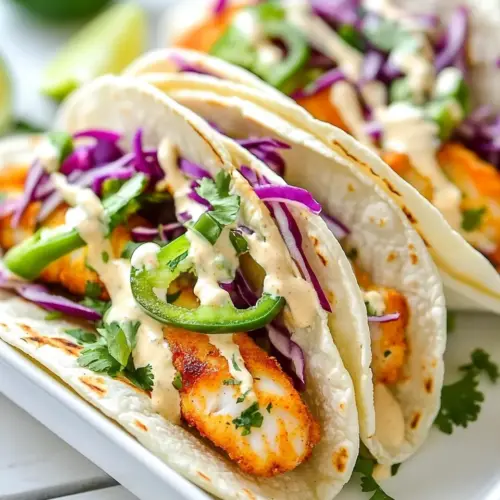
Chipotle Lime Fish Tacos
Chipotle Lime Fish Tacos deliver smoky chipotle heat, bright lime zing, and creamy avocado crema for an easy weeknight dinner that is light and flavorful. Tender white fish is marinated briefly, seared, and wrapped in warm corn tortillas with crisp slaw and tangy toppings, creating a crispy and creamy contrast that keeps guests coming back for more.
Equipment
- Mini food processor or blender
- large zip-top bag
- Large saute pan
- Food Processor
- Skillet
Ingredients
- 1 pound mild white fish such as tilapia, flounder or Dover sole Provide a flaky, mild-flavored protein that forms the base of the tacos; cooks quickly and pairs well with citrus and spices.
- 2 tablespoons olive oil Coat and sear the fish while adding a subtle fruity richness; helps distribute spices and prevents sticking during cooking.
- 1 lime zested and juiced (plus more lime for serving) Add bright citrus aroma and acidity to tenderize the fish and balance richness; zest imparts concentrated lime oils while juice adds tang.
- 4 garlic cloves minced Infuse savory depth and aroma when minced and cooked briefly; helps round out the marinade and complements spicy flavors.
- 1/2 teaspoon paprika Contribute a warm, slightly sweet smokiness that enhances the seasoning blend without overpowering the fish.
- 1/2 teaspoon chili powder Introduce gentle heat and earthy flavor to the rub, reinforcing the taco’s smoky profile and complementing the chipotle.
- 1/2 teaspoon kosher salt Season the fish for balanced flavor and help bring out other seasonings; kosher salt dissolves easily for even seasoning.
- 1 chipotle pepper in adobo sauce Provide smoky, spicy, and slightly sweet heat from the adobo, adding complex chile flavor to the fish and sauce.
- 8 small corn tortillas Serve as traditional handheld carriers that hold fillings and absorb sauces; small corn tortillas lend authentic texture and flavor.
- salsa Add moisture, freshness, and bright flavor as a topping or accompaniment; complements the spicy, smoky fish for contrast.
- extra lime wedges Offer additional bright acidity for serving to customize tanginess to taste and enhance the overall brightness of each bite.
- Cilantro optional Supply fresh herbal brightness and a mild citrus note when added as a garnish; optional for those who enjoy cilantro.
- 4 cups sliced cabbage or slaw mix Bring crunchy texture and a cool, crisp contrast to the warm fish; works as a base for assembling the tacos.
- 1/2 jalapeño diced (more or less to taste) Contribute a touch of fresh heat and vegetal brightness when diced; allows customization of spice level in the slaw or topping.
- 1 tablespoon lime juice Add a splash of extra lime juice for additional acidity or to adjust the dressing’s balance; brightens flavors.
- pinch of salt Provide a small amount of seasoning to the slaw or avocado mixture to enhance overall taste without overwhelming.
- 1 medium avocado Introduce creamy, rich texture and subtle buttery flavor when sliced into tacos for added mouthfeel and contrast.
- 1/4 cups sour cream Offer tangy creaminess to dress slaw or as a topping; helps mellow heat and bind components together.
- 2 tablespoons lime juice Add concentrated citrus acidity for brightening sauces or slaw and balancing the richness of avocado and sour cream.
- 1/4 teaspoon kosher salt Contribute a precise pinch of salt to season sauces or toppings, elevating flavors and ensuring balanced seasoning.
Instructions
- Combine the olive oil, lime zest and juice, garlic, paprika, chili powder, salt and chipotle pepper in a mini-food processor or blender and pulse until smooth. Place fish in a large zip top bag and pour sauce over it. Use your hands to move the fish around until fully coated in the sauce. Allow to marinate for 15 minutes. (I don't recommend leaving the fish in the marinade much longer because the lime juice can start to break down the fish and give it a weird texture): The first sensory note is the aroma, a bright citrus lift mingled with smoky pepper and garlic, almost like a savory citrus vinaigrette. As the blades whirl you will notice the mixture take on a slightly thick, saucy texture, signaling that it will coat the fish evenly. This step matters because emulsifying the oil with the acidic lime and the chili helps the flavors cling to the protein, which leads to a deeply flavored exterior after searing. A common mistake is under processing, which leaves large bits of pepper or garlic, creating uneven flavor pockets; pulse until integrated but not completely liquid if you want little flecks for texture. The sound will shift from loud to a steadier hum as the ingredients break down, and the smell becomes more unified, indicating readiness.
- When ready to cook, heat a large sauté pan over medium heat, add some oil to the pan to keep fish from sticking. Sear fish on one side, 1-2 minutes, then flip and sear on the other side until cooked through (cooking time will depend on the thickness of the fish, it is done when opaque and easily flaked with a fork. My fish was very thin and only took 1-2 minutes per side): When you transfer the sauce, the visual contrast between pale fish and the reddish marinade is striking, and you'll see the fillets glisten as they get coated. Using a zip top bag ensures the sauce makes contact with all surfaces, and it allows you to remove excess air so the fish marinates consistently. This technique is important because direct contact speeds flavor infusion in a short timeframe. Avoid overfilling the bag which can trap pockets of sauce and lead to uneven coverage, and also avoid leaving the fish in the acidic marinade for too long, which can alter texture. Gently massage the bag so the sauce spreads, and you'll feel the fillets become slick with marinade under your hands.
- To prepare the slaw, toss together the cabbage mix, lime juice, salt and jalapeno, set aside until ready to eat.: The tactile moment here is satisfying, you will feel each fillet slide as the sauce covers it, and your hands are the best tool to ensure even coating. This matters because areas that are missed will cook with milder flavor. Be mindful of cross contamination, wash hands immediately after, and use a clean surface to rest the bag while it marinates. A common misstep is being too rough and breaking delicate fillets, so handle gently, moving them just enough to spread the sauce evenly.
- To prepare the avocado crema, add the avocado, lime juice, sour cream and salt to a food processor, pulse until creamy.: During this short rest the lime and spices will infuse the outer layer of the fish , creating a bright seasoned exterior while preserving a tender interior. You will notice the scent intensify as the citrus melds with garlic and chipotle, but do not exceed this time significantly, because prolonged acid exposure can start to denature the flesh and create a mushy texture. If you need extra time, keep the bag chilled on ice or in the fridge, and avoid leaving it on the counter. The right balance gives you pronounced flavor without compromising structure.
- Warm the tortillas by spraying with cooking oil and heating in a large skillet, flipping as needed, until starting to brown and crisp on both sides.: Once the pan is hot you should hear a faint sizzle when oil hits the surface, and the oil will shimmer slightly, a sign it is ready. Heating properly prevents sticking and promotes a quick sear that locks in moisture, producing a clean exterior. If the pan is too cool you will get a pale, steamed finish rather than a seared one, and if it is too hot you risk burning the marinade before the interior cooks. Use a medium setting and test with a droplet of water; it should dance across the surface. Add just enough oil to coat, and tilt the pan to spread it evenly.
- To assemble tacos, fill tortillas with some slaw and fish. Top with avocado crema and salsa. Drizzle with lime juice and garnish with cilantro (if using, optional) Enjoy!: The auditory cue here is a soft sear, not a violent crackle, and visually you want the edges to turn opaque and show a bit of golden color. Depending on thickness the fish will finish quickly, and you will know it is done when it flakes easily with a fork and the internal flesh is uniformly opaque. The searing caramelizes the sugars in the marinade, adding depth and texture, while short cooking preserves moisture. Overcooking makes fish dry and tough, so watch closely and use a gentle flip to avoid breaking delicate fillets. If a fillet is thicker, increase time slightly but monitor for flaking as your cue.
- To prepare the slaw toss together the cabbage mix lime juice salt and jalapeno set aside until ready to eat: The slaw will smell bright and sharp from the lime with a peppery tickle from the jalapeño , and its crunch provides a refreshing counterpoint to the warm fish . Tossing distributes the dressing and softens the cabbage just enough so it is easy to bite without losing snap. Letting it rest briefly allows flavors to marry; if you dress it too early it can become watery, so reserve dressing and mix close to serving time if you want maximal crunch. Taste and adjust salt so it complements the other components.
- To prepare the avocado crema add the avocado lime juice sour cream and salt to a food processor pulse until creamy: As you blend, the texture turns from chunky to luxuriously smooth, and a bright green color emerges, lifted by the lime. This creamy element provides cooling balance to the smoky chipotle pepper , and the fat in the avocado carries flavor across the palate. If the crema seems too thick, add a teaspoon of water or additional lime juice to reach a spoonable consistency. A common error is using an overripe avocado that tastes flat or mealy, so choose one with a slight give for best flavor and texture.
- Warm the tortillas by spraying with cooking oil and heating in a large skillet flipping as needed until starting to brown and crisp on both sides: The tortillas should become pliable and aromatic with a faint toasty note, developing tiny brown spots that add flavor and a subtle chew. Spraying lightly with oil encourages even browning and prevents sticking, while heating in a dry pan can cause them to crack. Warm tortillas immediately before assembling so they remain flexible; if they cool they can stiffen and break when folded. Keep warmed tortillas covered with a clean towel to retain steam and softness until service.
- To assemble tacos fill tortillas with some slaw and fish: The moment of assembly is sensory and visual, bright slaw against warm fish looks appetizing and the contrast of temperature is satisfying. Layering matters, place slaw first to create a bed that helps keep the tortilla from becoming soggy. Avoid overstuffing which makes the taco difficult to handle and leads to spills; aim for balanced portions so each bite contains all elements. You will feel the warmth of the tortillas and the coolness of the crema as you build, which is part of the appeal.
- Top with avocado crema and salsa: The creamy, tangy avocado crema should be dolloped or drizzled so it coats but does not drown the other components, and a spoonful of salsa adds a fresh, acidic pop. This layering of flavors creates harmony between smoke, cream, and brightness. Be mindful of salt levels in the salsa to maintain balance, and add sparingly if it is very bold.
- Drizzle with lime juice and garnish with cilantro optional Enjoy: The final squeeze of fresh lime lifts everything and creates a crisp, finishing acidity that brightens the assembled taco. A sprinkle of fresh cilantro adds an herbal perfume if you like it. Serve immediately so textures remain distinct; letting assembled tacos sit will soften the tortillas and wilt the slaw. Enjoying them hot ensures the best contrast of warm and cool components.
Notes
- Choose thin white fish, such as tilapia or flounder for fast, even cooking and delicate flaking that fits nicely in corn tortillas.
- Pulse the chipotle thoroughly so the smoky flavor disperses evenly; chunks can create pockets of intense heat that some guests may not enjoy.
- Use freshly zested lime rather than bottled zest substitutes to capture volatile oils that add aromatic lift to the marinade and crema.
- Heat the pan correctly, look for a shimmering oil surface and a soft sizzle when adding the fish to achieve a quick sear without burning the marinade.
- Rest slaw briefly after tossing so the flavors marry but not long enough to lose crunch; ten to fifteen minutes is ideal for a crisp yet flavorful slaw.
- Keep tortillas covered after warming in a towel to retain steam and keep them pliable for folding without breaking.