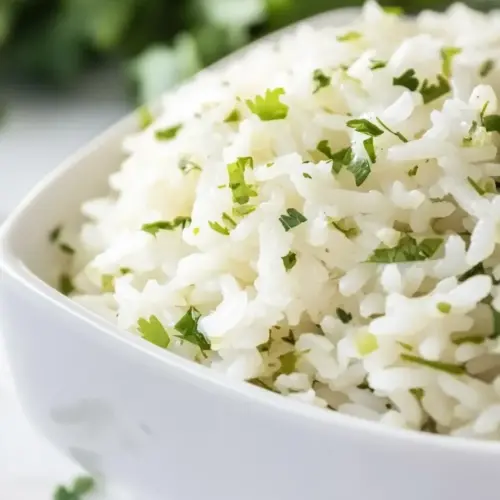
Chipotle Cilantro Lime Rice
Chipotle Cilantro Lime Rice is a bright and fragrant side dish featuring fluffy jasmine rice tossed with fresh cilantro and zesty lime juice. This easy weeknight side is creamy in mouthfeel yet light, with a citrusy pop that lifts bowls, tacos, and grilled mains. Make a big batch to feed a crowd or keep leftovers for quick lunches, it is a reliable, flavorful addition to many meals.
Equipment
- Pot with lid
- Fork
- Citrus Juicer
Ingredients
- 2 cups jasmine rice Rinse and cook to provide the starchy base and tender texture that absorbs flavors throughout the dish. Jasmine rice offers a subtly floral aroma and slightly sticky consistency ideal for serving alongside saucy mains. Proper rinsing and measured cooking ensure fluffy, non-gummy grains that carry the cilantro-lime seasoning well.
- 3 cups water Boil and simmer to hydrate the rice evenly, enabling proper gelatinization of starches for tender grains. Water quantity is calibrated to achieve the right moisture level for jasmine rice without becoming mushy. Gentle simmering and a rested finish produce separated, fluffy rice ready to be tossed with flavorings.
- 1/2 cup chopped cilantro Chop finely and stir in at the end to impart fresh, bright herbal notes and a vibrant green color. Cilantro provides citrusy, slightly peppery complexity that balances the richness of oil and the tang of lime. Adding it off-heat preserves its aroma and prevents wilting, maximizing freshness.
- 1/4 cup lime juice Squeeze fresh and mix in to deliver pronounced acidity and a clean citrus lift that brightens the overall flavor profile. Lime juice cuts through richness, adds brightness, and enhances the herbaceous quality of cilantro. Adjusting the amount to taste ensures a balanced tang without overpowering the dish.
- 1 tablespoon vegetable oil Heat briefly and coat rice grains for subtle richness and to help distribute flavors evenly. Vegetable oil prevents sticking, promotes a pleasant mouthfeel, and aids in briefly toasting the rice if desired for added depth. Using a neutral oil keeps other flavors like lime and cilantro in the foreground.
- 1 teaspoon salt Measure precisely and season during cooking to enhance and balance the natural flavors of the rice and other ingredients. Salt aids in flavor development during hydration and helps bring out the citrus and herbal components. Dissolving salt in the cooking water ensures even seasoning throughout the grains.
Instructions
- Rinse your rice until the water runs clear, then place the water, salt, and rice in a pot and bring to a boil. Immediately cover reduce the heat to low and simmer for 15 minutes.: The moment after rinsing, the jasmine rice smells clean and slightly floral, and when you add it to the pot the grains glint faintly before the simmer begins. As the pot comes to a boil you will hear a quiet rolling sound, and steam will rise carrying hints of the rice scent. This initial vigorous heat helps ensure the water penetrates each grain quickly, minimizing uneven cooking. One reason rinsing matters is it removes milled starch that can glue grains together as they heat. A common error here is turning the heat too high and allowing the pot to boil aggressively, which can cause foaming or boil overs. If that happens, reduce the heat and spoon off any foam. Also, ensure the measured water matches the rice quantity; too little yields undercooked centers, while too much makes the rice mushy.
- Once tender remove from heat let rest for 10 minutes, and then fluff with a fork.: As you lower the heat and cover the pot, listen for the gentle whisper of steam and a faint periodic pop from the grains as they expand. A steady, low simmer is the key sensory cue, and the surface should be mostly calm with occasional tiny bubbles, not roaring boil. Simmering lets the moisture absorb slowly, producing tender interiors with intact outer texture. This gentle technique prevents broken grains and creates that desirable slightly separate structure. One frequent mistake is peeking too often or lifting the lid, which lets steam escape and disturbs the cooking balance. Avoid this and resist the urge to stir, which can release more starch and create stickiness.
- Stir in the cilantro, lime juice, and oil and stir to evenly combine.: After the 15 minute simmer, turning off the flame initiates a quiet, important phase. The pot continues to steam internally, and letting it rest for 10 minutes allows trapped moisture to redistribute evenly. During this time the aroma deepens and the grains settle into a light, plump state. When you lift the lid you should see separated, glossy grains, not a wet surface. Fluffing with a fork instead of stirring gives you gentle aeration while keeping grains intact. A common pitfall is skipping the rest, which often yields wetter, clumped rice. Another issue is using a spoon to mash the rice, which compresses it; use a fork to tease grains apart.
- Stir in the cilantro lime juice and oil and stir to evenly combine: When you fold in the chopped cilantro , the bright green flecks contrast beautifully with the pearly grains, and the aroma lifts instantly. The lime juice introduces a lively acidity and a faint citrus perfume that mingles with the rice steam. Adding the small amount of vegetable oil gives the rice a subtle sheen and helps the citrus and herb coat each grain. As you combine, notice the glossy finish and the fresh fragrance, which indicate a balanced finish. A typical mistake is adding citrus too early while the rice is too hot, which can cook off some of the bright flavor, so it is best to mix in after resting. Also, over stirring can bruise the cilantro and create a muddled color, so fold gently until everything feels evenly distributed.
Notes
- White Rice Substitution: If you prefer a different white rice variety, follow the package instructions for water ratio and cooking time. For example, some brands of long grain white rice require slightly less water or a shorter simmer, so adjust accordingly and still allow the 10 minute rest after cooking to settle texture.
- Brown Rice Adjustment: When using brown rice instead of jasmine rice, increase the cooking water and lengthen the simmer time following the package guidance. Brown rice typically needs a longer simmer and more liquid to become tender, and it will also benefit from the same 10 minute resting period for even moisture distribution.
- Oil Options: I use neutral vegetable oil for a clean finish, but you can use canola oil if preferred. Avoid strongly flavored oils that could compete with the fresh citrus and herb notes, because they will change the intended profile of the dish.
- Storage Guidelines: Cool the rice quickly and transfer to an airtight container for refrigeration. Stored properly, the rice keeps for 3 to 4 days in the fridge and up to a month in the freezer. When freezing, portion into meal sized containers to make thawing and reheating easier.
- Reheating Method: Reheat in the microwave in 30 second increments with a splash of water to restore moisture, or warm gently in a skillet with a little water and a lid to steam it back to life. Stir occasionally to ensure even heat and avoid dry patches.