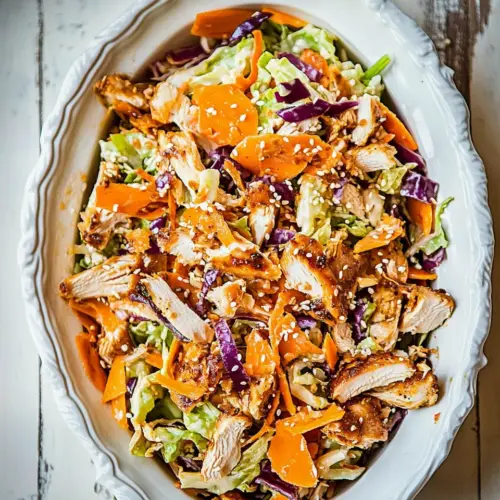
Chinese Chicken Salad
Chinese Chicken Salad brings creamy peanut dressing, crunchy cabbage, and tender chicken together in a bright, satisfying bowl. This easy, crispy textured salad works as an easy weeknight dinner or a fresh lunch option. Enjoy the balance of sweet mandarins, toasted almonds, and savory soy for a reason to make it again and again.
Equipment
- Skillet
- Jar
- Large Bowl
- Knife
- Cutting Board
- Tongs or wooden spoons
Ingredients
- 2 chicken breasts boneless, skinless, cut into bite-sized pieces Poach or sear and dice to provide the main protein and hearty texture for the salad, absorbing marinades and carrying savory flavors.
- 1 tablespoon ginger fresh, minced Grate or mince finely to add a bright, zesty warmth and aromatic lift that complements the dressing and chicken.
- 1 tablespoon soy sauce Marinate or season to add savory umami depth and saltiness that balances sweet and citrus components in the dish.
- 1 tablespoon orange juice Use as a sweet-tart citrus component for brightness and acidity that helps brighten the dressing and balance richness.
- 1 teaspoon sesame oil Drizzle sparingly to impart a concentrated toasted sesame aroma and subtle nutty flavor throughout the salad.
- 1/2 teaspoon black pepper Season lightly to provide gentle heat and earthiness, enhancing the overall savory profile without overpowering other flavors.
- 1 teaspoon sriracha sauce optional Stir into marinades or dressings for optional spicy heat and tangy kick to elevate the dish’s flavor complexity.
- 1/4 cup honey Whisk into dressings or glazes for pronounced sweetness and sticky texture that helps bind flavors to the chicken and vegetables.
- 1/2 kosher salt Measure carefully to control seasoning; when added appropriately it balances flavors and enhances overall taste without over-salting.
- 3 cups Napa cabbage chopped Chop thinly to contribute tender crunch and mild cabbage sweetness, forming the bulk of the crisp salad base.
- 1 1/2 cup red cabbage chopped Slice or shred finely to add vivid color, crunchy texture, and a slightly peppery flavor that contrasts with lighter greens.
- 3 cups iceberg lettuce chopped Tear or chop to create a crisp, cool foundation with light texture and neutral flavor that holds up to heavier toppings.
- 2 large carrots shredded, about 1 1/2 cups Shred or julienne to add sweet earthiness, color, and an accessible crunch that complements cabbage and lettuce.
- 1/2 cup scallions chopped Slice thinly to provide mild oniony sharpness and freshness that brightens the salad and pairs well with citrus notes.
- 2 mandarin oranges peeled and slices pulled apart Peel and separate segments to add juicy sweetness and citrus brightness that contrasts creamy dressings and crunchy elements.
- 1/3 cup almonds sliced Toast or use raw sliced for a delicate nutty crunch and subtle buttery flavor that adds texture and richness.
- 1 cup fried wontons see NOTES Crumble or scatter for crunchy, savory topping that brings a deep-fried crisp contrast and playful texture to each bite.
- 4 cloves garlic minced Mince finely to infuse pungent aromatic depth and savory warmth into marinades or dressings when combined with other seasonings.
- 1/4 cup soy sauce Combine into sauces or dressings to contribute savory umami and saltiness, balancing sweet and acidic components effectively.
- 1/4 cup brown sugar Dissolve into dressings or glazes to add molasses-like sweetness and depth, helping create a caramelized note when cooked.
- 1/2 cup peanut butter creamy Spoon into dressings to provide creamy body, subtle nuttiness, and rich flavor that helps emulsify and thicken the dressing.
- 5 tablespoon olive oil Whisk in as a smooth oil component to create cohesive dressings with a fruity base and help carry fat-soluble flavors.
Instructions
- Mix the marinade ingredients (except the salt) together in a jar. Place the chicken pieces in a freezer baggie (or bowl) and place in the refrigerator for 30 minutes or up to overnight. Move the chicken around in the baggie (or bowl) occasionally.: The air fills with a bright, gingery aroma as citrus and soy sauce mingle with minced garlic and ginger , giving you an immediate sense of the flavor direction. This step releases essential oils and creates a concentrated flavor bath that will penetrate the chicken . A common misstep is skimping on mixing, which yields uneven flavor pockets; shake or stir thoroughly until the marinade looks homogenous. If the marinade smells overwhelmingly salty or sharp, you may have used too much soy, so adjust with a splash more orange juice. When you place the chicken into the marinade, press pieces so they are fully coated, and move them occasionally to ensure even absorption.
- Heat a large skillet, preferably cast-iron, over high heat. Drain the marinade from the chicken and add the chicken to the skillet. Add 1/2 teaspoon of salt and stir until cooked through and dark in color. Add a squirt or two more of the sriracha during the cooking process to add a little more coating to the chicken. Once cooked, remove from the skillet and set aside.: Cooling time allows the marinade to work into the meat so every bite carries nuance, and the chilled chicken firms slightly which helps with even searing later. The texture becomes juicier when you give it this resting period, because the flavors begin to penetrate rather than just sitting on the surface. A frequent error is leaving the chicken out at room temperature for too long; always refrigerate during the marination window to avoid bacterial growth. If pressed for time, even 30 minutes makes a noticeable difference compared to zero minutes.
- Place all of the salad vegetables in a large bowl. Leave the almonds, mandarins, and wontons for topping the salad.: Every time you jiggle the bag or stir the bowl you redistribute the marinade, which keeps all pieces evenly seasoned and prevents pockets of concentrated flavor. This motion also ensures thinner pieces do not over marinade compared to thicker ones, leading to uniform color and texture after cooking. A trap some fall into is leaving the bag untouched for hours, which can result in uneven flavor absorption. If you see any excess marinade pooling, briefly redistribute it so the liquid does not stagnate on one side of the protein.
- Mix together the peanut dressing ingredients in a jar. Stir, or shake, until fully mixed. You may need a spoon to help mix it all together.: The moment the pan hits high heat you should see it shimmer slightly and smell a faint toasty note from the metal, signaling it is ready to sear. A hot pan creates a dark caramelized exterior on the chicken , developing Maillard flavors that make the salad irresistible. Avoid a pan that is not hot enough, which causes steaming and prevents that desirable browning. If your skillet smokes heavily, reduce the heat slightly; you want intense heat, not a burnt finish.
- Pour the dressing over the vegetables and then use two large wooden spoons (or your hands) to mix it all together, completely coating the salad with the dressing. Transfer to a platter, or individual serving plates, and top with almonds, mandarins, and wonton strips.: Draining ensures liquid does not pool in the pan, which would steam rather than sear the chicken . As the pieces hit the skillet you should hear a confident sizzle, and the sound will change as the exterior browns, signaling progress. Stir occasionally to promote even coloration, and watch for deep golden to dark brown spots that tell you the surface sugars have caramelized. A common mistake is adding too many pieces at once, crowding the pan and causing steaming. Cook in batches if necessary to keep that sizzle audible.
- Add 1/2 teaspoon of salt and stir until cooked through and dark in color.: The salt enhances the savory backbone and helps proteins brown more effectively. As the chicken cooks you will smell richer, toasted notes and see juices tighten as they evaporate, leaving concentrated savory flavors. Cook until pieces are opaque and slightly darkened, which means the exterior has developed flavor and the interior is fully set. Overcooking will dry the meat, so look for a slight spring when pressed. If juices run pink when cut, continue cooking in short bursts to avoid drying.
- Add a squirt or two more of the sriracha during the cooking process to add a little more coating to the chicken.: Introducing a touch of sriracha sauce while the chicken sears gives a glossy sheen and a faint chili aroma that lingers without overpowering. The heat integrates into the caramelized exterior and rounds out the savory notes from the marinade. Too much sriracha can mask other flavors, so add sparingly and taste if possible. If the pan looks sticky, a quick splash of orange juice can deglaze and lift those browned bits for more flavor.
- Once cooked, remove from the skillet and set aside.: Resting the chicken off heat allows juices to redistribute, preserving moistness. The surface will still smell toasty, and the internal temperature will finish stabilizing. Cutting immediately can release juices and dry the meat, so a short rest of a few minutes helps maintain texture. A typical oversight is chopping too soon; patience here keeps the meat tender. Set the cooked pieces on a plate to cool slightly before adding to the salad.
- Place all of the salad vegetables in a large bowl.: The combination of shredded Napa cabbage , chopped red cabbage , and chopped iceberg lettuce creates a dynamic, layered bed that holds dressing well. Toss them gently to mix colors and textures so each forkful samples multiple leaves. If the greens are wet, pat them dry so the dressing clings rather than slides off. Overmixing can bruise delicate leaves, so fold gently to preserve structure.
- Leave the almonds, mandarins, and wontons for topping the salad.: Reserving crunchy and juicy toppings preserves their distinct textures, so they remain crisp and vibrant when served. Scatter them over the finished salad just before plating to keep wonton strips from softening and mandarins from releasing too much juice into the greens. A common misstep is pre mixing these toppings, which leads to soggy textures and diluted flavors. Keep them separate until assembly.
- Mix together the peanut dressing ingredients in a jar.: As you combine peanut butter , soy sauce , brown sugar , orange juice , and olive oil , a rich nutty aroma emerges and the mixture smooths into a glossy emulsion. This dressing brings creamy body and a sweet savory balance that clings to the vegetables. If the texture looks too thick, add small spoonfuls of warm water or more orange juice until it loosens. Failing to fully emulsify leads to uneven coating, so stir or shake well until the dressing is silky and uniform.
- Stir, or shake, until fully mixed.: The sound of the jar shaking is oddly satisfying as the dressing homogenizes into a velvety sauce. When you open the jar a rounded, nutty scent should greet you, indicating the ingredients have integrated. If you see separated oil, continue mixing until the sheen is consistent. A frequent error is under mixing, leaving clumps of peanut butter which will not coat the salad evenly.
- You may need a spoon to help mix it all together.: Using a spoon to scrape the jar ensures you retrieve every bit of dressing and helps break up any remaining clumps. This small action improves the final consistency and prevents wasting flavorful sauce. If the dressing seems overly stiff while stirring, add a splash of orange juice to loosen it. Leaving sauce stuck to the jar is common, so scrape thoroughly so each toss has enough dressing.
- Pour the dressing over the vegetables and then use two large wooden spoons (or your hands) to mix it all together, completely coating the salad with the dressing.: The visual cue you want is an even, glossy coating on every leaf, and you should hear gentle clinking as the utensils move through the bowl. Tossing by hand or with spoons lets you feel the balance, ensuring no pockets of dry greens remain. Avoid over tossing which can bruise delicate lettuce; a few thorough turns is usually enough. If some parts look dry after tossing, add a small drizzle more dressing and fold gently until uniform.
- Transfer to a platter, or individual serving plates, and top with almonds, mandarins, and wonton strips.: The final assembly is where the salad becomes visually inviting, as bright orange segments and pale wonton strips contrast with green and purple leaves. Add the toppings right before serving so the wontons stay crisp and almonds remain crunchy. A common mistake is assembling too early, which leads to loss of texture and diluted flavors. Present the platter with confidence and watch guests dive in.
Notes
- Use rotisserie chicken for speed: If time is limited, shred store bought rotisserie chicken and fold it in to save cooking time without sacrificing the hearty protein element.
- Make wonton strips ahead: Cut and fry wonton strips in advance and store in an airtight container to maintain crispness for several hours before serving.
- Adjust sweetness to taste: Modify the honey or brown sugar quantities in the marinade and dressing to suit sweeter or more savory preferences.
- Swap almonds for peanuts: If you prefer a denser nut texture, substitute sliced almonds with chopped roasted peanuts for a different nutty note in each bite.
- Omit sriracha for milder heat: Skip the sriracha sauce in the marinade and during cooking if you want a gentler, family friendly version.
- Make the dressing ahead: Prepare the peanut dressing up to a day ahead and refrigerate, bringing it to room temperature and re emulsifying briefly before tossing.