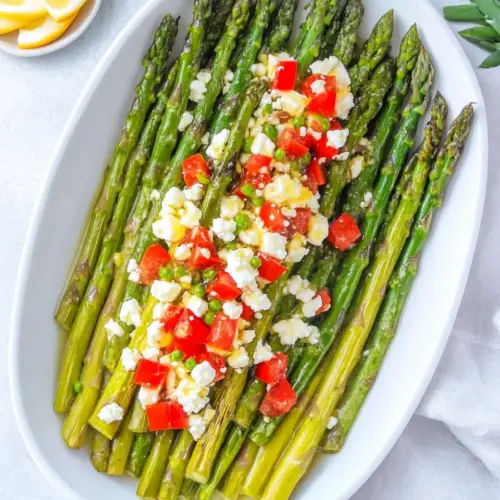
Chilled Asparagus with Feta Vinaigrette
Chilled Asparagus with Feta Vinaigrette is a bright, creamy, and easy spring side that balances crisp asparagus with tangy crumbled feta cheese and fresh citrus. This refreshing dish is perfect for an easy weeknight dinner or a light luncheon, delivering vibrant color and contrasting textures that make it worth adding to your regular rotation.
Equipment
- Steamer
- Small Bowl
- Whisk
- Potato peeler
Ingredients
- 2 tablespoons crumbled feta cheese Provide a salty, tangy crumb that enriches the vinaigrette with creamy Mediterranean character; sprinkle over the finished asparagus to add a briny contrast and slight creaminess that balances citrus and heat. Crumbled texture integrates easily into dressings and gives every bite a pleasant savory note.
- 2 1/2 tablespoons freshly squeezed lemon juice Brighten the dressing with sharp, acidic citrus that cuts through richness and lifts flavors; use freshly squeezed lemon juice for vibrant acidity that complements the feta and asparagus. Lemon juice also helps macerate the pepper slightly and adds a clean finish to the vinaigrette.
- 1 1/2 tablespoons freshly squeezed orange juice Add a sweet, fragrant citrus layer that mellows the lemon while contributing complexity; freshly squeezed orange juice brings subtle sweetness and aromatics that round out the dressing. Orange juice pairs well with the mustard and Tabasco to create a balanced, multidimensional vinaigrette.
- 1 tablespoon water Dilute and adjust vinaigrette consistency to ensure it emulsifies smoothly and coats the asparagus evenly; a small amount of water can temper acidity without diluting flavor excessively. Use measured quantities to maintain the intended balance between tangy juices and oil.
- 2 teaspoons Dijon mustard Emulsify the citrus and oil into a cohesive vinaigrette while adding a sharp, piquant note; Dijon mustard stabilizes the dressing and lends subtle savory depth. Whisk thoroughly to create a smooth emulsion that clings to asparagus and peppers.
- 2 teaspoons vegetable oil Bind and enrich the vinaigrette with a neutral mouthfeel that carries flavors evenly; vegetable oil provides a silky texture and helps distribute citrus and feta throughout the dish. Choose a light oil to avoid overpowering the delicate asparagus.
- 2 drops Tabasco sauce Introduce a controlled spicy kick that lifts the vinaigrette with a touch of heat and vinegar tang; a couple of drops of Tabasco add warmth without overwhelming other flavors. Adjust quantity carefully to maintain balance with the citrus and feta.
- 1 1/4 pounds asparagus Serve as the main vegetable component, offering a crisp, tender base that showcases the vinaigrette; trim and blanch or chill asparagus to preserve bright color and firm texture. Arrange chilled spears with the diced red pepper and drizzle with the feta vinaigrette for a refreshing presentation.
- 1/2 cup diced red bell pepper (alternately, you can use roasted red pepper strips) Provide sweet, crunchy contrast and vivid color to the dish, complementing the asparagus and feta vinaigrette; diced red bell pepper adds freshness and textural interest. Use roasted red pepper strips as an alternative for a smoky, softer profile.
Instructions
- In a small bowl, whisk together the feta cheese, lemon juice, orange juice, water, Dijon mustard, vegetable oil, and hot sauce.: The first thing you will notice is the aroma from the fresh lemon juice and orange juice as they mingle with the tang of the feta cheese . Whisking briskly creates a slightly creamy emulsion where tiny droplets of vegetable oil disperse through the citrus and mustard, giving the dressing a silky sheen. This step matters because a well emulsified vinaigrette clings to the asparagus instead of pooling on the plate, and it helps the flavors marry so every forkful is balanced. When whisking, listen for the faint, almost silent rustle of the whisk and watch for the dressing to thicken very slightly, becoming glossy. If it seems too sharp, a tiny splash more water will mellow it; if it separates, add a drop more Dijon mustard and whisk again to rebind. A common mistake here is adding the oil too quickly or not whisking enough, which prevents the emulsion from forming and leaves a watery dressing.
- Break off the tough ends of the asparagus. Trim the ends with a potato peeler, if you'd like. Place your trimmed asparagus in the top half of a steamer pan set. Steam for 5 to 10 minutes depending on the thickness of the asparagus, or until the asparagus are tender.: When you bend a stalk gently you will feel a natural break point where the tender part meets the woody end, and using that tactile cue ensures you remove the fibrous portion that can be unpleasant to eat. The scent here is grassy and fresh; when trimming with a potato peeler the visual cue is a clean, even stalk with the pale, tougher end removed. This technique matters because eating the tough ends risks an unpleasant stringy texture that distracts from the delicate vinaigrette. Trimmed asparagus not only looks better on the plate but cooks evenly. A typical error is trimming too much and wasting tender stalk, so aim to remove only the fibrous portion.
- Divide the asparagus evenly among 4 plates, and top each serving with 2 tablespoons feta vinaigrette and 2 tablespoons red bell pepper. Chill until cold and serve!: Using a potato peeler turns the trimming into a neat finish, creating uniformly tapered stalks that present beautifully. The peeler reveals the bright green flesh beneath the outer skin, and the visual payoff is elegant, especially for a composed plate. The reason to peel is purely aesthetic and textural, because sometimes the outer skin can be tougher on thicker asparagus. If you choose to peel, do it lightly; over peeling can make the stalks too thin and prone to overcooking. Avoid using a dull peeler which drags and bruises the vegetable.
- Place your trimmed asparagus in the top half of a steamer pan set: As you arrange the stalks, you will notice steam rising and a delicate vegetal perfume filling the air, which indicates you are about to transform firm stalks into tender crisp ones. The steamer environment cooks gently with moist heat, preserving vibrant color and preventing the stalks from becoming waterlogged, which is essential for a chilled presentation. Position the asparagus so they are in a single layer when possible, and avoid overcrowding which causes uneven cooking. A frequent oversight is starting with water that is not yet boiling, which lengthens steaming time and risks overcooking; ensure the water is at a vigorous simmer before setting the steamer in place.
- Steam for 5 to 10 minutes depending on the thickness of the asparagus, or until the asparagus are tender: Pay close attention to the sensory cues during steaming, because thickness dictates timing. Thin stalks become tender in about 5 minutes, while very thick ones may need up to 10 minutes; you'll know they are ready when a knife meets slight resistance and the center yields without collapsing. Visually the color should be a bright, lively green, and the stalks will glisten from the steam. This controlled cook preserves a pleasant snap, which contrasts beautifully with the creamy feta cheese dressing. A common mistake is testing only the tip; probe near the middle for the best indication of doneness, and resist the temptation to oversteam which leads to limp, dull asparagus.
- Divide the asparagus evenly among 4 plates: As you transfer the stalks, notice the leftover steam that continues to soften them, so allow a brief moment for residual heat to dissipate. Arranging the stalks with care makes the dish feel intentional, and dividing evenly ensures consistent portions for your guests. The visual of neat bundles or fanned stalks is appealing, and chilling them promptly helps lock in texture and color. Be mindful not to pile them, because stacking will trap heat and steam and can lead to sogginess. A simple slip is leaving them at room temperature too long before chilling, which dulls the crispness you worked to achieve.
- Top each serving with 2 tablespoons feta vinaigrette and 2 tablespoons red bell pepper: Spoon the vinaigrette so that the glossy dressing lightly coats the stalks, and listen for the gentle splash as it hits the plate. The crumbled feta cheese will soften into tiny creamy pockets, and the diced red bell pepper adds a sweet crunch and bright red contrast. This step matters because proper distribution ensures every bite balances the vegetal asparagus with the bright citrus and creamy salt of the dressing. If you pour too much dressing at once it can pool, so aim for even, delicate dollops. A common misstep is adding the pepper too coarsely chopped, which can overwhelm the texture balance; keep the dice small for a pleasing mouthfeel.
- Chill until cold and serve: Chilling sets the dish and sharpens the citrus notes, turning it into a refreshing course. As the plate cools you will notice the vinaigrette firm slightly and the flavors knit together, making the asparagus taste cleaner and brighter. Serving cold also maintains the intended contrast with any warm mains you pair it with. Chill in the refrigerator uncovered briefly, then covered, to avoid condensation pooling on the plate. The most frequent mistake is skipping the chill entirely, which leads to a lukewarm plate where the vinaigrette can feel flat instead of lively.
Notes
- Make ahead: The vinaigrette can be made up to a day in advance and stored covered in the refrigerator to save time when serving.
- Microwave option: For a quick approach follow the provided microwave instructions, arranging the asparagus spoke like on a platter and microwaving at high in short intervals to reach crisp tender texture.
- Presentation tip: Fan the asparagus or arrange in small bundles on each plate for an elegant look that feels intentional and restaurant worthy.
- Adjust heat: Increase or omit the Tabasco sauce to control the amount of spice, adding gradually so the citrus and feta cheese remain balanced.
- Peeling thicker stalks: If your asparagus is very thick, lightly peel the lower third to remove tougher skin and ensure even tenderness when steamed.