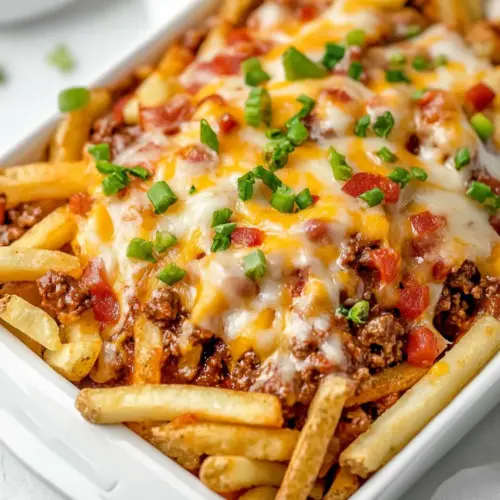
Chili Cheese Fries
Chili Cheese Fries turn crispy french fries into a saucy, cheesy sensation with savory ground beef, tender beans, and melty cheddar cheese. This crowd pleasing, easy weeknight dinner blends creamy, crispy, and spicy textures into one shareable dish. Serve it for game nights or casual gatherings, because it delivers big flavor with minimal fuss.
Equipment
- Large Skillet
- Serving plates
Ingredients
- 2 lb french fries Crisp and hearty, provides the golden base for the dish and soaks up savory chili flavors while adding satisfying texture to every bite. Bake or fry until crisp to contrast the saucy toppings and prevent sogginess. Ideal when spread in a single layer to maximize crunchy surface area for cheese melting.
- 1 lb ground beef Rich and savory, supplies the primary protein and meaty texture that defines classic chili cheese fries. Brown thoroughly to develop deep fond and caramelized bits that enhance the sauce’s complexity. Lean or medium-fat grind works well to balance juiciness without excess grease.
- 1 onion diced Sweet and aromatic, adds a mellow onion flavor and moisture that forms the flavor foundation alongside garlic and spices. Sauté until translucent or lightly browned to release sugars and build depth in the chili mixture. Diced size helps distribute bursts of savory-sweet notes throughout the topping.
- 1 jalapeño diced Bright and spicy, contributes fresh heat and a grassy, peppery bite that lifts the chili’s flavor profile. Remove seeds for milder heat or include them for a stronger kick; sauté briefly to soften and meld with onions and garlic. Diced jalapeño also adds visual contrast and a fresh snap.
- 3 cloves garlic minced Pungent and fragrant, offers a savory backbone that enhances the overall aroma and taste when gently cooked with onions and peppers. Mince finely to distribute garlicky depth evenly through the chili sauce without overpowering other ingredients. Brief cooking mellows sharpness and releases sweet, roasted notes.
- 15 oz kidney beans drained and rinsed (1 can) Hearty and creamy, brings body and a slightly earthy sweetness while adding protein and fiber to the chili topping. Drain and rinse to reduce excess sodium and preserve bean texture so they hold up under heat. Stir in toward the end of simmering to avoid over-mashing and keep whole bean integrity.
- 15 oz diced tomatoes not drained (1 can) Juicy and acidic, supplies liquid, tomato chunks, and bright tang that balance the richness of beef and cheese. Use the juice to contribute to the chili sauce body while the tomato pieces add texture and bursts of freshness. Canned tomatoes simplify preparation while maintaining consistent flavor.
- 1 cup tomato sauce Smooth and concentrated, adds cohesive tomato flavor and a saucy base that helps thicken and unify the chili components. Stir in to create a uniform, glossy sauce that clings to fries and beans for improved mouthfeel. Adjust quantity slightly to reach desired sauciness for topping fries.
- 1 cup beef broth Savory and umami-rich, enhances the chili with a meaty, gelatinous mouthfeel and helps thin or thicken the sauce to desired consistency. Use warm broth to deglaze the pan and capture browned bits from cooked beef for deeper flavor. Can be adjusted to control the sauce’s simmering intensity.
- 2 tbsp tomato paste Thick and tangy, intensifies tomato flavor and helps bind the chili sauce for a richer, more robust profile. Mix in small amounts and taste, as tomato paste concentrates acidity and sweetness that define chili depth. Helps the sauce cling to fries when reduced during simmering.
- 1 1/2 tbsp chili powder Smoky and aromatic, provides essential chili character and warm spice notes that give the topping its signature flavor. Add gradually and simmer to allow the powder to bloom in fat, releasing fuller aroma and depth. Adjust to preferred heat and complexity while balancing other seasonings.
- 2 tsp Worcestershire sauce Savory and slightly sweet, contributes a complex, tangy depth that enhances beefiness and rounds out the chili sauce. Add sparingly and taste, as Worcestershire adds fermented umami notes that boost overall savoriness. Stir in during cooking to meld with other liquids and spices.
- 1 tsp kosher salt Clean and crystalline, brings necessary seasoning to heighten and balance the flavors throughout the chili mixture. Sprinkle to taste while simmering, keeping in mind the saltiness of canned goods and broth to avoid over-salting. Finely measured salt allows other savory elements to shine.
- 1/2 tsp ground black pepper Warm and piquant, supplies a subtle heat and aromatic bite that complements the chili powder without overwhelming the dish. Grind fresh or use pre-ground to season while simmering so pepper flavors disperse evenly. Small increments help fine-tune the overall spice balance.
- shredded cheddar cheese, sour cream, and chopped green onions for topping Melty and savory, forms the indulgent finishing layer that creates gooey, flavorful pockets atop the fries and chili when baked or broiled. Shred just before use for easier melting and even coverage; choose sharp cheddar for pronounced tang. Sour cream adds cooling creaminess while chopped green onions contribute freshness and color.
Instructions
- In a large skillet set over medium-high heat, brown the ground beef with the onion, jalapeño, and garlic until no pink remains.: The pan will hiss as the ground beef hits the surface, releasing savory aromas and creating little brown bits that smell deeply roasted. As the onion softens and the jalapeño gives off a green, peppery scent, the mixture will lighten and then darken as it sears. This browning is critical because those caramelized bits dissolve back into the sauce, boosting umami and complexity. Stir occasionally to ensure even color, and break the meat into bite sized pieces with your spoon so you get both crisp edges and tender sections. A common mistake is crowding the pan, which causes steaming and prevents browning, so use a wide skillet and give the meat room.
- Drain any excess fat and return the mixture to the skillet on the stovetop.: When you drain, you will notice the pan becomes less loud and the aroma shifts from heavy fat to a cleaner savory scent. Returning the mixture allows you to continue building flavor without greasy heaviness, which helps the sauce thicken properly. Scrape the bottom of the skillet to lift any stuck bits into the meat, those pieces add concentrated flavor. Be careful not to pour off so much that the pan becomes dry, you still want a little fat to carry the flavors. A common oversight is leaving too much fat, which can make the final chili oily, so drain judiciously.
- Stir in the beans, diced tomatoes, tomato sauce, broth, tomato paste, chili powder, Worcestershire sauce, salt, and pepper.: As you add each liquid, you will see a glossy sheen form and a fragrant steam rise. The tomato paste will sink in then bloom, and the aroma will shift to a richer, tangy note. Stirring integrates all the seasonings, so take a moment to mix until the color is uniform and the sauce looks cohesive. This combination balances texture and flavor, the kidney beans soften and the diced tomatoes add bursts of acidity. One pitfall is adding spices unevenly, so measure and stir promptly to avoid pockets of overly spicy or salty flavor.
- Bring the mixture to a boil, reduce the heat, and simmer for 30-40 minutes until thickened, stirring occasionally.: You will see the mixture bubble confidently at first, then settle into a gentle simmer where small, regular bubbles rise. During simmering, flavors concentrate, liquids evaporate, and the sauce becomes spoonable. The sound changes from a brisk boil to a soft simmer, and the scent deepens into a slow roasted tomato character. Stirring occasionally prevents sticking and allows steam to escape evenly, which helps the chili reduce. A common error is simmering too high, which can scorch the bottom, so lower the heat to maintain a steady, gentle bubble.
- Meanwhile cook the fries your favorite way—fry, air fry, or bake them.: The method you choose changes the sensory outcome. Frying yields loud sizzles and a golden, blistered surface that crunches satisfyingly. Air frying produces a clean, hot airflow that crisps with less oil, and baking gives a more even, slightly drier crisp. Whatever route you take aim for a hot, crisp exterior and a tender interior, because that contrast is what the chili will cling to. Avoid overcrowding the fryer or sheet, which causes steam and sogginess, and keep an eye on color because overbaked fries can become dry instead of crisp.
- Pile the hot fries onto one large, or several smaller, serving plate(s). Sprinkle with cheddar cheese, then ladle on the hot chili. Top with additional cheese, sour cream, and green onions.: Assemble while the fries are piping hot so the shredded cheddar cheese melts into gooey ribbons, and the chili clings to the fries instead of pooling. You should hear a soft sizzle as the hot chili meets the fries, and see the cheese begin to shine and stretch. Spoon the chili in a few places rather than drowning the fries, that keeps pockets of crispness exposed. A common mistake is letting the fries cool before assembling, which makes the cheese less likely to melt and results in a limp texture.
- Top with additional cheese, sour cream, and green onions: The final layering adds creaminess, tang, and freshness. Dollops of sour cream cool the palate, while extra cheddar cheese brings a melted, indulgent finish. Sprinkle the chopped green onions last for a snap of color and a bright, oniony lift. These toppings create textural and temperature contrasts that make each bite interesting. Avoid adding cold toppings too early, since they can cool the dish too quickly; add them right before serving for the best effect.
Notes
- Swap the fries confidently if you want a different base, try thicker steak fries or waffle fries for more surface area to hold the chili.
- Make it ahead by cooking the chili a day early, it will taste deeper the next day, then reheat gently before serving so the texture stays right.
- Control the heat by removing seeds from the jalapeño or adding more if you prefer a spicier finish, taste as you go to dial it in.
- Melting cheese tips place the fries and cheese under a hot oven broiler for a minute if the cheese needs more melt, watch closely to avoid burning.
- Vegetarian swap remove the ground beef and use an extra can of beans with vegetable broth for a satisfying meatless version.