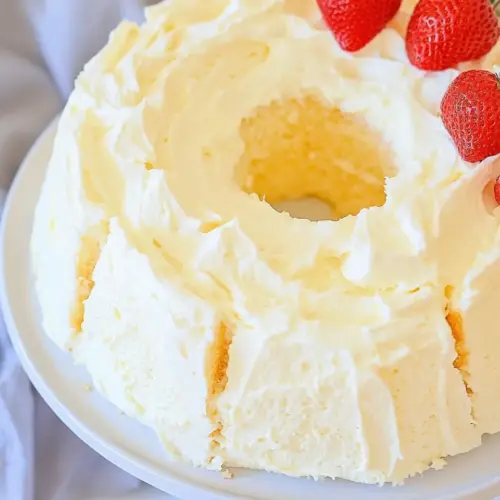
Chiffon Cake
Chiffon Cake is an airy, tender dessert with bright citrus notes and a creamy orange butter frosting. This light, spongy cake combines whipped egg whites and rich yolks for a cloud like crumb, making it an elegant choice for celebrations or easy weeknight treats. Serve with fresh fruit for a beautiful presentation that still feels effortless to make.
Equipment
- Stand mixer or electric mixer
- 10 inch angel food tube pan
- Mixing Bowls
- Spatula
- Sifter
Ingredients
- 2 cups cake flour Provides a fine, soft base for the cake batter; ensures a tender crumb when properly sifted and measured. Contributes structure through gluten development while remaining lighter than all-purpose flour when handled gently.
- 1 1/2 cups sugar Adds sweetness and helps tenderize the crumb; also aids in browning and moisture retention during baking. Can be adjusted slightly for personal taste but affects texture and shelf life if significantly altered.
- 1 tablespoon baking powder Leavens the cake by producing carbon dioxide when activated; reacts with liquid and heat to create lift and a delicate sponge. Helps achieve a light, airy texture typical of chiffon cakes when combined with whipped egg whites.
- 1 teaspoon salt Balances flavors and enhances overall taste; strengthens other ingredients by slightly tightening batter proteins. Helps control fermentation and sweetness perception in the finished cake.
- 1/2 cup vegetable oil Contributes fat that keeps the cake moist and tender without weighing it down; helps emulsify the batter for a smooth texture. Supports the cake’s soft mouthfeel while allowing the egg white foam to remain light.
- 7 egg yolks Adds richness, color, and emulsifying properties that stabilize the batter; yolks contribute to tenderness and flavor. Supports structure and moisture while complementing the egg whites used for leavening.
- 3/4 cup cold water Provides hydration for the dry ingredients and helps dissolve sugar and extracts; cold temperature can help control batter temperature. Affects batter consistency and final crumb when accurately measured.
- 2 teaspoons vanilla extract Imparts aromatic vanilla flavor and enhances sweetness perception; helps round out the cake’s flavor profile. Small amount contributes depth without overpowering the fruit or citrus notes.
- 1 teaspoon orange extract Delivers concentrated citrus aroma and flavor that complements orange juice and zest; adds a brighter, citrus-forward note. Useful in small amounts to intensify orange character without increasing acidity.
- 7 egg whites Incorporated as whipped foam to create volume and lightness; beaten to stiff peaks to trap air that leavens the cake. Responsible for the characteristic airy, chiffon-like texture when gently folded into the batter.
- 1/2 teaspoon cream of tartar Stabilizes egg white foam during whipping and improves volume retention; helps produce finer, longer-lasting meringue structure. Enables a glossy, stable foam that yields a consistent airy crumb after baking.
- 1/2 cup butter softened Adds a rich, creamy buttery flavor and contributes to tenderness when used in frostings or fillings. Softened butter creams easily with sugar to create smooth icings or fillings that complement the chiffon layers.
- 1/4 cup orange juice Provides fresh citrus acidity and flavor that brightens the cake and balances sweetness; can slightly thin glazes or fillings for easier spreading. Enhances orange character when combined with zest and orange extract.
- zest of one medium orange Offers concentrated fresh citrus oils and bright aroma; enhances overall orange flavor without additional acidity. Zest adds texture and visible flecks of flavor that complement both cake and glaze elements.
- 1 teaspoon vanilla extract Adds warm vanilla aroma and deepens flavor complexity when paired with orange notes; supports sweetness perception. Useful for both batter and fillings to ensure a well-rounded vanilla presence.
- 4 cups powdered sugar Supplies sweetness and a powdery texture ideal for glazes, frostings, or dusting; dissolves smoothly when mixed with fats or liquids. Helps create silky icings that can be used to finish or fill the chiffon cake.
- fresh fruit optional Provides a fresh, colorful garnish and light fruity contrast to the sweet cake and frosting. Can be used to decorate slices or served alongside for added freshness and texture.
Instructions
- Preheat the oven to 325°F.: The oven should be fully heated before you place the pan inside, which ensures even rising and steady baking. You will notice a gentle, warm aroma fill the kitchen as it comes up to temperature, and the oven light will help you watch the cake without opening the door. A common mistake is placing the cake in too cool an oven, which causes poor rise and dense texture. If your oven runs hot or cool, use an oven thermometer to verify accuracy.
- Sift the cake flour, sugar, baking powder, and salt into a large mixing bowl. Make a well in the center, and add the oil, egg yolks, cold water, vanilla, and orange extract. Mix until smooth.: As the dry mixture sifts, the air incorporated creates a lighter base for the batter, and the combined dry ingredients will smell faintly of sweet flour and citrus from the extracts. Mixing the well ingredients in the center gives an emulsion where the oil and yolks disperse evenly, preventing streaks of fat. If you overmix after combining, gluten develops and the cake loses tenderness, so stop as soon as the batter looks homogeneous. Scrape the bowl sides to ensure nothing is clinging and to guarantee even texture.
- In another large mixing bowl or the bowl of a stand mixer, beat the egg whites and cream of tartar together until they form stiff peaks. Pour the batter mixture into the egg whites, folding it in gently so the egg whites don’t deflate.: When you beat the egg whites with cream of tartar , you will see them transition from frothy to glossy peaks that stand tall. The sound changes too, from a rapid splashing to a thicker, almost muffled beat. Folding requires a light hand, using a spatula in a wide arc to preserve the trapped air, which produces the cake's signature lift. If you stir aggressively, the volume will collapse, yielding a denser cake. To test, lift the spatula and watch for ribbons that slowly sink back into the batter.
- Pour the batter into an ungreased 10-inch angel food tube pan, and spread evenly. Bake for 55 minutes, then increase the heat to 350°F and bake an additional 10-15 minutes, until the cake is golden brown on top and a toothpick inserted in the center comes out clean. Remove from the oven and let cool upside down. Allow to cool completely, then release from the pan by running a plastic knife around the edges of the pan. Invert onto a serving platter.: As the batter bakes, the oven will fill with a toasty, sweet aroma and you should see the cake climb and dome slightly before settling into an even top. The dual temperature step allows gentle initial rise, then a final blast to set the exterior and encourage a golden finish. Cooling upside down prevents collapse by using gravity to keep the center elevated; you will hear a faint settling sound as steam escapes. A common error is greasing the pan which prevents the cake from clinging to the sides while cooling and causes it to fall; always use an ungreased tube pan for chiffon cakes. When releasing from the pan, slide a narrow tool carefully to avoid tearing the delicate crumb.
- When the cake has cooled, make the frosting by adding the butter to a large mixing bowl or the bowl of a stand mixer. Beat until light and fluffy. Add the orange juice, orange zest, vanilla, and powdered sugar, and mix until combined. Increase the speed to high and beat until light and fluffy.: The frosting should smell bright and citrusy as the orange zest and orange juice are incorporated. As you beat the softened butter with the sugar, the mixture becomes pale and silky, transforming into a spreadable cloud. Beating at low speed first prevents powdered sugar from puffing into the air, then raising the speed gives the frosting a whipped, airy quality. If the frosting becomes too loose, chilling it briefly firms it up; if it is too stiff, add a teaspoon of juice at a time to loosen. Avoid overheating the butter, which yields greasy frosting.
- Spread the frosting over the cooled cake and decorate it with fresh fruit, if desired.: The final assembly is tactile and visual, as the smooth frosting glides over the tall, spongy cake creating soft peaks where your spatula lifts away. Fresh fruit adds bright color and a juicy contrast that cuts through sweetness, and placing fruits strategically creates an inviting presentation. If you apply frosting while the cake is still warm, it will melt and slide, so patience is essential. For clean slices, chill the frosted cake briefly so the frosting firms, and use a sharp knife wiped between cuts.
Notes
- Use room temperature eggs: Letting the eggs sit at room temperature helps the whites whip faster and reach greater volume, which directly improves the cake's lift and texture.
- Measure flour accurately: Spoon and level the cake flour into a cup rather than scooping, to avoid compacting and ending up with a dense cake.
- Whip whites to the correct stage: Aim for glossy, stiff peaks without dryness; over whipped whites can separate and under whipped whites will not provide enough structure.
- Adjust sweetness in frosting: Add the powdered sugar gradually and taste as you go to get the balance between sweet and bright from the orange juice.
- Garnish simply: Fresh fruit is optional but recommended, it adds both visual appeal and a refreshing contrast to the creamy frosting.