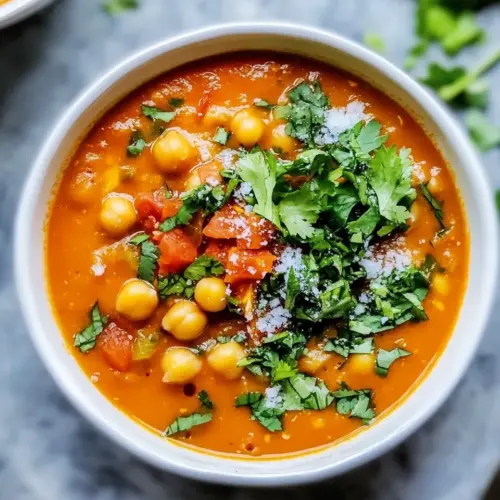
Chickpea Soup
Chickpea Soup is a creamy, aromatic bowl that blends tender legumes, red lentils, and coconut for a balanced, easy weeknight dinner. The curry scented broth is both warming and bright, perfect for cold evenings and meal prep. Make it for a simple, nourishing meal that reheats well and pleases a crowd.
Equipment
- Large Pot
- Blender
Ingredients
- 2 tablespoons coconut oil or olive oil Melt and coat the pot to sauté aromatics and prevent sticking while adding a subtle richness and mild flavor to the base of the soup.
- 1 cup diced yellow onion Provide a sweet, savory foundation when softened; dice finely to release natural sugars and build depth in the soup's flavor profile.
- 1 cup diced carrots Add earthy sweetness and texture when diced; sauté until tender to contribute body and balance to the curry-spiced broth.
- 1 tablespoon finely minced garlic Infuse pungent, savory aroma when finely minced; stir in early to bloom flavors and create a fragrant background for the soup.
- 1 tablespoon minced ginger Contribute warm, zesty brightness when minced; cook briefly to mellow raw sharpness and enhance the soup's aromatic complexity.
- 2 tablespoons tomato paste Concentrate tomato flavor and add umami depth; stir in to thicken the broth slightly and provide a rich, savory backbone.
- 1 tablespoon yellow curry powder Impart warm, aromatic curry flavor and color; sprinkle in to define the soup's primary spice character and aromatic profile.
- 1 teaspoon ground cumin Lend warm earthiness and a slight nutty note; add to complement curry flavors and deepen the overall savory complexity.
- 1 teaspoon paprika Provide sweet-smoky warmth and color; include to round out spice layers and accentuate roasted or smoky notes in the broth.
- 1/4 teaspoon red pepper flakes optional Introduce optional heat and a touch of lingering spice; add sparingly to control the soup's overall spiciness to taste.
- 1 teaspoon salt Enhance and balance flavors by seasoning the broth; dissolve fully to bring out sweetness and savory elements in the soup.
- 1/4 teaspoon pepper Brighten and balance the soup with subtle sharpness; adjust to taste to harmonize salty and aromatic components.
- 4 cups vegetable stock or chicken stock Create the liquid base and deliver savory depth; use as the primary cooking medium to meld spices, legumes, and vegetables.
- 1 (14.5-ounce) can fire-roasted crushed tomatoes Add bright tomato flavor and chunky texture; stir in canned crushed tomatoes to contribute acidity and body to the soup.
- 1/2 cup red lentils see note 1 Thicken and slightly sweeten the broth while adding protein-friendly starch; rinse before use if needed and cook until tender.
- 2 (15.5-ounce) cans chickpeas drained and rinsed Provide hearty protein and creamy texture when drained and rinsed; simmer to absorb flavors and contribute substantial body.
- 1 (13.5-ounce) can coconut milk full-fat, divided, see note 2 Add rich creaminess and subtle coconut sweetness; reserve some for finishing to create a silky mouthfeel and balanced richness.
- Toppings as desired see note 3 Offer fresh contrast and finishing touches such as herbs, citrus, or crunchy elements; customize to add color, texture, and brightness.
Instructions
- Open can of coconut milk and stir well. Remove 1/3 cup of coconut milk and set aside for later.: As you stir, you will notice the cream rising and the liquid becoming glossy, which helps later when you want a silky garnish. Set aside 1/3 cup so the reserved coconut remains cool and visibly bright when drizzled on finished bowls. A common misstep is shaking the can vigorously, which can create splatters when opened; instead, gently stir with a spoon. The why here is simple, the separated fats if unmixed will give uneven texture, and reserving some creates a pretty finishing touch.
- In a large pot, heat the oil over medium heat. Add the onions and carrots. Season to preference with salt and pepper. Cook, stirring occasionally, until tender, about 8–10 minutes. Add garlic, ginger, curry powder, cumin, paprika, optional red pepper flakes, salt, pepper, and tomato paste. Cook, stirring frequently until very fragrant, about 2–4 minutes. Add in can of undrained crushed tomatoes and cook, mixing and scraping any browned bits off the bottom of the pan for 1 minute.: You should hear a gentle sizzle as the onion and carrots hit the pan and see the edges turn translucent and slightly golden, releasing a sweet aroma. Stirring occasionally prevents sticking and promotes even caramelization. This step builds the soup’s flavor base by coaxing natural sugars out of the vegetables. Avoid rushing with a too high flame, which could char the outsides while leaving centers raw, and make sure the oil is warmed but not smoking before adding the vegetables.
- Add red lentils, vegetable stock, and all the coconut milk except the set aside 1/3 cup. Bring to a boil. As soon as it boils, cover the pot and reduce heat to low. Simmer for 10 minutes. Add chickpeas, return lid to the pot, and cook 10 more minutes. Remove lid and carefully transfer 2 cups of the soup to a blender and purée until smooth.: As the spices bloom, they will perfume the kitchen with toasty, warm notes and the tomato paste will darken slightly, indicating that its raw edge has softened. Stir constantly to avoid burning the spices which would impart bitterness. This brief toasting mellows the spices and releases essential oils that flavor the entire pot. If you smell anything acrid, lower the heat immediately, because burnt spices cannot be rescued.
- Add the puréed soup back to the pot and stir in the lemon zest, lemon juice, and cilantro. Taste and adjust the seasoning as needed. If you prefer a thicker soup, blend it a bit more. Ladle the soup into bowls, drizzle reserved coconut milk on top, and serve with extra fresh cilantro, mint, and lemon wedges.: The tomatoes will bubble and loosen the browned fond, which carries concentrated flavor into the broth. Use a wooden spoon to scrape and incorporate those browned bits, they are pure savory gold. Simmering briefly melds the tomato with the spices, creating a cohesive base. A mistake here is skimming off the fond, losing that deep flavor; instead, dissolve it into the sauce.
- Add red lentils, vegetable stock, and all the coconut milk except the set aside 1/3 cup. Bring to a boil: You will see the red lentils swell and begin to release starches almost immediately, and the broth will take on a creamier appearance as the coconut disperses. Bringing to a vigorous boil ensures the lentils start cooking evenly. Watch the pot during this stage to prevent boil overs, and use medium high heat to reach a boil efficiently.
- As soon as it boils, cover the pot and reduce heat to low. Simmer for 10 minutes: On low the soup should maintain a gentle simmer, with small bubbles rising steadily. This controlled simmer allows the lentils to soften and integrate without breaking into complete mush. It also helps the flavors marry slowly and steadily. If you simmer too vigorously, the lentils may break down too quickly and make the texture gummy, so keep a gentle simmer.
- Add chickpeas, return lid to the pot, and cook 10 more minutes: Adding the canned chickpeas later keeps them pleasantly chewy rather than falling apart, which creates textural contrast with the puréed base. During this second simmer the chickpeas warm through and pick up the surrounding spice notes. If you prefer softer legumes, you can add them earlier, but expect a more homogeneous texture. A common error is not rinsing canned chickpeas, which can add a metallic or overly salty note, so rinse well before adding.
- Remove lid and carefully transfer 2 cups of the soup to a blender and purée until smooth: When you blend hot liquid, you will first hear a rush and then a steady hum as the mixture becomes glossy and lump free. Puréeing brightens the texture and thickens the body by breaking down the lentils and veggies. To avoid steam pressure build up, hold the blender lid with a towel and start at low speed, increasing gradually. Never fill the blender more than half full with hot liquid, or you risk splatter burns.
- Add the puréed soup back to the pot and stir in the lemon zest, lemon juice, and cilantro: The return of the silken purée will immediately transform the pot, creating a smooth, cohesive broth with suspended bits of whole chickpeas . Lemon zest and juice lift the heavy flavors and add a bright counterpoint, while cilantro offers an herbal finish. Stir until evenly combined and taste to adjust seasoning. If the soup tastes flat, more acid often helps; if overly sharp, a pinch more salt can balance it.
- Taste and adjust the seasoning as needed. If you prefer a thicker soup, blend it a bit more: This tasting moment is crucial, because simmering and blending change perception of salt, heat, and acidity. Adjust salt, pepper, or a squeeze more lemon to refine the balance. If the soup becomes too thick upon standing, thin with a splash of stock and rewarm gently. A frequent misstep is over salting before reductions or blending, so season cautiously and recheck at the end.
- Ladle the soup into bowls, drizzle reserved coconut milk on top, and serve with extra fresh cilantro, mint, and lemon wedges: The final presentation adds contrast, the white swirl of coconut against warm orange broth signals creaminess, and the bright herbs and lemon visually and flavorwise elevate the bowl. I like to offer extra garnishes so everyone tailors bowls to their taste. Avoid adding garnishes too early if you plan to store leftovers, as herbs will wilt and lose vibrancy.
Notes
- Blooming spices: Toast the curry powder, cumin, and paprika briefly in the oil to release their essential oils, which deepens aroma and flavor across the soup.
- Reserved coconut: Save a small amount of the coconut milk to drizzle on top for a visually pleasing swirl and a cool contrast to the warm broth.
- Control the heat: Keep the sauté on medium to medium low so aromatics soften without burning, which preserves sweetness and avoids bitterness.
- Rinse lentils and chickpeas: Rinsing removes dust and excess canning liquid, improving the final clean flavor of the soup.
- Finish with acid: A squeeze of lemon brightens the bowl and balances richness, so always taste and add acid at the end.