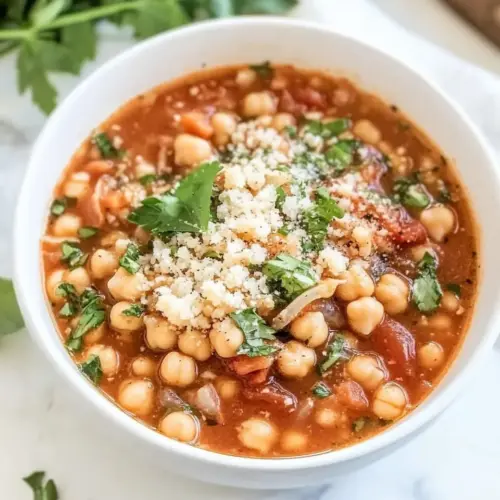
Chickpea Pasta Soup
Chickpea Pasta Soup is a creamy, comforting tomato based soup studded with tender chickpeas and whole wheat pasta. It balances bright acidity, gentle heat, and a savory finish from melted parmesan cheese, making it an easy weeknight dinner that feels special. Make it for quick family meals or cozy solo suppers for satisfying, pantry friendly comfort.
Equipment
- Large Pot
- Wooden Spoon
- Skillet
Ingredients
- 2 tablespoons olive oil Drizzle with a fruity, peppery fat to sauté aromatics and form the flavorful base of the soup; adds richness and helps distribute heat for even cooking.
- 1/2 sweet onion, diced Dice finely to provide sweet, savory depth and body when softened; sweats down to meld with garlic and tomatoes for a balanced flavor profile.
- 2 garlic cloves, minced Mince finely to release pungent, aromatic oils that brighten the soup; provides savory undertones and complements herbs and tomato components.
- 1/4 teaspoons salt Season sparingly to enhance and balance flavors throughout the cooking process; helps amplify savory notes in both broth and tomato elements.
- 1/4 teaspoon pepper Season lightly to add subtle heat and depth without overwhelming other flavors; works with salt to round out the overall taste.
- 2 tablespoons tomato paste Concentrate tomato flavor by stirring in and cooking briefly to develop caramelized, umami-rich notes; thickens and intensifies the tomato base.
- 2 tablespoons brown sugar Sweeten mildly to balance tomato acidity and add a soft caramel note; helps round flavors and complement herbs and spices.
- 2 teaspoons dried oregano Season dried to impart earthy, herbaceous complexity and Mediterranean character; rehydrates in the liquid to release aromatic oils into the soup.
- 1/8 teaspoon crushed red pepper flakes Spice sparingly to introduce background heat and a slight smoky kick; elevates complexity without dominating the other seasonings.
- 1 (28-ounce) can whole peeled tomatoes Crush and add to build a robust, bright tomato foundation; provides body and texture while contributing natural acidity and sweetness.
- 1 cup tomato puree Pour in to achieve a smooth, uniform tomato texture and deepen the tomato flavor; blends with whole tomatoes for a cohesive sauce-like consistency.
- 2 cups low-sodium chicken or vegetable stock Simmer with to create the soup's liquid base, diluting concentrated tomato flavors and allowing aromatics to meld; provides savory depth and controls saltiness.
- 1 (15-ounce) can chickpeas, drained and rinsed Rinse and add for protein, fiber, and a tender, slightly creamy texture; contributes heartiness and makes the soup more filling.
- 1 cup whole wheat pasta Cook until al dente within the soup to add wholesome chew, whole-grain nuttiness, and structure; absorbs some broth while retaining bite.
- 1 cup freshly grated parmesan cheese, plus more for topping Grate freshly to introduce salty, umami-rich dairy notes and a creamy finish; melts into the soup to add richness and bind flavors.
- chopped fresh parsley + basil for topping Chop freshly to provide bright, herbal freshness and a pop of color when sprinkled on top; balances richness with light, aromatic notes.
- 1 tablespoon olive oil Drizzle extra to sauté or finish, adding a clean, fruity oiliness that enhances mouthfeel and layer of flavor in croutons or soup.
- 1 tablespoon unsalted butter Melt to lend a silky, creamy richness and help brown croutons; contributes mellow dairy flavor and improves browning reactions.
- 2 cups torn/cubed multigrain bread pieces Toss with to create crunchy toasted bread pieces that add texture and absorb soup flavors; provides rustic, comforting body when served.
- 1/2 teaspoon garlic powder Season evenly to flavor the bread pieces and add garlicky aroma; complements fresh garlic used earlier and ties flavors together.
- 1/4 teaspoons salt Season again to ensure the bread pieces and final dish reach a balanced savory level; helps maintain consistent salt across components.
- 1/4 teaspoon pepper Season lightly to add a final touch of warmth and depth to the bread pieces and overall dish; mirrors earlier pepper for cohesion.
Instructions
- Heat a large pot over medium-low heat and add the olive oil. Stir in the onion, garlic, salt and pepper and cook, stirring occasionally, until the onion is translucent, about 5 minutes. Stir in the tomato paste, sugar, oregano and red pepper flakes, cooking for another 1 to 2 minutes while stirring. Add in the whole peeled tomatoes and stir. Break apart the tomatoes with a wooden spoon, then add the puree and stock, cover and cook over medium-low heat for 10 to 15 minutes.: Warmth should be gentle and even, not roaring, so the olive oil shimmers without smoking; you will notice a faint fruity aroma as it heats. This low heat lets the oil carry the flavors of the aromatics without burning them. A common mistake here is turning the heat too high and browning the oil, which can make the garlic and onion bitter later. If your pan starts to smoke, lower the heat and let it cool slightly before adding ingredients.
- Remove the cover and add the chickpeas and the pasta – as long as you’re serving this soon. You don’t want the pasta to be too mushy, so be sure to only add it about 15 to 20 minutes before serving. Cover again and cook the pasta until al dente, about 10 ish minutes. If it seems like you need a little more stock, add it about 1/2 cup at a time, stirring well. Once the pasta is cooked, stir in the parmesan cheese until melted. Taste the soup and season additionally with salt and pepper if needed.: As the onion softens, it will release sweet, savory steam and the pan will sound softer when you stir, a gentle sizzle rather than aggressive crackling. The pieces should turn glossy and lose their raw bite. This step creates the flavor base, so patience matters; rushing with high heat will brown the onion unevenly. If you notice browning, reduce the heat and add a splash of stock to deglaze.
- Serve and top the soup with extra cheese, chopped fresh herbs and the breadcrumbs.: When you add the tomato paste , it should cling to the pan then loosen as it cooks, releasing a deepening, caramelized fragrance. The brown sugar will melt and tame acidity, while dried oregano and the red pepper flakes release aromatic oils. Cooking these briefly blooms the herbs and sweetens the paste; skipping this step leaves a flat, underdeveloped tomato flavor. Stir constantly to prevent the paste from sticking and burning.
- Heat a skillet over medium heat and add the butter and olive oil. Once sizzling, toss in the breadcrumbs and season with the salt, pepper and garlic powder. Cook, stirring often, until golden and toasty, about 5 to 6 minutes. Remove from heat and let cool slightly.: The pot will hiss slightly as cold tomatoes hit the warm base, and large chunks will start to break down under the spoon. Use a wooden spoon to press and separate the tomatoes so they melt into the mixture, creating both texture and body. Leaving them intact yields large, sometimes uneven tomato chunks, so break them up until they integrate into the broth.
- Break apart the tomatoes with a wooden spoon, then add the puree and stock, cover and cook over medium-low heat for 10 to 15 minutes: As everything simmers, steam will carry tomato perfume and the broth will begin to darken in color. This period lets flavors knit together and for any metallic notes from canned tomatoes to soften. Keep the heat moderate so the surface shows gentle movement, not a rolling boil, which can make the flavors harsh. If the pot reduces too quickly, partially uncover and add small amounts of stock to maintain a pleasant consistency.
- Remove the cover and add the chickpeas and the pasta as long as you’re serving this soon: Adding the chickpeas and pasta now sets up the final cook. You will see tiny bubbles and smell the combined starch and tomato aroma. Timing matters; add the pasta about 15 to 20 minutes before you plan to serve so it reaches al dente without turning gummy. A frequent error is adding pasta too early, which results in overcooked, mushy strands that fall apart in the soup.
- You don’t want the pasta to be too mushy, so be sure to only add it about 15 to 20 minutes before serving: This rule of thumb helps preserve texture so the pasta remains pleasantly chewy and the chickpeas retain firmness. Watch the pot and test a strand a couple of minutes before the package time; pasta in soup can cook faster due to constant liquid contact. If the pasta seems close to done but the soup needs more time, remove a portion of pasta early to stop the cooking.
- Cover again and cook the pasta until al dente, about 10 ish minutes: During this covered simmer, you will notice the broth slightly thicken as starch releases from the pasta . The aroma becomes richer and more cohesive. Stir occasionally to prevent pasta from sticking to the pot bottom. If the soup looks too thick, add up to 1/2 cup of stock at a time to loosen it while keeping flavor concentration.
- If it seems like you need a little more stock, add it about 1/2 cup at a time, stirring well: Adding liquid in measured increments keeps control over consistency and intensity of flavor. Each addition should be stirred in and brought back to a gentle simmer so the soup integrates smoothly. Overly diluting the soup will make it bland, so taste as you add and stop once the mouthfeel feels right.
- Once the pasta is cooked, stir in the parmesan cheese until melted: When you add the parmesan cheese , it should melt and thicken the broth slightly, lending a silky sheen and savory depth. Stir gently to distribute the cheese and avoid clumping. If the cheese seizes or forms strings, remove the pot from heat temporarily and stir; excessive heat or abrupt cooling can affect texture.
- Taste the soup and season additionally with salt and pepper if needed: This is the finishing seasoning moment. Sample the broth and adjust the seasoning in small increments, because once you over-salt it is hard to correct. If you find it too acidic, a tiny pinch of sugar can rebalance, but do this sparingly. Remember that the parmesan cheese will add saltiness, so final adjustments should be subtle.
- Serve and top the soup with extra cheese, chopped fresh herbs and the breadcrumbs: Presenting the bowl is part of the experience; sprinkle additional parmesan cheese , a scattering of chopped parsley and basil , and the toasted breadcrumbs for contrast. The visual contrast of green herbs and golden crumbs against the red broth makes it inviting. If you add toppings too early they will lose their texture, so wait until right before serving.
- Heat a skillet over medium heat and add the butter and olive oil: For the breadcrumbs, start with a warm pan and combined fats so the butter and olive oil sizzle gently together, creating a nutty aroma. This fat mix helps the crumbs brown evenly. Avoid overheating which can burn the butter ; if browning happens too fast lower the heat immediately.
- Once sizzling, toss in the breadcrumbs and season with the salt, pepper and garlic powder: When the crumbs hit the pan they should sing with a lively hiss and begin to toast. Seasoning at this point ensures flavor permeates the crumbs rather than just sitting on top. Stir frequently so they brown uniformly; neglected crumbs will scorch on one side.
- Cook, stirring often, until golden and toasty, about 5 to 6 minutes: Watch for an even golden color and a crisp crunch when you press a crumb between your fingers. The aroma will turn toasty and inviting. If they brown too quickly, remove the pan from heat briefly and stir, then return to a lower temperature to finish.
- Remove from heat and let cool slightly: Cooling a bit prevents the crumbs from continuing to brown and allows them to firm up into a satisfying crunch. If you skip cooling, the crumbs can be warm but limp on the soup, losing their intended texture. Let them rest briefly so they hold their crispness when sprinkled on the bowl.
Notes
- Oil and heat control: Keep the heat medium-low when starting so the onion and garlic sweat and sweeten rather than brown. If the pan gets too hot, lower it and add a splash of stock to cool down and deglaze.
- Tomato paste development: Cook the tomato paste with the aromatics for at least a minute to deepen its flavor, which prevents a raw tinny taste from showing up in the finished soup.
- Pasta timing: Add the pasta close to serving time, testing a strand early so you hit al dente. If you plan to eat later, undercook the pasta slightly and finish cooking in the reheated soup.
- Stock choice: Low sodium stock gives you control over seasoning. If you use a saltier stock, reduce added salt and rely on finishing adjustments after stirring in the parmesan cheese.
- Breadcrumb texture: Use slightly stale multigrain bread for crumbs, and toast them slowly in butter and oil until golden for the ideal crunchy topping that complements the silky broth.