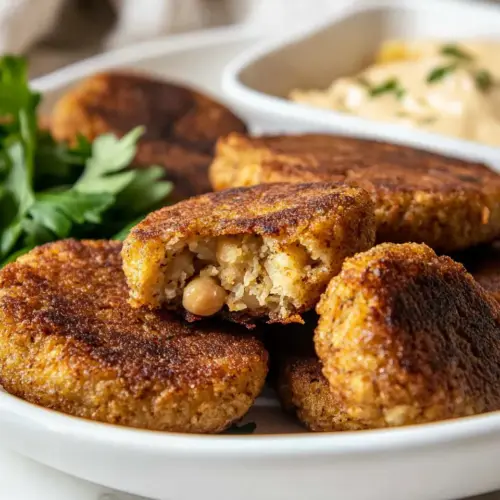
Chickpea Fritters
Chickpea Fritters are crispy little patties with a tender, savory center, offering a creamy, nutty bite with a golden crust. This easy recipe is perfect for quick weeknight dinners or snackable appetizers, using simple pantry staples for robust flavor. Make them to enjoy a versatile, protein rich dish that reheats beautifully and satisfies crowds with minimal fuss.
Equipment
- Skillet
- Mixing Bowl
- Fork or Potato Masher
- Spatula
Ingredients
- 1 15-ounce can chickpeas Drained and mashed to provide a creamy, protein-rich base and hearty texture for the fritters. Offers nutty flavor and helps bind other ingredients when partially mashed while retaining some whole chickpeas for bite.
- 1/4 cup all-purpose flour Combined to absorb moisture and create structure, helping the fritters hold together during shaping and frying. Adds lightness and prevents overly wet batter while contributing neutral flavor.
- 1/4 cup grated Parmesan cheese Grated finely to add savory umami and a hint of saltiness that enhances overall flavor. Helps with binding by contributing a slightly oily texture and melts slightly when cooked for richness.
- 1 teaspoon ground cumin Ground finely to introduce warm, earthy notes that complement the chickpeas and elevate the spice profile. Works well in small amounts to add depth without overpowering the other seasonings.
- 1/2 teaspoon garlic powder Used in powdered form to impart a mild, mellow garlic flavor evenly throughout the mixture. Provides aromatic sharpness without fresh garlic’s moisture, helping maintain batter consistency.
- 1/2 teaspoon salt Added to season the mixture and bring out the savory elements of the fritters. Balances flavors and enhances the taste of the chickpeas and cheese when mixed evenly.
- 2 -4 tablespoons water Stirred in gradually to adjust the consistency of the batter, allowing control over moisture so the mixture can be shaped and fried. Helps dissolve and distribute dry ingredients for a cohesive texture.
- 2 tablespoons olive oil Heated in a skillet to fry the fritters until golden and crisp, contributing to browning and a pleasant mouthfeel. Adds fruity, savory notes while preventing sticking and creating a crisp exterior.
Instructions
- Prepare the chickpeas by draining and rinsing them thoroughly to reduce sodium content.: As you rinse the chickpeas under running water you will notice the water run clearer and the beans become less briny. The rinsing softens canning liquid residues and helps prevent an overly salty result. A common mistake here is not draining long enough, which leaves excess liquid that dilutes flavor and makes the mixture wetter than desired. Pat them dry briefly with a clean towel to remove surface moisture, because too much water will mean you need more flour and risk dense fritters.
- In a mixing bowl, combine chickpeas with flour, Parmesan cheese, cumin, garlic powder, salt, and 2 tablespoons of water. Mash the mixture with a fork or a potato masher until smooth, adding more water if necessary to achieve a thick, moldable consistency.: When you add the flour and Parmesan cheese to the mashed chickpeas , you will see a grainy but cohesive mixture forming. The aroma of cumin will start to come forward, and the dry ingredients will absorb initial moisture. If the mixture seems crumbly, add a splash more water to bring it together, but avoid making it runny. A typical slip up is adding too much water at once, so err on the side of less and adjust slowly to reach a moldable texture.
- Form the mixture into small, flat patties, about 1/2 inch thick.: As you mash, the mixture transforms from whole beans into a cohesive paste with small bits for texture. The sound is quiet but the visual change is satisfying as the mix becomes pliable. The reason this matters is that a smooth yet slightly textured interior yields a better mouthfeel after frying. Avoid overmashing to the point of complete puree, because then the fritters may be gummy. If you see dry pockets, sprinkle in another teaspoon of water at a time to integrate.
- Heat olive oil in a skillet over medium heat. Cook the patties for 2-3 minutes on each side until they are golden brown and crispy.: When shaping, press gently so the edges adhere and the surface is compact without being compressed to stiffness. You should feel a cohesive mass that holds shape when picked up. The ideal thickness allows the center to warm through while the exterior crisps to golden brown. A common error is making patties too thick, which leads to undercooked interiors, or too thin, which causes excessive drying. If the mixture sticks to your hands, lightly wet them or dust with a touch of flour .
- Serve the fritters warm with your choice of dip, such as tzatziki or hummus, or with fresh lemon wedges.: As the olive oil warms you will notice a faint shimmer on its surface and a slight aroma, which signals it is ready. Medium heat is important here because it allows the exterior to brown without burning quickly. If the oil smokes, the pan is too hot and will burn the coating before the center cooks, so reduce heat and let it cool slightly. Too low a temperature will result in greasy, pale fritters that never crisp properly.
- Cook the patties for 2 to 3 minutes on each side until they are golden brown and crispy: When the fritters hit the hot oil you should hear a gentle sizzle and see edges set up, turning a warm golden brown in a couple of minutes. The smell will become toasty and nutty, especially from the Parmesan cheese . Flip carefully with a spatula and cook the other side to match. A frequent misstep is overcrowding the pan, which drops the oil temperature and leads to uneven browning, so give each patty breathing room.
- Serve the fritters warm with your choice of dip, such as tzatziki or hummus, or with fresh lemon wedges: Serving immediately ensures the contrast between the crisp outside and tender center is at its peak. Squeezing a little citrus brightens the flavors and a cool dip adds moisture and balance. If you plan to hold them, keep them in a single layer in a low oven set to warm to preserve texture. Reheating directly in a skillet restores crispness better than a microwave, which can make them soggy.
Notes
- Boost the herb profile Add chopped fresh herbs into the batter for brightness, but fold them in gently to keep the mixture cohesive.
- Adjust the cheese level Increase or decrease the Parmesan cheese to control saltiness and depth, tasting as you go.
- Make them oil light Bake the patties on a greased sheet at moderate heat if you prefer fewer calories, though the texture will be less crisp than skillet frying.
- Increase binding If the mixture is too loose, add another teaspoon of flour at a time until you reach a stable consistency for shaping.
- Serve warmed Hold finished fritters in a low oven to keep them crisp until serving, arranging them in a single layer to avoid steam build up.