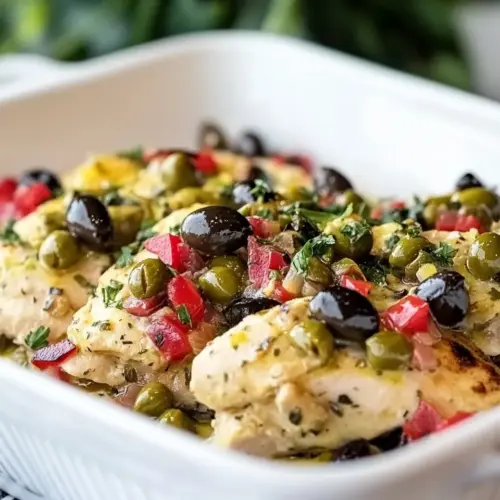
Chicken with Olives and Capers
Chicken with Olives and Capers presents juicy, browned chicken topped with a briny mix of black olives, green olives, and capers, finished with Dijon and lemon for a bright, savory bite. This easy weeknight dinner is quick to prepare, pantry friendly, and perfect for entertaining or a cozy family meal, making it a recipe you'll return to again and again.
Equipment
- Large Frying Pan
- Baking Dish
- Knife
- Cutting Board
- Instant read thermometer
Ingredients
- 4 large boneless, skinless chicken breasts Season and tenderize protein by rubbing onto chicken breasts before cooking; provides aroma and a baseline savory profile. Combine with other spices for balanced depth and to help form a flavorful crust during searing or roasting.
- 3 T olive oil, divided Moisten and facilitate frying by dividing between pan and finishing; adds richness and helps brown the chicken evenly. Use remaining oil to loosen pan bits and marry sauce components for a cohesive finish.
- 2 tsp . Poultry Seasoning (see notes) Flavor and season poultry with warm, herbaceous notes; sprinkle or rub onto meat to impart subtle savory complexity. Use modest amounts to complement other seasonings without overpowering the dish.
- salt and fresh-ground black pepper to taste Season food to taste and enhance all other flavors during preparation and at the table. Use carefully to balance the dish; black pepper adds mild heat and a fresh bite when freshly ground.
- 6 oz . can black olives, drained Add briny, savory umami and a tender texture when stirred into the sauce; drain to control liquid contribution. Provide a mellow olive flavor that pairs with capers and mustard to build a Mediterranean profile.
- 1/4 cup chopped green olives Impart bright, herbal brine and a firmer texture when chopped and mixed into the sauce; balances richness with a slightly tangy olive character. Use alongside black olives and capers to create layered olive flavors.
- 1/4 cup chopped capers Deliver concentrated salty, tangy bursts that lift the sauce and cut through richness; chop and scatter so each bite has occasional piquant pops. Complement mustard and lemon for a lively, briny contrast.
- 2 T chopped red onion Add sharp, sweet, and slightly pungent aromatic notes when finely chopped; sweats quickly to release flavor into the pan. Provides a mild crunch and color contrast while supporting the overall savory profile.
- 1 tsp . minced garlic Provide pungent, savory aromatics when minced and sautéed briefly to awaken oils; builds foundational flavor early in cooking. Use sparingly to avoid overwhelming other delicate components like lemon and olives.
- 2 T Dijon mustard Bind and emulsify sauce components while contributing tangy, slightly spicy depth; whisk with oil and lemon to create a cohesive dressing for the chicken. Balances briny ingredients and helps the sauce cling to the meat.
- 2 T fresh-squeezed lemon juice (see notes) Brighten and balance the dish with fresh citrus acidity; squeeze and add near the end to preserve brightness. Cuts through the richness of oil and olives, lending a clean finish and enhancing other flavors.
Instructions
- Take chicken breasts out of the fridge and let them come to room temperature.: You'll notice the chill leave the surface and the meat relaxes, which helps it cook evenly and prevents a band of overcooked outside with a cool center. The texture becomes juicier when the internal temperature is closer to room temperature before cooking. If you skip this, the exterior may brown too quickly while the center remains underdone. A common mistake is leaving meat out too long, so aim for about 15 to 20 minutes to avoid food safety concerns.
- Preheat oven to 375 F/190 C and spray baking dish with non-stick spray. (I used a dish that was 8" x 11" but something close to that will work fine.): You'll feel the kitchen warm and watch the oven dial or display reach temperature, ensuring consistent baking. Preheating ensures the dish begins cooking immediately and helps the topping bubble properly. Not preheating can extend bake time and produce uneven doneness. Avoid using an incorrectly sized pan that crowds the chicken , which can trap steam and prevent browning.
- Drain can and chop the black olives, chop green olives, chop red onion, and chop capers.: As you chop, you'll see contrasting colors and smell the briny notes of the olives and capers . Uniform chopping helps the flavors distribute evenly over each bite. If pieces are uneven, some bites will be overly salty or too mild. Rinse capers only if you need to reduce sodium, but pat everything dry to avoid diluting the topping.
- Mix chopped black olives, green olives, red onion, and capers with Dijon mustard, garlic, lemon juice, and 2 T olive oil to make the topping.: Once combined, the topping should look cohesive and glossy, with tiny flecks of garlic and onion. The mustard and oil emulsify the mixture so it clings to the chicken while baking, and the lemon lifts the whole profile. If the mixture seems watery, a bit more mustard or oil helps bind it. A frequent error is under mixing, which leaves the mustard and oil separated, reducing adhesion to the meat.
- Trim chicken as needed and season with Poultry Seasoning (affiliate link) and a little salt and pepper.: Trimming creates even surfaces and removes excess fat, producing a cleaner sear. You should see the seasoning adhere visibly to the surface. Season evenly so every strip gets flavor. Beware of over salting since the topping adds saltiness as it bakes.
- Heat other 1 T olive oil in a large frying pan and brown the chicken about 5 minutes per side, or just until it's nicely browned. (It will not be fully cooked at this point.): The pan will sizzle and aromas of caramelized meat will develop, creating that desirable golden crust. Browning builds flavor through the Maillard reaction and helps seal juices. If the oil smokes, lower the heat to avoid bitter flavors. A common slip is moving the chicken too soon, which prevents proper crust formation.
- Cut chicken into 3 or 4 lengthwise strips (Make 4 strips for large chicken breasts or 3 for smaller ones. You want the strips to be about the same thickness.): Notice the firm texture and the clean edges as you slice, which makes the portioning consistent for even baking. Similar thickness ensures uniform cooking times and an attractive final presentation. If strips vary widely, some pieces can overcook while others stay underdone. Use a sharp knife for clean cuts and safety.
- Arrange chicken strips in a baking dish. (I used a dish that was 8" x 11" but any size close to that will work.: Lay the strips so they sit comfortably without overlapping, which lets heat circulate and the topping contact the surface. You'll see the browned sides facing up and the pieces leveling in the dish. Crowding leads to steaming, which prevents the topping from crisping slightly. If you notice overlapping, use a larger dish or two smaller dishes.
- Spoon the olive and caper sauce over the chicken, trying to get all the pieces of chicken covered with sauce.: The topping should glisten as you spread it, coating each strip so every bite delivers briny flavor. Press gently to help the sauce adhere and to nestle small pieces into crevices. If you heap it all in one spot, coverage becomes uneven and some bites lack balance. A frequent misstep is skimping on distribution, leaving parts of the chicken bare.
- Bake 20 -25 minutes, or until the chicken is cooked through and the whole dish is bubbling hot.: During baking you will hear gentle bubbling and see the topping thicken and the pan juices shimmer. This stage melds flavors and finishes cooking the meat. If it bakes too long, the chicken can dry out, so check early. Underbaking is a safety concern, so ensure it reaches the right internal temperature.
- I would use an Instant Read Meat Thermometer (affiliate link) if you have one to check that chicken has reached a temperature of 165 F/75 C after 20 minutes, and cook it a few minutes longer if needed.: The thermometer gives an exact reading, removing guesswork, and a quick probe tells you when the chicken is safely done. Insert into the thickest part without touching bone to get an accurate result. A misread can occur if probe touches the pan, so avoid that mistake.
- Serve hot, with the sauce and pan juices spooned over the chicken strips when you plate it.: You will notice steam rising and the sauce coating the chicken , creating glossy, appetizing servings. Spoon the pan juices over each piece so every bite is moist and flavorful. Letting it sit too long before serving cools the sauce and dulls flavors, so plate promptly.
Notes
- Room temperature matters, bring the chicken out 15 to 20 minutes before cooking so it cooks evenly and stays juicy.
- Pat dry, dry the chicken with paper towels before seasoning to help the surface brown properly.
- Even pieces, slice the chicken into similar sized strips so every piece finishes at the same time in the oven.
- Balance the salt, taste the topping if needed and remember the olives and capers add salt, so adjust added salt lightly.
- Use a thermometer, an instant read thermometer takes the guesswork out of doneness and prevents drying the chicken.
- Rest briefly, let the plated chicken sit for a couple of minutes to allow juices to settle for a juicier bite.