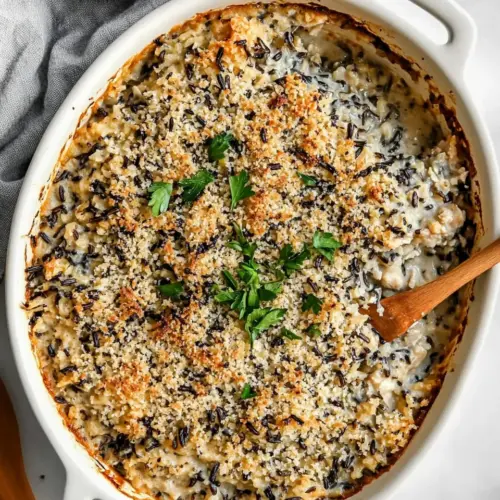
Chicken Wild Rice Casserole
Chicken Wild Rice Casserole delivers creamy, savory comfort with tender chicken, nutty wild rice, and a golden breadcrumb topping. This easy weeknight dinner is cozy, rich, and reheats beautifully for satisfying leftovers. Make it when you want a warm, family friendly meal that fills the kitchen with buttery, toasty aromas and invites everyone to linger at the table.
Equipment
- Large Skillet
- Casserole Dish
- Whisk
- Spoon
Ingredients
- 6 tablespoons butter (divided) Melted to provide a rich, savory base and help sauté aromatics; divided to allow browning and later to enrich the casserole’s creamy sauce and topping for added moisture and flavor.
- 1/2 onion (chopped) Chopped to add sweet, aromatic depth and texture; sweated in butter until translucent to build the flavor foundation for the sauce and overall dish.
- 2 garlic cloves (minced) Minced to impart a sharp, pungent aroma and flavor boost; lightly cooked with onion to release essential oils and complement the creamy sauce.
- 1/3 cup all-purpose flour Whisked into the fat to form a roux that thickens the sauce; cooked briefly to remove the raw flour taste and create a smooth, velvety base for the casserole.
- 14.5 ounces chicken broth (1 can) Poured into the roux to create a savory, umami-rich liquid base; provides depth and balances the creaminess while seasoning the casserole.
- 1 cup whole milk Stirred into the sauce to add creaminess, body, and a mild dairy flavor; helps create a luscious texture that binds the rice and chicken together.
- 1/2 teaspoon poultry seasoning (optional) Sprinkled in to lend warm, herbaceous notes reminiscent of sage and thyme; optional but enhances poultry flavor and overall seasoning complexity.
- 1 teaspoon kosher salt Added to season and elevate all flavors; used carefully to ensure the casserole is well-balanced without oversalting.
- 1/4 teaspoon ground black pepper Ground to contribute subtle heat and brightness; used sparingly to accentuate other seasonings without overpowering delicate flavors.
- 4 cups cooked chicken breast (chopped*) Chopped and folded in to supply tender protein and savory substance; cooked chicken breast makes the casserole hearty and satisfying.
- 4 cups cooked wild rice (**) Combined into the casserole to provide nutty, chewy texture and earthy flavor; fully cooked wild rice brings body and a distinctive grain component.
- 1 cup shredded mozzarella cheese (optional***) Sprinkled or folded to introduce creamy, milky richness and mild tang; optional cheese melts into the casserole adding gooeyness and flavor contrast.
- 3/4 cup breadcrumbs Sprinkled on top to create a crisp, golden crust that contrasts the creamy interior; breadcrumbs provide crunch and a visually appealing finish.
Instructions
- Preheat the oven to 375 ℉.: As the air in the oven begins to warm, you will notice a dry, rising heat that prepares the casserole for even baking. Preheating ensures the dish starts cooking at the intended temperature so the topping browns without overcooking the filling. If you skip preheating, the bake time will be inconsistent and the breadcrumbs may not crisp properly. A common mistake is putting the casserole into a cold oven, which leads to longer bake times and a soggy topping; avoid that by turning the oven on first.
- Heat 4 tablespoons butter in a large skillet over medium heat.: When the butter hits the pan it will melt and begin to foam slightly, releasing a gentle nutty aroma. The right medium heat allows the butter to coat the pan and pick up the flavors of aromatics without burning. This step is critical for flavor extraction, because the butter carries the scents of subsequent ingredients. A common pitfall is using too high heat and scorching the butter , which introduces bitter notes; keep the heat steady and adjust if it smokes.
- Once heated, add in the onion and a pinch of salt, and sauté for a few minutes until softened. Stir in the garlic.: You will hear the soft sizzle as the diced onion hits the skillet and releases moisture. Over three to five minutes the onion will turn translucent and tender, giving off a sweet, savory scent; that is your cue to add the minced garlic , which will perfume the pan. Letting the onion soften first prevents burnt garlic and ensures a mellow base. The mistake most people make here is rushing and allowing the garlic to brown too quickly, which can impart harshness; lower the heat and stir regularly if browning happens too fast.
- Whisk in the flour until smooth. Slowly add in the chicken broth and milk while whisking until the mixture is smooth. Stir in the poultry seasoning, salt, and pepper.: After sprinkling the flour into the pan, whisk continuously so it cooks into the fat and forms a silky paste without lumps. As you pour in the chicken broth and then the whole milk , the mixture will loosen and thicken, transforming into a glossy sauce. That smooth sheen and slight resistance on the whisk indicate the roux has developed properly and will cling to the rice and chicken . Incorporating the poultry seasoning , salt , and black pepper at this point seasons the sauce evenly. If you add the liquid too quickly you will get lumps, so pour slowly and whisk constantly; a common troubleshooting tip is to temper the liquid by adding it in small streams.
- Stir in the chicken and wild rice. Taste and add more salt and pepper if needed.: When you fold in the chopped chicken and cooked wild rice , the filling becomes substantial, and you will see the grains and meat coated in the creamy sauce. Take a spoonful to taste; salt levels vary by broth and cheese so adjust carefully. The sensation should be balanced, with savory depth and a touch of pepper heat. A typical error is under seasoning at this stage, leading to a bland casserole; always taste and tweak before baking.
- Transfer the mixture to a greased casserole dish or keep in the skillet if the skillet is oven safe.: Spoon the filling into a prepared dish, spreading it evenly so the top bakes uniformly. If you use an oven safe skillet you save a transfer step and preserve any fond at the pan bottom, which adds flavor. Ensure the dish is well greased to prevent sticking and aid in browning. Transferring while the mixture is too hot can make handling tricky, so use oven mitts and a steady hand; dropping or spilling can waste filling and create hot spots that cook unevenly.
- Melt the remaining 2 tablespoons of butter, and mix it with the breadcrumbs. Top the casserole with the cheese (if using) and breadcrumbs.: As the remaining butter melts, whisk it into the breadcrumbs so each crumb is moistened and will toast rather than dry out. Sprinkle shredded mozzarella cheese if using, letting it form a gentle blanket for the crumbs. The buttered crumbs will bake into a nutty, golden crust that contrasts the creamy interior. Avoid adding too much butter, which results in greasy crumbs; a light coating is enough for crispness.
- Bake for 20-22 minutes until the top is golden brown and the casserole is bubbling.: In the oven, you will observe gentle bubbling at the edges and a warm, toasty aroma as the topping browns. The sound is quiet, a low simmer, and the visual cue of a golden crust indicates readiness. Let the casserole rest briefly after removing it from the oven so the sauce sets slightly before serving. A common mistake is removing it immediately and serving too loose a filling; allow five to ten minutes of rest so it firms and slices cleanly.
Notes
- Use a Dutch oven: I often cook everything in a Dutch oven so I can go from stovetop to oven without transferring, which saves cleanup and preserves fond for extra flavor.
- Add vegetables: If you have extra produce, toss in mushrooms, peas, or diced carrots when sautéing the onion to boost nutrition and color.
- Toast your breadcrumbs: For extra crunch, toast the breadcrumbs briefly in a skillet before mixing with the melted butter, this intensifies their flavor and browning in the oven.
- Make ahead assembly: Assemble the casserole up to the breadcrumb step, cover, and refrigerate for up to 24 hours; add the topping and bake when ready to serve.
- Swap cheeses carefully: If you want more pronounced flavor, try a sharper melting cheese in place of mozzarella cheese, but remember stronger cheeses may alter salt levels so taste before baking.
- Double for a crowd: This recipe scales well; use a larger casserole and increase bake time slightly until the center is bubbling and the topping is golden.