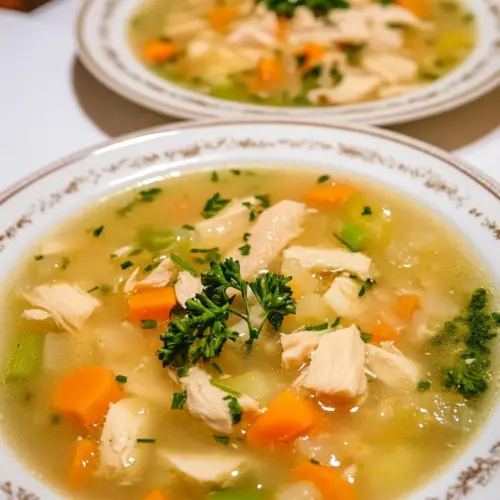
Chicken Vegetable Soup
Chicken Vegetable Soup is a warm and nourishing bowl, creamy in mouthfeel and packed with tender chicken and soft vegetables. This easy weeknight dinner is comforting, light, and perfect for chilly evenings, delivering savory depth from bones and balanced texture from small pasta. Make it for a cozy family meal that reheats beautifully and always feels like home.
Equipment
- Large Stockpot
- Chef's Knife
- Cutting Board
- Small pot
- Food Processor
Ingredients
- 2 carrots, peeled and cut into small pieces Peel and dice into small pieces to provide sweet, earthy flavor and tender texture; carrots add natural sweetness and color to the broth. Simmered pieces also release vitamins and slight thickness, enhancing mouthfeel and nutritional value.
- 1 leek, cleaned, white part sliced Clean thoroughly and slice only the white part to contribute a mild, onion-like sweetness and aromatic base; leeks mellow when cooked and infuse the soup with subtle depth. Softened slices will blend with other vegetables to create a balanced, savory foundation.
- 3 celery ribs, cleaned and sliced Clean and slice ribs to introduce crisp, slightly peppery vegetal notes and fibrous texture; celery adds aromatic freshness and light saltiness when cooked. Sautéed or simmered pieces release aromatic compounds that brighten the overall soup profile.
- 2 zucchini, sliced Slice into rounds to deliver tender, slightly sweet and watery flesh that soaks up broth flavors; zucchini provides body without overpowering other ingredients. Cooked zucchini breaks down slightly, contributing subtle thickness and sustaining a light, summery character.
- 2 garlic cloves, peeled Peel cloves and mince or crush to release pungent, savory aroma and sharp umami that enhances overall flavor; garlic intensifies the soup’s savory profile. Brief sautéing mellows harshness and unlocks sweet, roasted notes that complement chicken and vegetables.
- 2 whole chicken breasts, skinless, boneless cut into small cubes Cut into small cubes to supply lean protein and hearty texture that makes the soup filling and nutritious; chicken breasts create a mild, tender meat base. Lightly browning or simmering the cubes infuses the broth with savory juices and boosts protein content.
- chicken, backs, wings, neck chicken Use backs, wings, and neck to build a rich, gelatinous stock full of deep chicken flavor; these parts provide collagen and body to the broth. Slow simmering extracts nutrients and yields a flavorful foundation that elevates the finished soup.
- pasta, small soup pasta Add small soup pasta to contribute comforting bite and absorb broth, making the soup more substantial and child-friendly. Cooked until tender, the tiny pasta pieces thicken the soup slightly and offer pleasing texture contrasts.
Instructions
- Place over medium heat a stock pot with water and add all the above ingredients (not the pasta). Add more water to cover and cook at medium low, with the lid half covering the pot for 45 minutes.: The kitchen will fill with the gentle steam of simmering chicken and softened carrots , a warm and building aroma that signals flavor extraction. As the pot settles into a soft simmer, you should hear a quiet, steady bubbling rather than a roar, which lets bones and vegetables slowly release their goodness. This slow release is why low heat is preferred, it yields a clear, rich broth. A common mistake is boiling too hard, which can emulsify fats and make the broth cloudy, and it can toughen the chicken . Keep the lid half covering the pot to trap heat while allowing a bit of evaporation, which concentrates flavor.
- When all the vegetables are tender, and the chicken fully cooked, remove from the heat and let cool for 15 minutes. In a food processor place all the vegetables and puree it all. Clean the chicken from the bones and puree as well.: During this period, watch for tiny bubbles and rising steam, the sign that collagen and vegetable sugars are dissolving into the liquid. You will notice the color deepening and the aromas becoming layered and savory. Stirring is not necessary, but skimming any scum that surfaces will keep the broth clear. If you rush and use higher heat, the broth can become cloudy and the texture of the chicken might turn stringy. Maintain a gentle simmer to coax out the best flavors and a balanced mouthfeel.
- Return it to the stock pot and keep warm. If it is too thick, more water can be added.: Cooling slightly before handling preserves the juices and makes blending safer. Touch a fork to the vegetables to confirm tenderness, they should yield easily. The aroma at this stage becomes richer and rounder, indicating the melded flavors. One pitfall is blending piping hot contents, which can splatter; cooling avoids burns and helps control the texture when pureeing.
- At this point I cooked small rings (ditalini) egg pasta. When done I drain and place some of the pasta in a soup bowl and add the soup over it.: As you pulse, the mixture transforms from chunky to silky, releasing the sweetness of the vegetables into a cohesive base. The pureed texture should be smooth yet full bodied, lending body to the final soup. If the mixture is too thick, add small amounts of the reserved broth to loosen it. Overprocessing can make the texture gluey, so pulse in short bursts and check frequently to avoid losing the pleasant mouthfeel.
- Clean the chicken from the bones and puree as well: Handling the cooled bones, you will find the meat comes away easily, remaining tender and moist. Pureeing the meat adds a meaty silkiness to the soup without large shredded pieces, creating an even distribution of protein. A mistake people make is leaving small bone fragments; check carefully and remove any tiny pieces to avoid unpleasant crunches. The pureed chicken will blend into the vegetable base, enriching the flavor and texture.
- Return it to the stock pot and keep warm: Reintroducing the pureed components to the pot brings everything back together, and the steam will lift more aroma as flavors marry. Keep the pot at a gentle hold, which keeps the texture stable and prevents the pasta from overcooking later. If the soup feels too thick at this point, adding hot water will adjust consistency without diluting warmth. Avoid rapid reheating, which can change mouthfeel and make the broth taste flat.
- If it is too thick more water can be added: When adjusting consistency, add hot water a little at a time, tasting as you go so you maintain balanced seasoning and body. The sensory cue here is a spoon coating the back of a spoon but not clinging like a puree, that is the sweet spot. Adding cold water can shock the soup and change texture, so use warm liquid to preserve the integrated flavors. Watch out for over thinning, which can leave the bowl watery rather than comforting.
- At this point I cooked small rings ditalini egg pasta: The small pasta should be cooked separately to the package doneness so it remains al dente, offering a pleasant chew against the silky soup. When cooking, the pot will sound busier, a rolling boil that softens the pasta . Drain well to avoid diluting the soup, and rinse only if you need to stop the cooking fast. Overcooking the pasta causes it to disintegrate in the soup, making the texture mushy, so time it carefully.
- When done I drain and place some of the pasta in a soup bowl and add the soup over it: The final assembly is about contrast, the little pasta provides bite under the warm, velvety broth. Spoon the soup over the pasta so each bowl gets both liquid and tender pieces of chicken and vegetables. The sound of ladling and the steam rising is part of the satisfaction. A common slip is adding pasta directly to the pot too early, which swells and thickens the entire batch; plating separately keeps control and texture consistent for leftovers.
Notes
- Use bone pieces for depth — If you have backs, wings, or necks, they make the broth richer and more gelatinous, which creates a fuller mouthfeel.
- Cook pasta separately — Preparing small soup pasta in its own pot preserves texture, preventing the pasta from swelling and thinning the stored soup.
- Adjust consistency with hot water — If the soup is too thick after pureeing, add hot water gradually and taste, so you maintain flavor balance.
- Cool before pureeing — Let solids rest for about 15 minutes so blending is safer and you can control the final texture better.
- Skim early — Remove any foam or scum that rises in the first quarter hour to keep the broth clear and clean tasting.
- Store properly — Refrigerate in airtight containers for up to three days, and reheat gently to preserve texture and flavor.