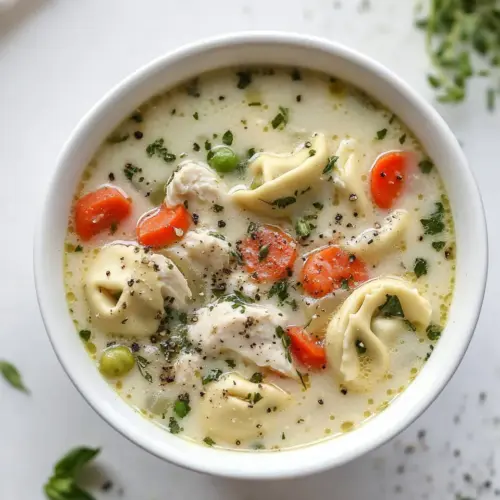
Chicken Tortellini Soup
Chicken Tortellini Soup is a creamy, comforting bowl that combines tender tortellini, shredded chicken, and scented vegetables for an easy weeknight dinner. Rich yet quick, it balances savory stock with a silky milk slurry for a luscious mouthfeel. Make it when you want cozy flavors without fuss, it comes together fast and feels like an instant classic.
Equipment
- Large Pot
- Shaker cup or small bowl
- Wooden Spoon
Ingredients
- 1 tablespoon olive oil Sauté in the pot to build a flavorful fat base; adds richness and helps soften aromatics while contributing a fruity, peppery olive note to the soup.
- 1 tablespoon unsalted butter Melt together with oil to create a silky cooking medium; contributes a subtle creaminess and browned-butter depth that enhances overall savory taste.
- 1 small sweet onion diced Dice finely and sweat until translucent to provide natural sweetness and aromatic complexity; helps form the flavor foundation for the broth and melds with the other vegetables.
- 1/2 cup chopped carrots Chop uniformly and simmer to add gentle sweetness and textural contrast; contributes body and a slightly earthy carrot flavor that balances savory components.
- 1/2 cup chopped celery Chop into small pieces and cook with the onion and carrots to provide aromatic backbone and slight vegetal crunch; lends classic mirepoix structure and savory nuance.
- 2 garlic cloves minced Mince and add toward the end of sautéing to release pungent, aromatic oils; infuses the soup with warm, savory garlic notes without becoming bitter.
- 1/2 teaspoon oregano Measure and sprinkle to introduce warm, slightly minty herbal undertones; complements the chicken and dairy while tying together the soup's Italian-inspired flavors.
- 1/2 teaspoon salt Measure and season early to enhance and balance overall flavors; helps to bring out savory elements in the vegetables, chicken, and broth.
- 1/2 teaspoon pepper Grind and season to provide subtle heat and aromatic lift; brightens and sharpens flavors, preventing the soup from tasting flat.
- 1 1/2 cups cooked shredded chicken Shred and add to the pot to supply protein, hearty texture, and meaty flavor; absorbs the broth’s seasonings and makes the soup more filling.
- 5 cups low-sodium chicken stock Pour in as the liquid base to simmer vegetables and tortellini; supplies savory depth and a salt-controlled environment for balancing the soup.
- 18 -ounce package of your favorite tortellini (I used a dry tortellini) Add as the pasta element to provide tender, cheese-filled bites and body; cooks in the broth, releasing starches that slightly thicken and enrich the soup.
- 1 cup milk or half and half Pour in to lighten and mellow the broth while adding creaminess; helps create a gentle, rich mouthfeel without overpowering the other flavors.
- 1 1/2 tablespoons flour Whisk with milk and cook briefly to thicken the broth into a silky consistency; provides body and helps the soup cling to the tortellini and chicken.
- fresh oregano and thyme for garnish Garnish fresh to impart bright herbal fragrance and a pop of color; scattering leaves over the finished soup enhances aroma and visual appeal.
Instructions
- Heat a large pot over medium heat and add the olive oil and butter. Once the butter melts, add in the onion, carrots, celery, garlic, oregano, salt and pepper. Stir and cook until the veggies soften, about 5 to 6 minutes. Stir in the shredded chicken and cook for a minute or two. Add in the chicken stock and bring the mixture to a boil, then reduce it to a simmer. Add in the tortellini and cook it for 5 minutes.: The moment the fat becomes glossy and slightly rippling is your cue, a comforting sizzle will greet the vegetables when they hit the pan. This method warms the base gently so the butter does not brown too quickly, preserving its creamy notes. If the pan is too hot, the butter can burn, which gives a bitter edge, so keep the heat moderate. You should smell a soft nutty aroma as the fats blend, and the surface will shimmer when ready.
- While the tortellini is cooking, fill a shaker cup with the milk. Add the flour to the milk and shake the cup for at least 30 seconds. After 5 minutes, stream in the milk slurry while stirring. Bring the soup back to a simmer and let it simmer for 10 or 15 minutes as it thickens.: As these aromatics hit the pan, listen for a steady gentle sizzle and watch the edges of the onion turn translucent. The smell will shift from raw to savory sweet in minutes, a cue that flavors are developing. Stir frequently so the vegetables sweat rather than char, releasing moisture and concentrating flavor. A common mistake is rushing the heat to speed things up, which can cause uneven browning, so take the time to soften them evenly for a rich base.
- Taste it and season more with salt and pepper if you find it necessary. Sprinkle with fresh oregano and thyme and serve!: You will notice the carrots and celery losing their raw crunch and the onion becoming glossy, which signals readiness. The sound will change from a loud sizzle to a gentle quiet simmer as moisture releases. This step builds the soup's backbone, so ensure the vegetables are tender but not mushy, giving texture and sweetness to the broth. Avoid undercooking, which leaves raw vegetable bites, and overcooking, which flattens flavor.
- Stir in the shredded chicken and cook for a minute or two: The heat will warm the chicken and allow it to pick up the flavors clinging to the pan, producing savory aromas that deepen the broth. You might hear a faint hiss as moisture from the chicken hits the hot surface. This brief step prevents cold pockets in the soup and integrates the meat, but be careful not to overwork it, which can dry the strands.
- Add in the chicken stock and bring the mixture to a boil, then reduce it to a simmer: Bringing the liquid to a boil releases intense aromas and helps the flavors marry, then lowering to a simmer keeps the tortellini from disintegrating. You should see gentle rolling bubbles when you bring it up, then tiny, steady bubbles when simmering. Boiling too long can make pasta gummy, so reduce promptly when it reaches a full boil. This simmer stage is where the soup gains cohesion.
- Add in the tortellini and cook it for 5 minutes: As the tortellini enters the broth, watch them bob and then expand; the pasta will plump and the filling will soften. The sound of bubbling will become more lively, and the aroma will take on a toasty, floury note as the pasta cooks. Check for a tender bite at the five minute mark, adjusting slightly for fresh versus dry tortellini. Overcooking leads to splitting or gumminess, so test early if using fresh pasta.
- While the tortellini is cooking, fill a shaker cup with the milk: The milk should be cool or room temperature so it blends smoothly and does not seize. Pouring and shaking with the flour creates an even slurry, and you will notice the mixture thicken slightly as the flour hydrates. If the milk is too warm, lumps may form when you add the flour, so keep the temperature moderate. This step ensures a silky finish without grainy pockets of raw flour.
- Add the flour to the milk and shake the cup for at least 30 seconds: A vigorous shake breaks up clumps and gives you a smooth slurry that will disperse evenly into the hot soup. You should see a uniform pale mixture with no streaks. If lumps remain, they can cook into unpleasant bits, so take the time to shake thoroughly. A small whisk can help if you notice any residual clumps.
- After 5 minutes, stream in the milk slurry while stirring: As you pour, the broth will hiss and the texture will start to thicken, becoming silkier and slightly opaque. Continuous stirring prevents pockets of cooked flour and helps the slurry bind to the liquid, creating a cohesive body. If you pour too fast, the slurry can clump, so stream slowly and maintain motion. The smell will shift to a gentle creaminess that promises a satisfying mouthfeel.
- Bring the soup back to a simmer and let it simmer for 10 or 15 minutes as it thickens: During this gentle simmer, the flour cooks through and the milk melds with the stock, producing a velvety broth that clings to the tortellini. Look for tiny slow bubbles and a slightly thicker coating on a spoon as indicators it's ready. Stir occasionally to prevent sticking and to check the consistency. A common error is simmering too hard, which can break down pasta and make the soup gummy, so keep it gentle and patient.
- Taste it and season more with salt and pepper if you find it necessary: Tasting at the end lets you adjust for salt balance and pepper heat, since the tortellini and chicken can change the final intensity. Use a clean spoon and take note of warmth, seasoning, and texture, then add small increments of salt until it sings. Over salting is easy to do, so season gradually and keep tasting as you go.
- Sprinkle with fresh oregano and thyme and serve: Fresh herbs bring a bright final fragrance that makes each bowl feel lifted and finished. Scatter them on top and watch the aroma bloom, adding a visual pop of green as well. Add them at the end to preserve their fresh oils, and avoid cooking them in, which would mute their impact. Serve hot so the tortellini and broth showcase their optimal textures.
Notes
- Use half and half for extra richness, swap the milk for half and half if you want a silkier, more indulgent broth that clings beautifully to the tortellini.
- Try different tortellini fillings, opt for cheese filled or spinach and ricotta to shift the flavor profile without altering technique, and adjust cooking time slightly if using fresh pasta.
- Leftover rotisserie chicken works great, shred it finely and add it in step four, it warms quickly and absorbs the savory notes from the sautéed vegetables.
- Make it herb forward, stir in more fresh oregano and thyme at the end for a brighter, more aromatic finish that contrasts the creamy base.
- Thicken or thin to taste, for a thicker soup extend the final simmer, for a lighter bowl add a splash more stock and adjust seasoning as needed.