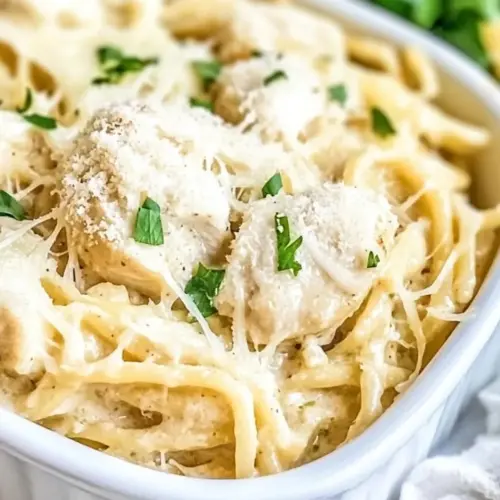
Chicken Tetrazzini
Chicken Tetrazzini delivers a creamy, cheesy pasta casserole loaded with tender rotisserie chicken, savory soups, and a golden bubbling top. This easy weeknight dinner is comforting and crowd friendly, with a texture that is silky and satisfying. Make it ahead or freeze for later, it remains a reliable, cheesy classic that's perfect for feeding a group.
Equipment
- 6-quart saucepot
- Mixing Bowls
- Rotary Cheese Grater
- 9x13-inch Baking Dish
Ingredients
- 1 (16-oz) package linguine pasta Cooked and drained to provide long, tender strands that carry sauce and bind the casserole into a hearty base for the dish; toss immediately with sauce to prevent sticking and ensure even coating.
- 1 whole rotisserie chicken, meat removed and chopped Shredded or chopped to supply moist, savory protein throughout the casserole and absorb surrounding flavors; distribute evenly for balanced bites and to keep the dish hearty and satisfying.
- 1 (10.5-oz) can Unsalted Cream of Chicken Soup Pooled as a creamy, savory binder that adds body and poultry flavor to the sauce; stir with other soups and dairy to create a smooth, cohesive mixture for the pasta.
- 1 (10.5-oz) can Unsalted Cream of Mushroom Soup Folded in as an earthy, umami-rich element that enhances depth and creaminess in the sauce; combine with the cream of chicken soup to round out the casserole's flavor profile.
- 1 (16-oz) container sour cream Stirred in to lend tangy richness and silkiness to the sauce while balancing salt and fat; incorporate smoothly to contribute moisture and a slightly tart finish.
- 1/3 cup butter, melted Melted to add luscious fat that enriches the sauce, helps blend ingredients, and creates a glossy finish; drizzle over or mix in to improve mouthfeel and prevent dryness.
- 1/2 cup chicken broth Poured in modestly to thin the sauce to a pourable consistency and add subtle savory liquid for cohesion; adjust quantity to reach the desired creaminess without making it soupy.
- 1/2 tsp salt Sprinkled sparingly to enhance overall seasoning and bring out savory notes in the chicken and sauce; calibrate carefully to avoid over-salting given canned soups and cheeses.
- 1/2 tsp pepper Ground into the seasoning blend to provide mild heat and brightness that accentuates other flavors; distribute evenly to maintain a balanced, pleasant peppery background.
- 1/4 tsp garlic powder Dusted lightly to introduce a warm, aromatic undertone that complements garlic-forward profiles and enhances savory depth; mix with wet ingredients to release flavor evenly throughout.
- 1/4 cup grated Parmesan cheese Shaved or grated to contribute a nutty, salty finishing touch that melts into the hot casserole and boosts umami; sprinkle over the top or fold in for concentrated savory lift.
- 2 cups shredded mozzarella cheese Scattered generously to form a bubbly, melty topping that seals in moisture and adds a stretchy, creamy texture; layer atop the assembled casserole for gratin-style appeal.
- 2 tsp dried parsley Sprinkled as a subtle herbaceous garnish to add mild color and a gentle, grassy flavor that brightens the rich, creamy components; mix into the filling or scatter on top before baking.
Instructions
- Preheat oven to 300ºF. Lightly spray a 9×13-inch baking dish with cooking spray.: When the oven warms to 300ºF , you'll notice a steady, dry heat that encourages even baking rather than an aggressive roast. The light coating of cooking spray prevents the casserole from sticking and helps the edges brown gently. A hot oven also kickstarts bubbling without overcooking the top. Be careful if you spray too much, as pooled oil can create uneven browning; one thin mist is all you need. A common mistake here is preheating at the wrong temperature, which can lead to underbaked center or over browned edges, so double check your dial.
- Cook pasta according to package directions. Drain.: As the linguine simmers, the kitchen fills with an inviting wheat aroma, and you can hear a gentle rolling boil that signals proper heat. Cook to al dente so the strands hold structure when baked, then drain thoroughly so excess water does not dilute the sauce. Rinsing is unnecessary unless the package recommends it, and it can cool the pasta too much. A frequent error is overcooking the noodles, resulting in a mushy texture after baking; test a strand about two minutes before the package time to avoid this.
- In a large bowl, combine chopped chicken, soups, sour cream, butter, broth, salt, pepper, garlic powder. Stir in cooked pasta.: As you stir these elements, the mixture will take on a velvety sheen from the sour cream and melted butter , emitting a layered scent of savory soups and roasted chicken . Mixing in the cooked pasta while everything is warm helps the sauce cling to each strand. Balance the seasoning after combining rather than before, because the canned soups already contribute salt. If the mixture seems too thick, add small amounts of chicken broth until it reaches a saucy but not soupy consistency. Avoid mixing too vigorously or the pasta can break down and become gummy.
- Pour mixture into prepared baking dish. Top with cheeses and parsley. Cover with aluminum foil.: When you spread the casserole into the greased 9×13-inch baking dish , smooth it evenly so the top bakes uniformly, which produces consistent bubbling across the surface. Sprinkle the grated Parmesan and shredded mozzarella in an even layer for a golden finish, then dust with dried parsley for a hint of color. Covering with foil traps steam, allowing the center to heat through without overbrowning the cheese. One pitfall here is piling on cheese unevenly, which leads to some spots burning while others stay pale, so take a moment to distribute it evenly.
- Bake covered for 45 minutes. Remove foil and bake an additional 10 to 15 minutes, until bubbly and cheese is melted.: During this covered phase, the casserole will steam and the sauce will meld with the pasta, producing a unified, creamy texture and a warm, savory aroma. After removing the foil, watch the surface closely as the cheese transitions from soft to golden and bubbly, signaled by small pockets of steam and a gentle crackle at the edges. The visual cue to look for is even browning and sustained bubbling around the sides, which tells you the center is hot and the cheese is set. Avoid leaving it uncovered too long, which can dry out the top, or not long enough, which leaves the cheese only partially melted. If you notice excess liquid pooling after baking, allow it to rest for several minutes; that helps the sauce thicken and settle before serving.
Notes
- Use leftover roasted chicken to deepen flavor and reduce prep, chopping it into bite size pieces so each serving has a balanced meat to pasta ratio, and avoid dense clumps when stirring into the sauce.
- Swap in gluten free linguine if you need a gluten free dish, making sure to follow the pasta package for cooking times because alternative flours vary in texture and absorbency.
- Boost umami with sautéed mushrooms by quickly cooking sliced mushrooms in a bit of butter and folding them into the mixture for added depth, watching closely so they do not release too much liquid into the casserole.
- Make it lighter by using lower fat sour cream and a light shredded cheese, noting that the mouthfeel will be less rich but still satisfying when balanced with seasoning.
- Prep ahead and freeze by assembling fully, wrapping tightly, and freezing; thaw in the refrigerator overnight before baking, and allow extra time in the oven if it is still partially chilled.