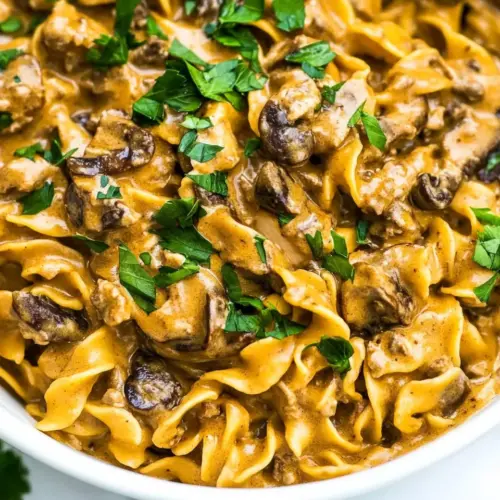
Chicken Stroganoff
Chicken Stroganoff is a creamy, savory, and easy weeknight dinner that combines browned chicken, earthy mushrooms, and tender egg noodles simmered in a flavorful chicken stock sauce. Smoky paprika and thyme add depth while Greek yogurt gives a bright, silky finish, making leftovers even better. Make it for a comforting family meal with minimal fuss.
Equipment
- Large deep skillet
- Dutch Oven
- Spoon
Ingredients
- 2 tablespoons extra-virgin olive oil Drizzle as a cooking fat to brown and sauté aromatics or proteins, lending a fruity, peppery olive flavor that enhances overall richness and helps prevent sticking during searing.
- 1 pound ground chicken Brown as the primary protein, breaking into crumbles and cooking until fully opaque; it soaks up seasonings and provides lean, tender meatiness to the stroganoff base.
- 1 tablespoon dried thyme leaves Sprinkle to introduce a warm, slightly floral and savory herb note that complements poultry; work into the meat while cooking to release aromatic oils and deepen flavor.
- 2 1/2 teaspoons smoked paprika Dust to add smoky, mildly sweet warmth and color; incorporate with the spices so it melds into the meat and contributes depth to the sauce without overpowering.
- 1 1/2 teaspoons garlic powder Season to contribute concentrated garlic flavor in a dry form that disperses evenly, imparting savory umami and aromatic lift when mixed with the ground chicken and mushrooms.
- 1/2 teaspoon kosher salt Season sparingly to enhance all other flavors and provide essential salinity; dissolve into the cooking juices to balance richness without making the dish taste overtly salty.
- 1/2 teaspoon ground black pepper Season to introduce sharp, aromatic heat that brightens the savory profile; grind into the meat and sauce for balanced spiciness that complements the paprika and thyme.
- 16 ounces cremini mushrooms, sliced (also called baby bellas) Sauté to develop deep, earthy, umami-rich flavor and tender texture; slice and brown until moisture reduces, adding body and mushroom complexity to the stroganoff.
- 2 tablespoons all-purpose flour Whisk to thicken and create a roux-like base that helps bind the sauce; sprinkle over the cooked mushrooms and meat, cooking briefly to remove raw flour taste.
- 3 cups unsalted chicken stock Simmer as the liquid backbone of the sauce, providing savory chicken flavor and enough volume to cook noodles and form a cohesive, flavorful gravy when reduced.
- 8 ounces whole wheat egg noodles Cook as the carbohydrate component that soaks up sauce and provides comforting texture; boil until tender and toss with the stroganoff to create a hearty main dish.
- 1/2 cup 2% Greek yogurt at room temperature Fold in at the end to add creamy tang and silkiness without curdling when brought to room temperature first; stir gently to enrich the sauce with a cool, cultured flavor.
- Chopped fresh parsley optional Garnish optionally to provide a fresh, herbal brightness and a pop of color; sprinkle chopped parsley over the finished dish to lighten the richness and add visual appeal.
Instructions
- In a large, deep skillet or a dutch oven with a tight-fitting lid, heat the olive oil over medium. Once hot, add the chicken, thyme, smoked paprika, garlic powder, salt, and pepper. Continue to cook, breaking up the meat with a spoon, until it is fully browned on all sides, 3 to 4 minutes.: The air will warm and the oil will shimmer quietly, signaling the pan is ready. You want the oil hot enough to sizzle lightly when it meets the chicken , which helps create those tasty browned bits. If the oil smokes fiercely, the pan is too hot, so lower the heat and let it cool a moment to avoid a burnt flavor. Avoid adding the meat to a cool pan, which causes it to release moisture and steam rather than brown; that prevents the Maillard crust that adds flavor.
- Add the sliced mushrooms. Continue to cook until the mushrooms begin to soften, about 5 to 6 minutes. Sprinkle the flour over the top, then stir so that it coats the chicken and mushrooms.: As the seasonings hit the warm chicken , you will hear a steady, energetic sizzle and notice the aroma of smoke and herbs. That immediate scent indicates the spices are blooming and integrating with the meat. Keep the pan moving enough to prevent sticking, but allow contact so small caramelized bits form on the surface. Overworking the meat can prevent browning, so give it moments to sit before breaking it apart.
- Add about one-third of the chicken stock. Stir and work the flour and any browned bits off of the bottom of the pan. Add the rest of the stock and the egg noodles and cover the pan. Bring the liquid to a boil, then immediately remove the lid and stir the pan. Re-cover, then reduce the heat to a low simmer. Let simmer until the noodles are al dente and most of the liquid is absorbed, about 7 minutes, stirring the noodles and replacing the lid every few minutes. If at any point the liquid drops below a gentle simmer, increase the heat slightly.: The sound turns from loud sizzle to a more gentle crackle as moisture cooks off and the meat sears. Visually, the meat will change to an opaque, golden tone with darker flecks where it hit the pan. If it still looks pale, resist the urge to stir constantly; letting it brown undisturbed helps develop flavor. A common misstep is overcrowding the pan which causes steaming, so if you must, brown in batches.
- Once the noodles are tender, remove the pan from the heat and let sit 1 minute to cool slightly. Stir in the room-temperature Greek yogurt. Taste and adjust seasonings as desired. Sprinkle with fresh parsley and serve hot.: The mushrooms will hit the hot pan and begin to hiss as they release moisture. Within a minute you will smell an earthy perfume, and as the liquid evaporates they will develop darker, caramelized edges. This color and concentration of flavor are essential for depth. If you add them too late, they will not render their juices properly; if added too early, they can overcook and become mealy.
- Continue to cook until the mushrooms begin to soften, about 5 to 6 minutes: Listen for a softer, less aggressive sizzle and watch the mushrooms reduce in size and darken. They should be tender yet still hold shape, with browned edges that add texture. If they look soggy instead of browned, the heat is too low or the pan is crowded; increase the temperature slightly and give them space to caramelize.
- Sprinkle the flour over the top, then stir so that it coats the chicken and mushrooms: As the flour hits the hot pan, it will absorb some of the fat and begin to toast, producing a faint nutty aroma. Coating the ingredients helps the flour cook evenly and prevents lumps when you add liquid. Stir thoroughly until you do not taste raw flour. If you skip this step or add liquid immediately, the sauce can be grainy or thin, so give the flour a minute to lose its raw edge.
- Add about one-third of the chicken stock: When the first portion of chicken stock hits the pan, it will hiss and begin to lift the brown bits from the bottom, a process that dissolves concentrated flavor into the liquid. Use a spoon to scrape those fond bits up, they are flavor gold. Adding all the liquid at once can make it harder to control thickness, so starting with a portion helps you integrate the flour and avoid lumps.
- Stir and work the flour and any browned bits off of the bottom of the pan: The mixture will thicken slightly and take on a glossy sheen as the flour hydrates and incorporates. Scraping the bottom brings deeper, roasted flavors into the sauce. If the bits resist coming up, let the stock simmer a moment; aggressive scraping on a cool pan can cause clumps. This deglazing is crucial to avoid a pasty or bitter finish.
- Add the rest of the stock and the egg noodles and cover the pan: As the remaining chicken stock joins the pan, the aroma rounds out and the liquid will start to move more freely. Nestle the egg noodles so they are submerged, then cover to trap steam and cook them through. If the noodles do not sit beneath the surface, they will cook unevenly, so press them gently into the liquid. Beware of lifting the lid too frequently which lets out steam and can alter cooking time.
- Bring the liquid to a boil, then immediately remove the lid and stir the pan: The boiling point creates active movement and wakes up the starch in the noodles , which helps thicken the sauce. Stirring now prevents the noodles from clumping and ensures even heat distribution. After this initial boil, recover the pan and reduce heat; failing to reduce will overcook the noodles and evaporate too much liquid.
- Re-cover, then reduce the heat to a low simmer: A gentle simmer maintains steady cooking without aggressive bubbling, which can break the noodles or make the sauce evaporate too fast. You should see small, soft bubbles occasionally, not a rolling boil. If the simmer feels too faint and the noodles are not cooking, slightly raise the heat; if it is too vigorous, lower it to protect texture.
- Let simmer until the noodles are al dente and most of the liquid is absorbed, about 7 minutes, stirring the noodles and replacing the lid every few minutes: During this phase, the sound softens and the mixture thickens as the starches release. Check the noodles early to avoid a mushy outcome; they should have a tender bite. Stirring periodically prevents the bottom from scorching and helps monitor liquid level. If the liquid drops below a gentle simmer, raise the heat slightly, since under simmering will leave the noodles undercooked.
- If at any point the liquid drops below a gentle simmer, increase the heat slightly: Watch the surface for tiny bubbles to ensure consistent cooking. A too low temperature stalls the noodles, while too high can reduce the stock too quickly. Adjust incrementally to maintain that balanced simmer. A common error is overcorrecting which leads to a boil, so tweak the heat in small steps.
- Once the noodles are tender, remove the pan from the heat and let sit 1 minute to cool slightly: The resting time allows the sauce to settle and the noodles to finish cooking gently from residual heat, softening the texture without going mushy. You will notice the steam calm and the surface become glossy. Skipping this pause can cause the Greek yogurt to seize when added to a pan that is too hot.
- Stir in the room-temperature Greek yogurt: As you fold in the warm but not scorching Greek yogurt , the sauce will transform into a silky, tangy finish that brightens the whole dish. The yogurt adds creaminess without heaviness when incorporated at the right temperature. If the pan is too hot, the yogurt can split, so ensure it is room temperature and mixed in off heat for a smooth texture.
- Taste and adjust seasonings as desired: Now is the moment to tune the balance of salt, pepper, and herbs; the warmth will carry flavors differently than the cool ingredients did. Add small increments, tasting after each, so you preserve the layered profile. Over-salting is easy at this point, especially if your stock was salted, so err on the side of caution and let people add more at the table if needed.
- Sprinkle with fresh parsley and serve hot: The final garnish of chopped parsley introduces a fresh green note and visual contrast, cutting through the richness with clean herbaceousness. Serve immediately while the sauce is warm and glossy. If you delay too long, the pasta will continue to absorb sauce and the dish will dry out, so plate and enjoy promptly.
Notes
- Storage: Refrigerate Chicken Stroganoff in an airtight container for up to 3 days, keeping the texture best when reheated gently.
- Reheating: Rewarm leftovers in a Dutch oven over medium low heat, adding a splash of chicken stock if the sauce seems too thick to restore its silky consistency.
- Freezing: Freeze in a freezer safe container for up to 3 months; thaw overnight in the refrigerator before reheating to preserve texture.
- Yogurt tip: If you are worried about curdling, temper the Greek yogurt by whisking in a few tablespoons of hot sauce from the pan before folding it back into the main pot.
- Noodle timing: Check the egg noodles a minute or two ahead of the suggested time, since different brands cook at different rates and you want them al dente.