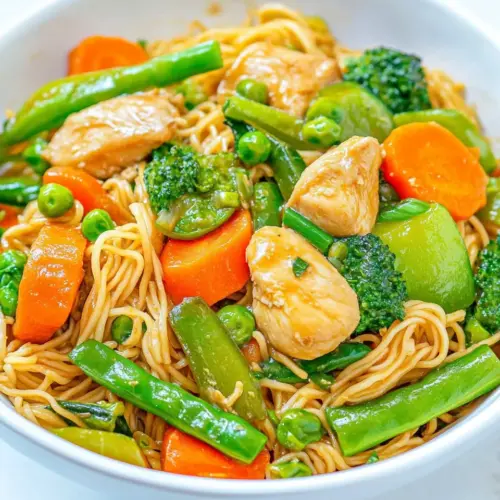
Chicken Stir Fry with Noodles
Chicken Stir Fry with Noodles brings together tender chicken, crisp vegetables, and thin wheat noodles in a glossy, slightly sweet umami sauce. This easy weeknight dinner is quick, texturally satisfying, and full of bright, savory aromas, making it ideal for busy evenings when you want big flavor with minimal fuss. Make it for a fast family meal that still feels thoughtful.
Equipment
- Large Skillet
Ingredients
- 8.8 ounces thin wheat noodles,(read FAQs for noodle options) Boil briefly to tenderize and separate; provides the primary carbohydrate base and soaks up sauce for the stir fry, giving it body and texture.
- 1/3 cup lite soy sauce Season generously for a salty, umami backbone; balances sweet and acidic components while enhancing overall savory depth in the sauce.
- 1/4 cup hoisin sauce Enrich with a sweet, tangy, and slightly savory layer; thickens the sauce and adds complexity with fermented soybean notes.
- 3 tablespoons rice vinegar Brighten with a clean acidic lift; cuts through richness and helps balance sweetness while tenderizing proteins slightly.
- 3 tablespoons honey Sweeten naturally to round out flavors; adds glaze-like sheen to the sauce and helps caramelize vegetables during high-heat cooking.
- 2 tablespoons sesame oil Finish with a nutty aroma and rich mouthfeel; used in small amounts to impart toasted sesame character and boost savory depth.
- 1 tablespoon ground ginger Spice aromatically and warm the sauce; contributes ginger’s sharp, slightly peppery flavor throughout the dish.
- 1/2 teaspoon freshly ground black pepper Season subtly to accentuate other flavors; adds mild heat and enhances savory elements without overpowering delicate ingredients.
- red miso paste,sriracha, red pepper flakes, and/or chili garlic sauce; optional and to taste for a spicier stir fry Provide optional fermented umami or chili heat; allow customization of spice and depth for diners who prefer a spicier, more pungent stir fry.
- 2 tablespoons sesame oil Enhance stir-fry aroma and provide additional nuttiness; used for flavor layering and to finish vegetables and protein.
- 2 tablespoons olive oil Sear and prevent sticking while adding a mild fruity flavor; provides high-heat stability for stir-frying chicken and vegetables.
- 1 pound boneless skinless chicken breast,cut into bite-sized pieces Cook until just done to supply the main protein; absorbs sauce flavors and contributes hearty substance to the meal.
- 4 cloves garlic,finely minced or pressed Infuse pungent, savory aromatics when sautéed; browns quickly to deepen the overall savory profile of the dish.
- 3 cups broccoli florets Provide crisp, green vegetable texture and mild bitterness; holds up to high heat and soaks up sauce while adding color and nutrition.
- 1 extra-large or 2 medium/large carrots,peeled and thinly sliced on the bias Add sweet-earthy crunch and color contrast when sliced on the bias; cooks quickly and pairs well with the sauce’s sweetness.
- 1 cups sugar snap peas Offer snap and bright vegetal sweetness; maintains vibrant texture and freshness that complements softer noodles.
- 1 (14.5 ounce)can baby corn,drained Contribute tender, sweet corn flavor and interesting bite; adds variety of texture and a subtle sweetness to the mix.
- bamboo shoots or water chestnuts,optional Introduce optional crunch or mild earthiness; add for extra texture contrast and a slightly different mouthfeel if desired.
- 1/3 cup green onions,sliced into thin rounds Garnish with a fresh, oniony green note; provides mild sharpness and visual contrast while enhancing overall flavor.
- soy sauce,to taste if desired Adjust final seasoning to taste with additional umami and salt; use sparingly to fine-tune the dish before serving.
Instructions
- Cook according to package directions; drain and set aside.: Steam and salty aromas will build as the noodles simmer, so watch for tender but slightly firm texture to the bite, not soft and falling apart. Rinsing briefly under cool water can stop overcooking and remove excess starch that causes clumping, though if you prefer more sauce adhesion skip rinsing and toss with a little oil. A common mistake is leaving them in hot water while you finish other steps, which leads to limp noodles and a mushy mouthfeel.
- Add all ingredients to a small bowl and whisk to combine; set aside.: As you whisk the soy sauce , hoisin sauce , rice vinegar , honey , sesame oil , ginger , and pepper, you will notice a glossy emulsion forming that smells sweet, tangy, and savory. This balance is crucial because it creates the glaze that will cling to the noodles and chicken . If the sauce tastes too sharp, add a touch more honey ; if flat, add a splash more rice vinegar . Avoid making it overly salty at this stage since reduction during cooking concentrates flavors.
- To a large skillet add the oils, chicken, and cook over medium-high heat for about 5 minutes, flipping intermittently so chicken cooks evenly.: When the pieces hit the hot oil you should hear a steady sizzle and see edges begin to caramelize into golden brown spots, which adds depth of flavor. Give space in the skillet so each piece browns rather than steams; overcrowding is a frequent error that prevents proper searing. Use a blend of olive oil and sesame oil to raise the smoke point while preserving that sesame fragrance.
- When chicken is about 90% cooked through, add the garlic and cook for about 1 minute or until fragrant, stirring often.: The moment you add minced garlic , the aroma will swell and the pan will smell intensely savory. Garlic cooks very quickly and can burn in seconds, becoming bitter, so keep it moving and reduce heat if it darkens too fast. This step layers aromatics into the meat and fat, which is key for a rounded final flavor.
- Add the broccoli, carrots, snap peas, baby corn, optional vegetables, add the sauce, stir, cover and cook for about 3 minutes or until vegetables are crisp-tender; stir intermittently.: As the vegetables hit the hot pan you'll hear a lively hiss, and the colors should pop, especially the green of broccoli and snap peas . Adding the sauce now allows it to heat and begin to thicken, coating everything in a glossy sheen. Covering briefly encourages even cooking, but over steaming will make vegetables limp, so check texture often. Stirring intermittently helps the sauce reduce evenly and prevents burning on the pan bottom.
- Turn off the heat, add the noodles, and toss well to combine; I find adding the noodles in batches and tossing as you go is easier than trying to incorporate them all at once. If your skillet isn’t large enough to accommodate the noodles, transfer the chicken and vegetables to a large bowl before adding the noodles.: The residual heat will warm the noodles through while preserving a tender chew. When you toss, you should see the sauce cling and the ingredients shine; this is the visual cue that flavors have melded. If the skillet is crowded, transfer contents to a large bowl before adding noodles , because forcing everything into a small pan can break strands and lead to uneven coating. A common misstep is trying to overmix vigorously which can bruise delicate vegetables and make the dish soggy.
- Garnish with green onions, add soy sauce if desired, and serve immediately.: Freshly sliced green onions bring a bright, raw onion aroma and crisp texture as a finishing touch. If you choose to add extra soy sauce at the table, do so sparingly, tasting to avoid oversalting. Serve hot so the sauce is glossy and the textures remain vibrant; letting it sit too long causes the noodles to soak up liquid and the vegetables to lose crispness.
Notes
- Swap noodles Use rice noodles or udon if you prefer a chewier bite; adjust cooking times according to package directions and remember thicker noodles will take up more sauce, so you may need to slightly increase the sauce volume.
- Boost umami Stir in a small spoonful of red miso paste or a dash of extra hoisin for a deeper savory backbone; dissolve the paste into the sauce early so it integrates smoothly without clumping.
- Adjust spice gradually Add sriracha, red pepper flakes, or chili garlic sauce a little at a time and taste between additions because the heat concentrates as the sauce reduces and you want control over the final spice level.
- Change vegetable mix Swap or add bell peppers, bok choy, or snap peas based on seasonality; vary cooking order by adding denser vegetables earlier and tender ones later to maintain crisp tender texture.
- Make it gluten free Replace the thin wheat noodles with rice noodles and use gluten free soy sauce to accommodate dietary needs without sacrificing the core flavors of the dish.
- Use dark meat Substitute boneless skinless chicken thighs for breast for a richer, more forgiving protein that tolerates slightly longer cooking without drying out; cut evenly for uniform cooking.
- Control sauce thickness If you prefer a saucier finish add a slurry of cornstarch and water while the sauce simmers, whisking gently until glossy, but add in small amounts to avoid it becoming gluey.
- Finish with acidity A tiny splash of rice vinegar or a squeeze of fresh citrus before serving can brighten the dish and sharpen the flavors right at the end of cooking.
- Toast your sesame oil Lightly warm sesame oil with the sauce ingredients to amplify its nutty aroma, but do not overheat as it can lose its delicate fragrance.
- Texture tweak Add water chestnuts or thinly sliced jicama for an extra crunchy element that contrasts beautifully with soft noodles and tender chicken.